Texturization in 3D printing has always been a technical challenge: while removing imperfections is common, intentionally adding wood grain or leather roughness used to require complex post-processing or difficult parametric models. However, a free tool has just changed the game, allowing designers and manufacturers to incorporate realistic textures directly onto models before printing. This breakthrough not only democratizes design but also opens doors to new industrial and artisanal applications. In this article we will explore how it works, what possibilities it offers, and how a technical and business perspective, supported by solutions such as custom software and artificial intelligence, can take this kind of innovation to the next level.
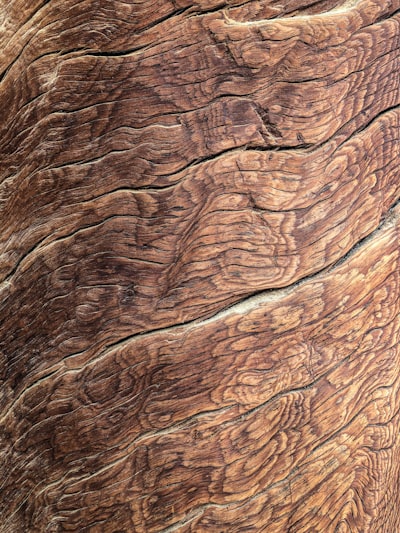
The tool in question —whose name arises from the maker community— allows users to load a basic 3D model and apply surface texture maps that simulate natural materials like wood, leather, stone, or even fabrics. The algorithm generates geometric displacements (bump mapping) or color variations that the printer translates into real layers. The revolutionary aspect is that the process is completely free and does not require advanced 3D modeling skills. Anyone with an STL file can obtain a professional result in minutes.
From a technical perspective, the software uses procedural synthesis techniques: instead of relying on predefined images, it creates random patterns that mimic the cellular structure of wood or the porosity of leather. This avoids obvious repetitions and allows scaling to any part size. Additionally, it integrates adjustable parameters (grain thickness, wear degree, base color) that facilitate customization without the need for complex geometry editing. For companies seeking differentiation, this mass customization capability is a key factor.
But the true potential of this tool unfolds when combined with a broader technological ecosystem. Imagine a furniture manufacturer wanting to produce handles with a leather finish in small batches: the designer generates the texture with the free tool, then the file is optimized for printing via custom software that adjusts slicing parameters according to the material. Subsequently, production data flows into a Business Intelligence system such as Power BI to monitor performance and quality in real time. All of this orchestrated in the cloud with AWS or Azure, ensuring scalability and security.
Cybersecurity also plays a crucial role: textured designs are valuable intellectual property. With cybersecurity and pentesting services, companies can protect their 3D model repositories from leaks or sabotage. Furthermore, artificial intelligence can improve the texturization itself: AI agents can learn from thousands of real samples to generate even more faithful textures, or even recommend the best pattern according to the printer type and filament.
Another relevant aspect is process automation. A company that integrates the free tool with a workflow based on process automation can receive customer orders with texture preferences, process them automatically, generate G-codes and send them to printers without manual intervention. This reduces errors and speeds up on-demand production, a model increasingly adopted by companies.
However, the free tool has limitations: it does not allow multi-resolution textures or control over grain direction in tight curves. That is where the experience of companies like Q2BSTUDIO comes in, developing custom extensions or modules to cover those needs without losing the free base essence. For example, a plugin that adds curvature analysis to orient the texture optimally, or an AI module that detects imperfections in the original model before applying the texture.
In the educational field, this tool is being used to teach parametric design and materials science. Students can experiment with different textures and see how they affect the strength or weight of the part. Combined with BI solutions, centers can analyze which combinations work best in lab tests. And with cloud AWS/Azure, models are shared globally for interdisciplinary collaborations.
Returning to the business world, use cases are varied: from rapid prototyping of packaging with wood finish for food, to luxury automotive parts with a leather look. Cost reduction is significant, as molds are no longer needed nor manual finishing. The carbon footprint also decreases by eliminating chemical dyeing and varnishing processes. Companies adopting these technologies report increased customer satisfaction due to the ability to offer ultra-personalized products.
From Q2BSTUDIO's perspective, our mission is to help organizations integrate these disruptive tools into their actual workflows. It is not enough to have free software that generates textures: it must be connected to the ERP, quality systems, and logistics. That is why we offer custom application development that acts as a bridge between open source innovation and corporate operations. Whether to add an intelligent texturization module or to create a Power BI dashboard showing real-time performance of each texture, our team is ready to make it happen.
In conclusion, the emergence of this free tool for adding wood and leather textures to 3D prints represents a turning point. It lowers entry barriers, accelerates innovation, and allows companies of all sizes to compete in finish quality. But the real value is achieved when combined with a solid technological ecosystem: cloud, AI, cybersecurity, and automation. At Q2BSTUDIO we are convinced that the future of additive manufacturing lies in intelligent customization, and we work every day so that our clients can make the most of it. If you wish to explore how to implement these capabilities in your organization, do not hesitate to contact us; we will help you turn a simple STL file into a differentiated product ready for the market.