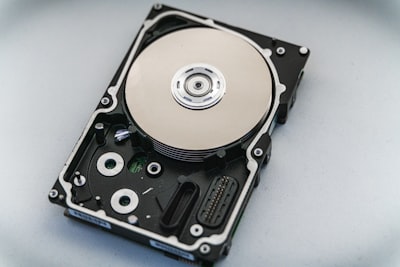
According to recent industry studies, approximately half of all hard drives fail during their first year of use, a statistic that surprises even the most seasoned IT professionals. Although internal hard drives are often considered reliable, the reality is that any drive, whether mechanical or SSD, can suffer unexpected failures. This phenomenon not only affects home users, but in business environments data loss can lead to operational shutdowns, financial losses, and reputational damage. Therefore, before fully trusting a new hard drive, it is essential to implement a robust data protection strategy that combines hardware, software, and best practices.
The causes of premature failures are varied: manufacturing defects, extreme temperatures, physical shocks, power surges, or firmware errors. A hard drive may work perfectly for weeks and then suddenly develop bad sectors or stop being detected by the operating system. The famous “bathtub curve” in reliability theory indicates that failures are most likely at the beginning and end of a device’s useful life. However, in practice, early failures are more common than thought, especially in batches with quality issues. For this reason, any company handling critical information must adopt preventive measures from day one.
So what should you do before trusting a new hard drive? First, subject it to a “burn-in” period: run exhaustive read/write tests using tools like CrystalDiskInfo or HDDScan for at least 48 hours. During this process, monitor SMART (Self-Monitoring, Analysis and Reporting Technology) parameters such as read error rate, reallocated sector count, and temperature. If anomalies are detected, it’s best to return the unit immediately. Additionally, it is advisable to set up an automatic backup system from the first use, whether via local copies (NAS, external drives) or in the cloud. Cloud solutions, especially those based on AWS or Azure, offer geographic redundancy and scalability, ideal for businesses that need to protect large data volumes.
For organizations that depend on business continuity, occasional backups are not enough. This is where custom software development comes into play. Custom applications designed to automate data replication processes, verify copy integrity, and generate real-time alerts at the first sign of imminent failure are key. Q2BSTUDIO, as a software development and technology company, helps organizations create personalized systems that integrate with their existing infrastructure, whether on-premise or in the cloud. For example, an intelligent monitoring application can analyze hard drive logs using AI techniques, detecting degradation patterns that would go unnoticed by a human administrator.
Artificial intelligence and AI agents are revolutionizing storage health management. These systems can predict failures days or even weeks in advance, allowing data to be migrated to an alternative drive or cloud instance before disaster strikes. Moreover, AI agents can act as virtual assistants for the IT department, suggesting corrective actions or executing scheduled maintenance scripts. At Q2BSTUDIO, we integrate machine learning capabilities into business workflows to provide an additional layer of proactive security. It’s not just about reacting to a failure, but anticipating it.
Cybersecurity also plays a crucial role in protecting data stored on hard drives. A physical failure can be devastating, but even worse is if that data falls into the wrong hands due to a security breach. Therefore, encryption policies, access controls, and immutable backups are essential. Q2BSTUDIO offers cybersecurity services that include infrastructure audits, penetration testing, and advanced firewall implementation. Additionally, Business Intelligence solutions like Power BI can help visualize the health status of all hard drives in the organization, consolidating SMART data into interactive dashboards that facilitate decision-making.
The combination of cloud computing (AWS, Azure) with BI tools allows companies to have a global view of their storage infrastructure, detecting trends and weak points. For example, a Power BI dashboard can show the failure rate by drive model, average drive age, or the geographic distribution of backups. This information is gold for IT managers when planning hardware renewals or contingency budgets. Q2BSTUDIO helps organizations implement these solutions in an integrated manner, from cloud migration to creating custom control panels.
In summary, the claim that “half of all hard drives fail in their first year” is not an exaggeration, but a realistic warning for both individual users and businesses to take action. Performing an initial burn-in, setting up automatic backups, and having intelligent monitoring tools are basic steps. But for organizations handling large data volumes, the best investment is to work with a technology partner like Q2BSTUDIO, which offers custom software development, cloud integration, artificial intelligence, cybersecurity, and BI. This way, not only are data protected against hardware failures, but a resilient, scalable, and future-proof data architecture is built. Don’t wait for a hard drive to fail you: act today with the right tools and knowledge.