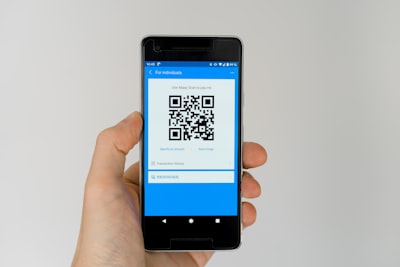
The remote development ecosystem has taken a qualitative leap with the arrival of cordless v0.6, a tool that redefines how professionals manage terminal sessions and coding agents from mobile devices. Unlike previous versions, this update opts for a CLI-first approach, eliminating the need for graphical applications or intermediate steps. When running cordless without arguments, a full-screen terminal panel is displayed with a single-use QR pairing code, allowing you to connect your phone immediately. This change is not a simple tweak; it represents a deep refactoring that transforms the product into an integrated and coherent experience.
From a technical perspective, cordless v0.6 incorporates several innovations worth noting. First, it is distributed as a standalone binary of approximately 45 MB that includes its own Node runtime and the node-pty library, eliminating any prior dependencies. This is possible thanks to Node's Single Executable Application (SEA) technology, which packages the code into a single executable file. Additionally, pairing is now managed by the daemon itself: it can only be invoked from a local socket, preventing a token stolen from a phone from registering new devices. This design reinforces security and avoids race conditions. The text-mode panel (TUI) allows you to browse sessions, attach to them, and manage paired devices, all without leaving the terminal. The session is transmitted directly to the host terminal without intermediaries like xterm.js, using the same replay protocol employed by the mobile application.
For a development company like Q2BSTUDIO, this type of tool illustrates the importance of creating custom applications that solve specific problems smoothly. The ability to pair a mobile device without friction is especially relevant in environments where mobility and immediate response are critical. For example, an engineer who needs to monitor a production deployment while on the move can, thanks to cordless, access active sessions from their phone without additional configurations. This approach aligns with current trends in cloud AWS/Azure, where remote management and container orchestration demand lightweight and secure tools.
The integration of artificial intelligence agents like Claude Code or Codex into terminal sessions opens new possibilities for automating repetitive tasks and providing coding assistance. At Q2BSTUDIO, we work with AI to develop solutions that boost the productivity of development teams. An AI agent embedded in a terminal session can review code, suggest optimizations, or even run automated tests, all within the same workflow. The architecture of cordless v0.6, with its persistent daemon and efficient protocol, provides a solid foundation for incorporating these agents without compromising performance.
Cybersecurity is another fundamental pillar. The fact that pairing is only possible from a local socket (loopback) and with single-use 256-bit tokens that expire in five minutes drastically reduces the attack surface. At Q2BSTUDIO, we offer cybersecurity services that address similar risks in enterprise applications. Furthermore, the clear separation between the TUI panel and the persistent daemon ensures that sessions continue running even if the user closes the terminal, an essential feature for production environments where continuity is critical.
Real-time data analysis also benefits from this type of connectivity. By being able to attach terminal sessions from a phone, analysts can query databases or run BI / Power BI scripts on the go, without needing to be in front of a computer. The combination of remote terminal and mobile visualization allows business intelligence teams to react to unexpected changes with the same speed as an operations team.
Process automation is another area where tools like cordless make a difference. The ability to launch Shell, Claude, or Codex sessions from a simple command, and manage them via a TUI panel, facilitates the creation of automated workflows that integrate testing, deployments, and monitoring. At Q2BSTUDIO, we implement automation solutions that reduce manual intervention and improve system reliability. The architecture of cordless v0.6, with its persistent session handling and efficient protocol, fits perfectly into that ecosystem.
In summary, cordless v0.6 not only improves the remote development experience but also sets a standard for how terminal tools should integrate with mobile devices. Its CLI-first design, standalone binary, and robust security model make it a reference for any team looking to optimize their workflow. At Q2BSTUDIO, we see in this type of innovation a confirmation that developing custom applications is the path to offering solutions that truly adapt to each organization's needs. The evolution of cordless demonstrates that, with a user-centric approach and a well-thought-out architecture, it is possible to simplify the complex and make technology work in our favor.