The evolution of command-line tools has taken a significant leap with the release of cordless v0.6, a tool that redefines how we interact with remote terminals and coding agents like Claude Code or Codex. This release is not a simple incremental update; it is a complete redesign that puts the command-line interface at the center of the experience, eliminating unnecessary steps and offering a seamless integration between desktop and mobile. In a world where efficiency and speed are key, cordless v0.6 presents itself as a solution that every developer should consider, especially those looking to optimize their daily workflow.
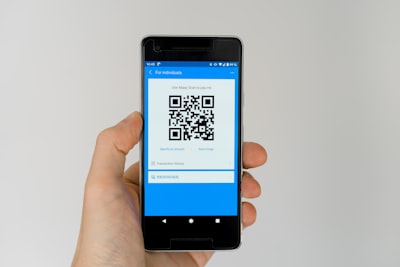
The premise of cordless is simple yet powerful: manage remote terminal sessions and AI agents directly from the command line, with the ability to pair a mobile phone instantly via a QR code. In version 0.6, the team behind this tool has listened to user feedback and made a radical shift: cordless is now first and foremost a terminal application. Running the command without arguments opens a full-screen dashboard displaying a single-use pairing QR code, daemon and Tailscale status, and the list of active sessions. No more separate pairing commands, no more GUI to keep open. Everything is integrated into a single standalone binary.
This CLI-first approach not only simplifies the user experience but also solves technical issues that plagued previous versions. Pairing is now securely managed by the daemon, using a 256-bit token with a five-minute TTL, rate-limited and single-use. Only a local user with access to the loopback socket can generate a new code, eliminating security risks associated with token theft. Additionally, the binary includes its own Node runtime and the node-pty library, meaning there is no need to install Node.js beforehand. With a download size of about 45 MB, any developer on Windows or Linux can start using cordless in seconds.
Behind this release lies a design philosophy reminiscent of best practices in custom software development. At Q2BSTUDIO, a company specialized in multi-platform application development, we see cordless as a clear example of how a well-designed tool can transform productivity. The ability to attach a session directly from the host terminal, without secondary renderers like xterm.js, is a testament to technical efficiency. Keystrokes are sent directly to the PTY, resize events are forwarded, and detach is accomplished with a simple chord. It is like a mini tmux integrated, but optimized for remote and mobile sessions.
Integration with AI agents is another strong point of cordless v0.6. The tool allows starting Claude Code or Codex sessions directly from the dashboard, and keeping them active even when the terminal interface is closed. This is possible because the daemon persists independently of the dashboard, managing the PTYs continuously. For teams working with artificial intelligence, this functionality represents a significant advance: they can launch an agent from the desktop, pair the phone, and monitor execution from anywhere. It is an example of how AI and development tools can converge to create more flexible environments.
From a business perspective, cordless represents a paradigm shift in remote terminal management. Companies that need custom software development often face complex environments with multiple servers and sessions. Cordless simplifies access and monitoring, allowing developers to connect from their phone to any active session without compromising security. Moreover, being based on a standalone binary reduces installation requirements and dependencies, crucial in corporate environments where software policies are strict.
Cybersecurity also benefits from this design. Secure pairing via single-use tokens and the restriction that only the local user can generate codes prevent stolen devices from accessing sessions. Q2BSTUDIO, aware of the importance of data protection, always recommends evaluating remote access tools under cybersecurity and pentesting criteria to ensure no vulnerabilities exist. In this regard, cordless has been designed with an architecture that minimizes the attack surface: the daemon only listens on local sockets, and communication with the mobile app uses WebSocket with reinforced authentication.
Another relevant aspect is portability and ease of deployment. At only 45 MB, the binary can be easily distributed through internal channels or even included in container images. For teams using cloud services like AWS or Azure, cordless can be a complementary tool for managing development sessions on remote instances. Integration with Tailscale adds an extra layer of secure connectivity, allowing access to sessions even from external networks without exposing ports. Q2BSTUDIO offers cloud services on AWS and Azure that benefit from tools like cordless to improve operational efficiency.
The use of artificial intelligence in developing cordless is also notable. The project was built in an ongoing debate with a language model, GPT-5.6 Sol, and with assistance from GitHub Copilot CLI. This shows how AI can act as a design partner, helping make informed decisions about architecture and features. For companies looking to integrate AI agents into their processes, cordless offers an interesting case study: AI not only generates code but also participates in the design of the tool itself. At Q2BSTUDIO, we see the potential of AI agents as an unstoppable trend that will transform how we develop software.
From a data analytics perspective, cordless could integrate with Business Intelligence systems to monitor session usage and agent activity. For example, reports could be generated on AI agent uptime, number of concurrent sessions, or usage patterns. Q2BSTUDIO, a specialist in BI solutions with Power BI, could help companies extract value from data generated by tools like cordless, creating dashboards that optimize team productivity.
Process automation also finds an ally in cordless. The ability to launch sessions from the command line and keep them persistent allows integrating cordless into CI/CD pipelines or automation scripts. For instance, one could automatically start a Claude Code agent to review code on a pull request, then pair the developer's phone to receive real-time notifications. Q2BSTUDIO offers software process automation services that can leverage these capabilities to reduce repetitive tasks and improve efficiency.
In summary, cordless v0.6 is much more than an update: it is a redefinition of how we should interact with remote terminals and AI agents in the post-pandemic era, where remote work and flexibility are essential. Its CLI-first approach, standalone binary, and secure QR pairing make it an indispensable tool for developers, DevOps teams, and companies seeking to optimize their workflow. Looking to the future, cordless marks the path towards deeper integration between desktop, mobile, and artificial intelligence — a path that Q2BSTUDIO celebrates and supports.