Android test automation has advanced considerably, but it still faces a recurring challenge: the fragility of flows that depend on fixed coordinates or arbitrary wait times. When a script assumes a button will always be in the same position, any change in screen resolution, language, font, keyboard, or system permissions can break the execution. The solution is not to add more delays, but to build an intelligent observation system that evaluates the real state of the interface before acting. In this article we explore how to choose among the three main information capture mechanisms —UI selectors, OCR, and image recognition— to create robust, scalable, and auditable automation flows.
The key is to understand that each technique has an optimal application scope. UI hierarchy-based selectors (identifiers, classes, accessible text, content descriptions) are the most reliable source because they work directly with the internal structure of the application. They resist superficial visual changes, such as a dark theme or slight resizing, and are ideal for standard elements like buttons, text fields or lists. However, they fail when the application does not expose information in its accessibility tree, for example, in nested web views or in fragments rendered via canvas. In those cases it becomes necessary to resort to OCR.
OCR (optical character recognition) allows extracting text directly from the screen image. It is especially useful for capturing error messages, order statuses, localized headings or search results that the UI does not expose as accessible text. But its probabilistic nature forces precautions: each capture must be accompanied by the original image, define acceptable variants for the expected text, and stop execution if confidence is too low or the required text does not appear. Lowering the confidence threshold without reviewing results only increases false positives.
Image recognition encompasses two distinct approaches: template matching and object detection using trained models. Template matching is suitable for custom icons, textless buttons or distinctive graphical states that lack a reliable selector. The template must be extracted from a real capture, tested across different themes and resolutions, and not assumed universal. Object detection, on the other hand, answers a different question: it finds instances of classes previously learned by a model. It should only be used if the available model includes the desired class, and it should never be treated as an improved version of OCR. It is a powerful but very specific tool.
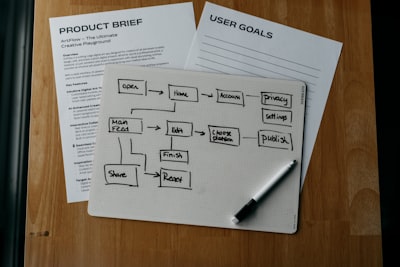
In practice, an effective strategy combines these techniques in a visible, auditable flow. First, capture the current screen state, then select the most appropriate technique based on the available evidence —UI, OCR, template, or detection—, verify the confidence and the business meaning of the result, and finally execute the action (tap, type, swipe, stop). Then wait for the screen to settle and observe again. This cycle of observation → selection → verification → action turns automation into a visible chain of evidence that a QA engineer can review and debug.
Uncertainty should be treated as a normal state, not a failure: when OCR misses text, inspect the image and raw output before lowering all thresholds; when a template fails, check the crop, scale, theme and competing matches; when the UI selector finds nothing, confirm that the element is on screen and actually exposed in the hierarchy. The goal is not that every node passes, but that the evidence is strong enough for the next authorized action.
From a business perspective, this automation architecture fits perfectly into custom software projects where quality and repeatability are critical. At Q2BSTUDIO we integrate these patterns into process automation solutions covering smoke tests, localization review, screenshot capture and product page verification. Additionally, our AI practices allow training custom detection models for proprietary interfaces, and our cloud AWS/Azure services ensure that test environments are scalable and available on demand. Cybersecurity also plays an important role: automated flows must have explicit boundaries to stop before sensitive actions such as payments, deletions or account configuration changes, unless the environment and policy expressly authorize them.
We complement these capabilities with BI/Power BI to visualize test results over time, and we are beginning to explore AI agents that can make contextual decisions within the automation flow, learning from historical patterns to adapt the observation strategy. Ultimately, Android automation with AI is not confidence theater: it is a visible chain of evidence, selection, action, logs and safe stops that any team member can review. For a deeper practical guide on deciding between OCR and images, we recommend consulting the detailed LaiCai Flow documentation, but remember that every implementation must be adapted to your software's reality.
At Q2BSTUDIO we help companies design these architectures, combining deep knowledge of Android, computer vision and quality processes. If your team needs robustness in automated tests or wants to explore how AI can improve the reliability of your flows, do not hesitate to contact us. Intelligent automation is not about eliminating uncertainty, but managing it transparently.