
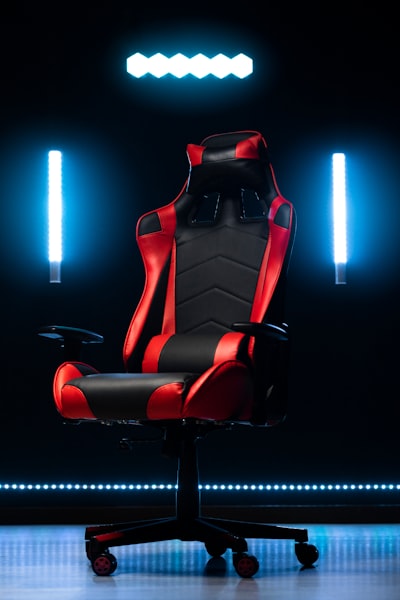
The Razer Soma Chroma gaming chair has arrived with a proposition that divides opinions: a solid base and an RGB lighting spectacle that almost overshadows its ergonomic shortcomings. This analysis is not just about the product, but about what it represents in the current tech ecosystem, where aesthetics often trump real functionality. From a technical and business perspective, we explore why the Soma Chroma, despite its visual appeal, falls short in something as basic as adjustability, and what lessons we can extract for software development and technology.
Let's start with the obvious: the Soma Chroma screams 'gamer' from every angle. Its backrest and seat are covered in breathable fabric, while the armrests and frame boast a minimalist finish. However, the real hook is its integrated RGB lighting system, with LED strips on the sides of the backrest and base that sync with Razer Chroma RGB. You can customize each zone, create dynamic effects, and even link it with other Razer devices for an immersive experience. It is, without a doubt, a visual feast.
But here arises the first problem: the chair barely offers adjustments. The armrests only move up/down and swivel, with no lateral or angle adjustment. The lumbar support is fixed, built into the backrest, and cannot be adjusted in depth or height. The tilt mechanism allows some rocking but lacks locking in multiple positions. For a chair costing 400–500 euros, these limitations are hard to justify. Users who spend long hours in front of the computer—whether gaming, programming, or managing data—need adaptable support, not just pretty lights.
The lesson here is clear: the real value of a product or service lies not in its superficial layer but in its ability to adapt to user needs. This translates directly to the business and tech world. Many companies invest in generic solutions or flashy interfaces but neglect customization and scalability. This is where companies like Q2BSTUDIO, specialized in custom software development, make a difference. An application designed specifically for a company's processes not only improves efficiency but also reduces long-term costs, just like a well-adjusted ergonomic chair prevents injuries.
The analogy goes further. The Soma Chroma, with its excessive RGB, reminds me of software projects where visual effects are prioritized over back-end architecture. A pretty interface is useless if the database is slow or security is weak. In the field of cybersecurity, for example, Q2BSTUDIO offers penetration testing and auditing services that ensure your system's 'skeleton' is protected. Similarly, a gaming chair without adjustable lumbar support can cause posture problems; software without security testing can leave critical vulnerabilities.
Another key point is artificial intelligence. Imagine a chair that, through sensors and AI algorithms, automatically adjusts lumbar support based on the user's posture. That would be a disruptive advance. In software, AI agents are revolutionizing the automation of repetitive tasks, from customer service to data analysis. Q2BSTUDIO implements solutions with intelligent agents that learn usage patterns and optimize processes in real time. The Soma Chroma, instead, opts for static: a bunch of lights that don't improve ergonomics. It's a reminder that technology should serve to solve real problems, not to mask them.
Let's talk about the cloud. Chairs don't have cloud, but the concept of scalability does apply. A non-adjustable chair is like a rigid on-premise infrastructure that can't grow with the company. That's why more and more companies migrate to cloud services like AWS or Azure, where they can scale resources on demand. Q2BSTUDIO advises on cloud migrations and hybrid environment optimization, offering flexibility that the Soma Chroma doesn't provide. If you need to adapt your computing capacity to work peaks, a cloud architecture is your best ally; if you need to adapt your chair to your body, you need models with full adjustments.
Business Intelligence also comes into play. A good chair lets you focus on data; a bad chair distracts you with pain. Similarly, a company without BI tools like Power BI is losing the ability to make informed decisions. Q2BSTUDIO develops custom dashboards that transform raw data into actionable insights. The visualization of key indicators is as important as the chair's RGB lighting, but the difference is that BI dashboards deliver real value, while lights only create ambiance.
Returning to the Soma Chroma, let's acknowledge its merit: Razer has achieved a comfortable chair for moderate sessions with decent build quality. The chosen materials, like breathable fabric and high-density foam, are appropriate. However, for a professional who sits eight hours a day, the adjustability limitations are a fatal flaw. In that sense, it's a product more oriented to occasional gaming or those who prioritize aesthetics above all.
In conclusion, the Razer Soma Chroma is a perfect example of how a product can shine in the superficial while failing in the essential. As users, we must demand more: not just lights, but functionality. As companies, we must apply that same logic when choosing tech partners. Q2BSTUDIO represents the opposite approach: solutions that adapt to you, not the other way around. From artificial intelligence to process automation, through cloud and cybersecurity, they offer an ecosystem where every component adjusts to the real needs of the business. Because in the end, the best technology is one that becomes a natural extension of your work, not a shiny ornament.

