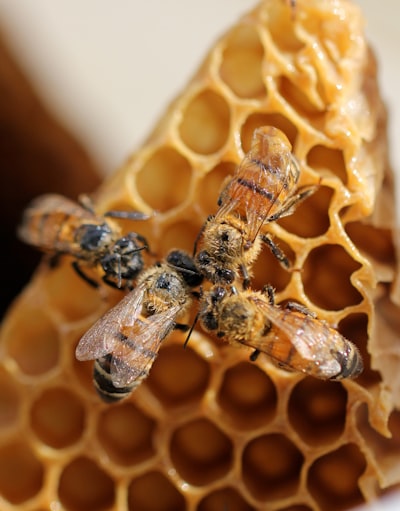
The life cycle of the honeybee (Apis mellifera) is one of the most fascinating and organized processes in nature. Understanding it not only satisfies scientific curiosity but also has direct implications for modern beekeeping, food security, and increasingly, for the development of technological solutions that support hive management. In this article we will explore each stage of the development of these insects, from egg to the emergence of workers, drones, and queens, and see how companies like Q2BSTUDIO are applying artificial intelligence, cloud computing, and data analytics to transform beekeeping into a more efficient and sustainable sector.
Everything begins with the queen laying eggs. In an active hive during spring and summer, the queen can deposit up to 2,000 eggs per day. Each egg is placed in a wax cell built by workers. The queen can decide whether to fertilize the egg as it passes through her spermatheca. Fertilized eggs become workers (sterile females) or, if fed exclusively with royal jelly, new queens. Unfertilized eggs become drones (males). This genetic and nutritional differentiation is the basis of the colony‘s social structure.
The egg, barely 1.5 mm, hatches on the third day. A white, legless larva emerges and is initially fed royal jelly by nurse bees. During the first three days, all larvae receive this protein-rich substance. After that, future workers and drones switch to a diet of honey and pollen, while queen candidates continue receiving royal jelly throughout their entire larval development. This nutritional difference determines whether a larva becomes a queen, with a faster development (16 days from egg to adult) compared to workers (21 days) and drones (24 days).
The larval phase lasts approximately six days, during which the larva molts several times and grows rapidly. Then, workers seal the cell with a cap of wax and silk, starting the pupal phase. Inside, the larva spins a cocoon and undergoes complete metamorphosis: tissues reorganize, and compound eyes, wings, legs, and chitinous exoskeleton appear. At the end of this process, the adult bee emerges by chewing through the cap. The newborn has a soft exoskeleton and needs a few hours to harden and begin its tasks inside the hive.
Workers, which make up the vast majority of the population, perform different jobs according to their age: first they clean cells, then feed larvae, then build honeycomb, ventilate the hive, receive nectar from foragers, and finally, in their last weeks of life, go out to collect pollen and nectar. Their lifespan is about six weeks in summer, but they can live several months if born in autumn to maintain the hive through winter. Drones, on the other hand, have no stinger and their only function is to mate with a virgin queen. They die after mating or are expelled from the hive in autumn when resources are scarce.
The queen is the only fertile female in the colony and can live for several years. Her cycle begins when a larva is fed exclusively royal jelly in a special cell called a queen cup. After emerging, the new queen must eliminate her rivals (other virgin queens) and perform one or more mating flights, where she mates with multiple drones. She stores sperm in her spermatheca and will use it throughout her life to fertilize eggs. Once mated, she returns to the hive and begins her uninterrupted egg-laying cycle, which can last for years.
From a business and technological perspective, detailed knowledge of the honeybee life cycle enables the design of digital tools that improve beekeeping management. For example, IoT sensors placed in hives can monitor temperature, humidity, and sound to detect when a hive is about to swarm or if the queen is ceasing to lay eggs. Collected data is processed by artificial intelligence algorithms that predict key events, such as the need for supplementary feeding or the optimal time to split the hive. All of this is integrated into cloud platforms (AWS or Azure) that allow the beekeeper to access real-time information from their mobile phone.
Furthermore, the use of custom software applications developed by companies like Q2BSTUDIO facilitates honey production traceability, hive inventory management, and treatment scheduling. Cybersecurity also plays a crucial role: protecting beekeeping operation data from unauthorized access is essential, especially when managing automated climate and feeding control systems. Q2BSTUDIO offers cybersecurity solutions to safeguard these critical infrastructures.
Another area of application is Business Intelligence. With tools like Power BI, beekeepers can visualize production trends, correlate climate data with hive activity, and optimize apiary locations. AI agents can recommend corrective actions in real time, such as adjusting ventilation or alerting about pest presence. Automation of processes through specialized software allows, for instance, controlling honey extraction or automated feeding, reducing costs and increasing efficiency.
In short, the honeybee life cycle is not only an amazing biological phenomenon but also a field where technology and innovation are generating real impact. Knowing how workers, drones, and queens develop is the first step towards professional and sustainable hive management. If you are thinking about digitizing your beekeeping operation or need custom software, cloud, BI, or AI solutions, at Q2BSTUDIO we have over a decade of experience developing technology for the agri-food sector. Contact us to discover how we can help you take your apiary to the next level.