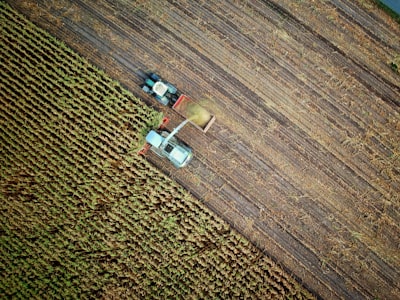
Agricultural resilience has become a strategic priority in the face of growing climate volatility and global supply chain disruptions. Traditional approaches that analyze biophysical and economic systems separately fail to capture complex interdependencies. In this context, integrated artificial intelligence models offer a solution capable of combining soil, climate, market and logistics data into a single analytical ecosystem. Q2BSTUDIO, as a company specialized in software development and technology, has identified that the true value of these models lies in their ability to adapt to the specific needs of each organization. That is why it bets on custom software applications that integrate simulation modules, visualization and real-time alert generation.
From a technical perspective, the architecture of an integrated AI model for agricultural resilience rests on three fundamental pillars. The first is heterogeneous data ingestion: IoT sensors in the field, satellite imagery, weather forecasts, commodity prices and production records. These flows are processed using machine learning algorithms that identify patterns and anomalies. The second pillar is scenario simulation: thanks to agent-based modeling techniques, it is possible to recreate the behavior of actors such as farmers, distributors and insurers under different shocks — droughts, pests, demand fluctuations —. The third pillar is the orchestration of these components on scalable platforms, where the cloud plays a critical role. Q2BSTUDIO deploys its solutions on cloud AWS/Azure, ensuring elasticity, high availability and reduced operational costs. Cybersecurity is incorporated from the design stage to protect sensitive information in value chains, an aspect that the company addresses through pentesting services and secure architectures.
Artificial intelligence does not act in isolation; it is complemented by Business Intelligence tools that transform results into interactive dashboards. Thus, decision makers — from cooperative managers to public policy analysts — can explore indicators such as the water stress index, the probability of crop failure or the economic impact of a border closure. AI agents, on the other hand, automate repetitive tasks such as generating periodic reports or detecting deviations in irrigation patterns. Q2BSTUDIO integrates these agents into client workflows using the Power BI platform, allowing alerts to reach field supervisors' mobile devices directly.
A representative use case is the assessment of the resilience of a grain supply chain in a drought-prone region. The integrated model collects historical yield data, future prices and climate forecasts. The AI trains a regression model that predicts expected production under different water stress scenarios. Then, an economic simulation model — similar in spirit to GTAP models but implemented with custom software — calculates the effect on local prices and trade flows. The results are visualized in a dashboard developed with Power BI, where an AI agent continuously monitors weather variables and triggers alerts when the probability of drought exceeds a threshold. This approach allows farmers to adjust their plantings and traders to renegotiate contracts in advance.
Implementing these systems requires a solid development strategy. Q2BSTUDIO offers consulting services and the construction of modular platforms that can integrate with legacy systems. The choice of cloud — AWS or Azure — depends on factors such as required latency, data residency regulations and operational budget. The company also deploys DevOps and CI/CD practices to ensure continuous updates without interruptions. In the field of cybersecurity, periodic audits are carried out and role-based access controls are implemented, especially when the model handles intellectual property data on seed varieties or pricing strategies.
Looking ahead, AI agents will evolve into autonomous systems capable of proposing corrective actions — such as recommending crop rotation or adjusting fertilizer dosages — based on the analysis of multiple variables in real time. These agents will be integrated with conversational assistants that allow users to ask questions in natural language, such as 'what is the frost risk on my plot for next week?' and receive answers grounded in the integrated models. Q2BSTUDIO is already exploring these capabilities in its innovation labs, combining natural language processing with physical simulation models.
In conclusion, integrated AI models represent a qualitative leap in the management of agricultural resilience, by unifying disciplines that traditionally operated in silos. For companies and organizations wishing to adopt this technology, having a technology partner like Q2BSTUDIO is key, not only for its ability to develop custom software applications, but also for its expertise in cloud, cybersecurity, business intelligence and artificial intelligence. The combination of these capabilities makes it possible to build robust, scalable systems aligned with the sustainability and profitability objectives of the agricultural sector.