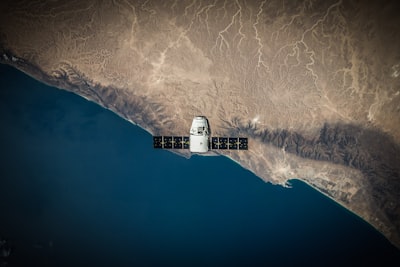
The race to deploy data centers in space has sparked a controversy pitting tech giants against environmental groups. While companies like SpaceX, Blue Origin, and Starcloud plan orbital constellations totaling over a million computing satellites, the U.S. Federal Communications Commission (FCC) faces unprecedented pressure to review its licensing policies. The petition filed by Earthjustice on behalf of DarkSky International, Environment America, and Public Employees for Environmental Responsibility (PEER) demands a Programmatic Environmental Impact Statement (PEIS) before approving any project. This is not about stopping innovation, but about comprehensively assessing the cumulative effects of what many call the 'orbital gold rush.'
The context is revealing: current FCC applications seek authorization to deploy 'over a million datacenter satellites' in low Earth orbit (LEO). This figure multiplies the current active satellite volume by orders of magnitude. Until now, the agency applied a regulatory framework designed for modest constellations, but the scale of these new proposals demands a different approach. The signatories warn that 'if ever a situation warranted a PEIS, this is it.' Individual review of each application prevents understanding the synergistic risks: launch emissions, atmospheric reentry pollution, ozone layer depletion, orbital debris, light pollution, and impacts on astronomy and wildlife.
Behind this regulatory struggle lies a paradigm shift in digital infrastructure. Space-based computing promises ultra-low latency for financial applications, global communications, and defense systems. However, proponents offer grandiose descriptions without detailing environmental costs. 'The proponents paint their plans in civilization-changing terms but refuse to embrace any inquiry into the impacts,' the petition states. This information gap contrasts with the rigor that companies like Q2BSTUDIO apply in developing custom software, where sustainability and efficiency are design pillars.
The debate is not only ecological; it also raises technical and economic questions. An orbital data center requires colossal investment in launchers, solar panels, cooling systems, and communication links. The limited lifespan of these satellites would generate a logistics chain of space debris hard to manage. Companies already operating in the cloud, such as those migrating to cloud AWS/Azure, know that energy efficiency is key; in space, every watt counts and any failure can cascade.
From a business perspective, the FCC initiative represents an opportunity to rethink tech regulation. It is not about blocking innovation, but establishing a framework that balances benefits and risks. Artificial intelligence (AI) could play a crucial role in monitoring constellations and predicting collisions, but its implementation requires reliable data and robust models. Here, AI tools developed by specialists like Q2BSTUDIO offer solutions for route optimization, predictive maintenance, and orbital fleet management.
Cybersecurity is another critical front. An attack on an orbital data center could disrupt global services or divert sensitive data. Security protocols must be designed from the start, integrating practices like pentesting and advanced encryption. Q2BSTUDIO's experience in cybersecurity shows that protecting critical infrastructure admits no shortcuts, whether on Earth or in space.
Another relevant aspect is data management. Orbital data centers would generate enormous volumes of telemetry and logs. BI/Power BI tools allow real-time visualization and analysis of that information, facilitating decisions on maintenance, energy consumption, and satellite performance. The combination of interactive dashboards and predictive models can make the difference between an efficient constellation and an operational disaster.
Process automation is equally vital. Launch, deployment, and operation cycles require fine orchestration. Systems based on automation can manage everything from embedded software validation to emergency protocol activation during space events. Companies like Q2BSTUDIO already apply these techniques in terrestrial environments, but adapting to space poses unique latency and reliability challenges.
Returning to the FCC petition, environmental groups emphasize that the current approach, which treats satellite licenses as categorically excluded from detailed environmental review, is outdated. The agency has already begun reconsidering its rules, acknowledging the rapid growth of the space industry. If it finally orders a PEIS, orbital data center operators will have to overcome a cumbersome bureaucratic process before sending their hardware into orbit. This could slow down multi-billion-dollar projects but would also force companies to internalize environmental costs.
At its core, the orbital gold rush reflects a classic tension between technological progress and sustainability. Advocates of space data centers argue they will reduce reliance on terrestrial infrastructure and enable more equitable global services. However, without rigorous evaluation, the ecological price may be too high. Q2BSTUDIO's experience in developing custom software demonstrates that responsible innovation is possible when environmental criteria are integrated from the design phase.
The Register article that serves as conceptual reference (not as a textual source) describes the petition and the arguments of environmental groups. From there, we have built a broader reflection connecting orbital regulation with current technological capabilities. The FCC holds a decision that will set a precedent for decades to come. Meanwhile, actors like Q2BSTUDIO continue to show that well-crafted technology, whether with AI agents or cloud computing, can be powerful and responsible at the same time.
In conclusion, the orbital gold rush is not an exaggeration. The prospect of over a million datacenter satellites in low Earth orbit will irreversibly transform Earth's exosphere. The question is not whether we should do it, but how to do it intelligently, measuring every impact and leveraging the best analysis, security, and automation tools that the software industry offers. Q2BSTUDIO, with its focus on BI and Power BI, cybersecurity, and automation, represents an example of how technology can align with sustainability. The FCC's decision will chart the course of this new frontier.