
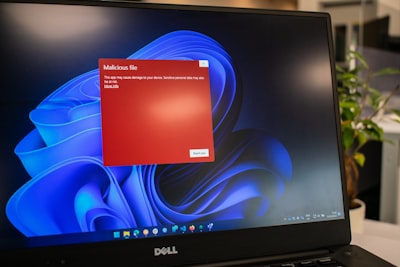
In the current cybersecurity landscape, the emergence of new threats that combine ransomware techniques with massive data-wiping capabilities poses an unprecedented challenge for businesses and organizations. Microsoft has recently identified a destructive backdoor named GigaWiper, developed in Golang, which integrates multiple malicious functionalities into a single modular tool. This software not only encrypts files with no recovery possibility but also includes commands to destroy data at the physical disk level, disable system recovery, and trigger blue screens of death, all remotely controlled via protocols such as RabbitMQ and Redis. This article provides an in-depth technical analysis of GigaWiper, its implications for enterprise security, and how solutions like those offered by Q2BSTUDIO can help mitigate these risks.
GigaWiper is not a simple encryption malware; it represents an evolution in the design of traditional wiper tools, which were usually focused solely on destruction. Now, attackers have merged ransomware capabilities with multiple wiping modules, creating a digital Swiss Army knife capable of executing both extortion and irreparable damage. According to Microsoft analysts, two main variants have been identified: one that acts as a standalone wiper, overwriting disk content and removing partition metadata, and a more complex one that establishes persistence, C2 communication, and offers a wide range of on-demand commands. These commands include ransomware based on Crucio, which generates random keys that are never stored, ensuring encrypted files are unrecoverable. Additionally, GigaWiper can disable Windows recovery, cause a BSOD, and render the device unusable, making it a high-impact threat for any critical infrastructure.
From a technical perspective, GigaWiper leverages Golang to be cross-platform and difficult to analyze. The backdoor organizes its commands into categories such as 'always run' (for continuous screen capture), 'manage command' (for system administration), and special shell modes. It also uses MinIO Client to upload stolen files to remote storage, executes PowerShell commands, collects system information, and provides full remote control over keyboard and mouse. All this, combined with the ability to clear Windows event logs, makes detection and response extremely complex. For companies handling sensitive data, this threat underscores the need for proactive cybersecurity strategies and continuous monitoring tools.
The rise of this hybrid malware requires organizations to strengthen their defenses not only with traditional solutions but also with modern approaches such as implementing AI for anomaly detection and intelligent agents that automate incident response. At Q2BSTUDIO, as a software development and technology company, we understand that cybersecurity is no longer an add-on but a fundamental pillar in any digital business architecture. That is why we offer cybersecurity services that include infrastructure audits, penetration testing, and secure cloud deployments. Additionally, our team develops custom software that integrates security measures from the design phase, minimizing the attack surface.
One key lesson from GigaWiper is that simple backups are not enough, as the malware can destroy both original data and replicas if they are connected to the same network. Therefore, backup strategies must include immutable and offline storage, as well as network segmentation. Companies migrating to cloud environments like AWS or Azure must pay special attention to role and permission configurations, as well as data encryption at rest and in transit. At Q2BSTUDIO we offer cloud AWS/Azure services that include secure architectures, infrastructure automation, and continuous monitoring to detect suspicious behaviors like those characterizing GigaWiper.
Furthermore, business intelligence plays a crucial role in preventing such attacks. Using BI tools like Power BI, organizations can analyze traffic patterns and security logs in real time, identifying correlations that might indicate early infection. At Q2BSTUDIO we implement BI / Power BI solutions that help visualize security metrics and generate automated alerts when anomalous activities are detected. Likewise, the development of AI agents specialized in cybersecurity allows autonomous response to threats like GigaWiper, executing isolation or blocking actions before damage spreads.
From a business perspective, the cost of an attack like GigaWiper can be devastating, not only due to data loss but also downtime, reputational damage, and potential regulatory penalties. Therefore, investing in cybersecurity is no longer optional; it is a strategic necessity. Companies must adopt a multi-layered approach combining technical solutions, staff training, and incident response plans. In this context, Q2BSTUDIO stands as a technological ally capable of designing and implementing customized solutions that address both current and emerging vulnerabilities.
In conclusion, GigaWiper represents a new generation of malware that merges the worst of ransomware and wipers, demanding a deep review of security strategies from organizations. The combination of irreversible encryption, physical disk wiping, and remote control makes its detection and mitigation extremely complex. However, with the right tools and knowledge, it is possible to significantly reduce the risk. At Q2BSTUDIO, we help companies build resilient digital environments through the development of custom software, integration of AI in security, secure cloud migration, and data analysis with Power BI. Cybersecurity is not a destination but a continuous process, and we are here to accompany you.
