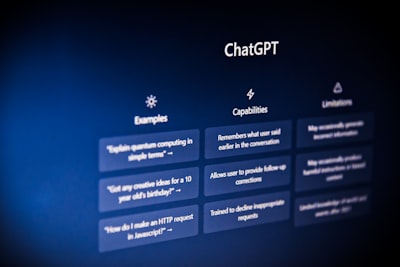
OpenAI has taken a significant step in its enterprise strategy with the launch of ChatGPT Work, an agentic platform designed to automate complex workplace tasks, alongside the general availability of its GPT-5.6 models. This move marks a paradigm shift: it is no longer just about competing for top benchmark scores, but about delivering AI that is cost-effective at scale. Companies that have moved beyond the experimental phase now seek to integrate AI into daily operations, and inference cost has become a critical factor. In this context, OpenAI introduces a scalable family of models — Sol, Terra, and Luna — allowing organizations to choose the level of capability and price according to workload. ChatGPT Work, meanwhile, acts as an autonomous assistant capable of coordinating multiple tools, executing long-running processes, and generating documents, presentations, and even websites, all within a framework of enterprise governance and security.
OpenAI's value proposition now centers on performance per dollar. According to the company, GPT-5.6 delivers stronger results in coding, scientific research, and cybersecurity, consuming fewer tokens and reducing operating costs. This resonates with the current needs of CIOs, who have seen rising token consumption create unexpected bills. The introduction of reasoning modes such as 'max' and 'ultra' — which coordinates four AI agents in parallel — expands possibilities for highly complex tasks. However, the true adoption of these tools depends on how they integrate into existing workflows. This is where companies like Q2BSTUDIO play a fundamental role: they offer artificial intelligence and process automation services that connect these capabilities with legacy systems and business applications of each organization.
The tiered approach of GPT-5.6 — Sol for advanced reasoning, Terra for general enterprise applications, and Luna for high-volume, low-cost deployments — reflects a maturity in the AI market. There is no longer a one-size-fits-all solution; businesses need flexibility to choose the right model for each task. For example, a company might use Luna for processing large volumes of transactional data, Terra for office productivity assistants, and Sol for complex cybersecurity analysis or research. This modular architecture resembles how other technology services, such as cloud computing, are consumed. Indeed, integration with cloud platforms like AWS and Azure is key to scaling these solutions. Q2BSTUDIO, as a technology partner, helps companies design cloud infrastructures that optimize performance and cost, combining AI models with custom cloud services.
In the cybersecurity domain, OpenAI's new models show notable improvements, with increases of up to 73.5% on ExploitBench compared to the previous version. This enables defensive tasks such as secure code review, patching, threat modeling, and blue teaming. However, security does not depend solely on the model; a complete architecture is required, including real-time monitoring, data protection, and regulatory compliance. Companies adopting these technologies must have robust cybersecurity systems that protect both data and automated processes. Q2BSTUDIO offers pentesting and security consulting services to ensure that the deployment of AI agents does not introduce vulnerabilities.
Another relevant aspect is ChatGPT Work's ability to autonomously generate documents, spreadsheets, and presentations, integrating with tools like Microsoft 365, Google Drive, Slack, and Notion. This accelerates administrative tasks and allows employees to focus on higher-value activities. But the real transformation occurs when these workflows connect with business intelligence systems. For example, an AI agent can extract data from a CRM, analyze it with Power BI, and generate an automatic report. Companies already using Business Intelligence with Power BI can enhance their capabilities by integrating agents that interpret results and suggest actions. Q2BSTUDIO develops custom applications that link generative AI with BI dashboards, creating autonomous decision ecosystems.
Competition in the large language model market intensifies, and OpenAI is betting on economic efficiency as a differentiating advantage. However, enterprise adoption requires more than a good model: it needs integration, security, and customization. This is where custom software development becomes indispensable. Q2BSTUDIO has experience in creating solutions that leverage OpenAI's models, adapting them to specific processes, connecting them with ERPs, CRMs, and corporate databases, and ensuring scalability in cloud environments like AWS or Azure. Combining frontier AI with custom software development allows organizations to obtain a real return on their artificial intelligence investment.
In conclusion, the launch of ChatGPT Work and the expansion of GPT-5.6 represent a milestone in the evolution of enterprise AI. The industry is moving away from the benchmark race and toward a pragmatic cost-benefit evaluation. Companies that want to lead this transition will need technology partners who understand both the technology and the business. Q2BSTUDIO, with its focus on cloud services on AWS and Azure, artificial intelligence, cybersecurity, and automation, is prepared to help organizations turn these innovations into real competitive advantages. The era of profitable and scalable AI begins now, and the key lies in intelligently orchestrating resources.