
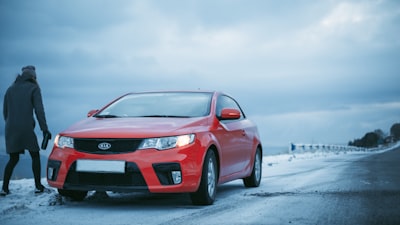
The Kia Forte quietly disappeared after the 2024 model year, but far from being an outdated car, it has become a hidden gem in the used car market. While manufacturers scramble to grab buyers' attention with increasingly sophisticated SUVs, the Forte represents a rational and efficient alternative that many overlook. However, to understand why this compact sedan is a true bargain, we must analyze not only its mechanical qualities but also the technological and business context surrounding it.
From a technical perspective, the Forte offered a balanced combination of reliability, moderate fuel consumption, and equipment that, at its time, was only seen in higher segments. With naturally aspirated or turbocharged gasoline engines, a manual or dual-clutch automatic transmission, and a robust platform, this car was built to last. But what truly makes it a bargain today is the accelerated depreciation sedans face compared to SUVs. On the used market, you can find low-mileage units with impeccable service history at a price far below comparable competitors.
Now, the Forte's disappearance is not isolated. It responds to a global trend where consumers prioritize ride height and a perceived sense of safety from SUVs, even though sedans are often more efficient on highways and nimbler in cities. Kia, as a manufacturer, has decided to redirect its efforts toward the new K4 and especially its electric and SUV lineup. But this strategic decision opens an opportunity for smart buyers: purchasing a used Forte means leveraging a mature platform, abundant spare parts, and low ownership costs.
In the business arena, the Forte's discontinuation also illustrates how companies must adapt to demand shifts without neglecting innovation. This is where technology comes into play. Kia, like many companies in the sector, increasingly integrates infotainment systems, connectivity, and driving assists. The latest Forte models, for instance, included a touchscreen compatible with Apple CarPlay and Android Auto, adaptive cruise control, and autonomous emergency braking. All of this is governed by embedded software that requires updates and maintenance. This digital ecosystem is a field where companies like Q2BSTUDIO have much to contribute, especially in developing custom software for fleet management, remote diagnostics, or personalized user experiences.
Furthermore, cybersecurity has become a critical pillar for connected vehicles. A used car like the Forte may not have the latest factory protections, but it can benefit from cybersecurity solutions implemented by specialized workshops or companies. For instance, Q2BSTUDIO offers pentesting and embedded system auditing services to ensure vehicle data is not vulnerable. Artificial intelligence also plays a role: AI agents can analyze driving data to predict failures or suggest optimal routes, something that could be integrated into aftermarket systems for a Forte.
On the other hand, the cloud is fundamental for vehicle data management. Services like cloud AWS/Azure allow storing and processing telemetry, enabling predictive maintenance. From Q2BSTUDIO, we implement cloud solutions that adapt to vehicle fleets, even older models, connecting sensors and diagnostic systems. Similarly, BI/Power BI helps rental companies or dealerships visualize the performance of their used vehicles, identifying which models like the Forte offer the best cost-benefit ratio for their customers.
The Kia Forte also stands out for its ease of maintenance. Unlike some European competitors, its parts are affordable, and there is a wide network of mechanics familiar with Korean engineering. This makes it an ideal candidate for those seeking a first car or a daily driver without complications. Moreover, its design, though discreet, has aged reasonably well, with clean lines that do not scream 'outdated.'
For those who value efficiency, the Forte delivers contained fuel consumption, especially in naturally aspirated versions. And if we talk about performance, the GT model with a 201 hp turbo engine proves that a compact sedan can be fun without breaking the bank. That versatility is hard to find in an SUV at the same price point.
From a business perspective, the Forte's discontinuation can be seen as a lesson in market adaptation. Kia, as a group, has managed to pivot toward electrification and SUVs, but not all manufacturers have that capability. Technology companies, especially software developers, must understand that obsolescence affects not only products but also business models. At Q2BSTUDIO, we work with companies from various sectors to create custom software that responds to changing market needs, whether in automotive, logistics, or services. Implementing AI agents to automate used car sales processes, for example, can make a difference in such a competitive market.
In conclusion, the discontinued Kia Forte is much more than a cheap used car. It is proof that, in a world obsessed with the new and the big, sometimes the sensible and well-built wins in the long run. For buyers who know how to look beyond trends, this sedan remains a smart choice. And for companies that want to capitalize on that market, technology is the perfect ally. Whether through cybersecurity, cloud, or artificial intelligence, the differentiating value comes from software. That is why at Q2BSTUDIO we continue developing solutions that transform data into decisions, and cars into opportunities.

