
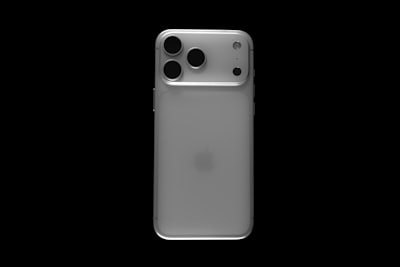
In the mobile technology ecosystem, few devices generate as much excitement as Apple's next major launch. For months, analysts and leakers have debated two possible names: iPhone Ultra or iPhone Fold. Beyond the nomenclature, what truly matters is the set of innovations Apple might be preparing for its most anticipated phone in years. Below, we analyze the most solid rumors, credible leaks, price estimates, and possible release dates, all from a technical and business perspective that connects with current software development trends.
The concept of an iPhone Ultra is not new within Cupertino's corridors. Since the launch of the Apple Watch Ultra, the company has shown its intention to create high-performance variants for professional users. This approach could be transferred to the iPhone, offering a device with more resistant materials — such as titanium or ceramic — a large foldable display, or a combination of both. The most recent leaks point to a design integrating next-generation hinges, similar to those already seen in Samsung's foldable market, but with Apple's obsession for precision and durability.
From a hardware standpoint, the iPhone Ultra is expected to incorporate the new A19 or M4 chip, manufactured with second-generation 3-nanometer process. This would not only improve raw performance but also allow running local artificial intelligence models with greater efficiency. An advanced Neural Engine would be key for generative AI functions, real-time video editing, and improved automatic translation. If any company knows how to squeeze the most out of silicon, it's Apple, and the iPhone Ultra could be the ultimate platform to showcase what custom hardware can achieve.
In the realm of credible leaks, analyst Ming-Chi Kuo has pointed out that Apple is testing prototypes with foldable screens of 7.5 to 8 inches, while Mark Gurman from Bloomberg has spoken of a 'foldable iPhone' for 2026 or 2027. Both sources agree that the device will not replace the iPhone Pro, but rather position itself as a separate premium line, with a price that could exceed $2,000. This segmentation strategy recalls how Apple positioned the iPhone X: an ultra-high-end product to mark the future of the lineup.
The most likely release date is September 2026, although some rumors point to a possible spring 2027 announcement if Apple faces delays in foldable screen production. South Korean LG Display and Chinese BOE would be the main suppliers, with a manufacturing process requiring microscopic tolerances. Overcoming these challenges is no trivial matter, and Apple is investing billions in R&D to ensure the crease is practically invisible and the hinge withstands hundreds of thousands of cycles without degradation.
But beyond hardware, the true differentiator of the iPhone Ultra will be its software ecosystem. Apple has been working on an adapted version of iOS that takes advantage of the additional foldable screen space, with improved multitasking modes and dynamically rearranging applications. This opens opportunities for third-party developers, including Q2BSTUDIO, a company specialized in custom software applications that are already exploring how to adapt their artificial intelligence, cybersecurity, and business intelligence solutions to new form factors. The ability to run AI agents natively on a foldable device could revolutionize business productivity, enabling virtual assistants that understand conversation context and act proactively.
From a business perspective, Apple not only sells hardware but builds a closed ecosystem where each service integrates naturally. The iPhone Ultra could be the catalyst for developers to adopt cloud computing technologies like AWS or Azure, as the most demanding applications will need to offload complex processes to remote servers. Here, providers like Q2BSTUDIO offer cloud services that allow secure data synchronization between the device and the cloud using advanced encryption protocols. Cybersecurity will also be a fundamental pillar: such a powerful and expensive phone becomes an attractive target, so Apple will reinforce the Secure Enclave and add improved biometric authentication. Cybersecurity solutions like those developed by Q2BSTUDIO for businesses could integrate perfectly into this new environment.
Real-time data analysis will be another benefited area. With a foldable screen, Power BI dashboards will display more information simultaneously, facilitating decision-making on the go. AI agents trained with proprietary models can analyze usage patterns and suggest automated actions, all without compromising user privacy. This convergence of technologies — AI, cloud, BI, and automation — is precisely the field in which Q2BSTUDIO has built its reputation, offering solutions tailored to each client's needs.
Regarding price, the most conservative estimates speak of $1,999 for the base model, with storage configurations up to 2 TB that could exceed $2,500. This would place it well above the iPhone 16 Pro Max but below some Chinese foldable competitors. Apple will justify this cost with a combination of premium materials, hinge innovation, and exclusive software ecosystem. However, commercial success will depend on how the market perceives this added value. Experience with the Apple Watch Ultra suggests professional users are willing to pay more for specific features.
The arrival of the iPhone Ultra or foldable will not only impact consumers but also the entire technology supply chain. Component manufacturers, app developers, and cloud service companies are preparing for a new mobility standard. In this context, having a technology partner like Q2BSTUDIO, which masters both custom software development and the integration of artificial intelligence and cybersecurity, will be key for companies wanting to seize the opportunities this device offers.
In summary, the iPhone Ultra represents much more than a phone: it is a statement of intent about the future of personal computing. Rumors and leaks paint an impressive device, but its true value will lie in the ecosystem surrounding it. Apple will have to prove that the foldable is not a fad but a logical evolution. Meanwhile, companies like Q2BSTUDIO are already preparing the groundwork, developing the applications, artificial intelligence, and cloud platforms that will bring this new hardware to life. Time will tell if the iPhone Ultra meets expectations, but one thing is certain: the tech industry is on the verge of a paradigm shift, and this time, the fold could be the key.
