When we talk about software for small businesses, people often think of a basic invoicing program or a simple CRM. However, in practice, it goes far beyond: it is an integrated system that connects every area of the business, from customer acquisition to stock management and financial analysis. But how does this technology really work for the small business owner, rather than the other way around?
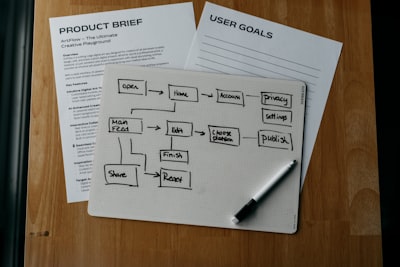
The starting point is understanding that there is no one-size-fits-all solution. Each business has unique processes: a retail store needs real-time inventory control, a medical office requires appointment and record management, while an auto repair shop demands job order tracking. That is why Q2BSTUDIO's approach is based on developing custom software (aplicaciones a medida). Instead of modifying the company to fit the software, the software is built to fit the company. This involves analyzing workflows, interviewing users, and prototyping specific functionalities.
Once requirements are defined, the technical architecture relies on the cloud. AWS and Azure cloud platforms provide the necessary infrastructure to ensure the system is available 24/7, scales automatically during peak seasons, and is backed up securely. Cybersecurity becomes a pillar from the design stage: role-based access policies, encryption of data at rest and in transit, and periodic audits to detect vulnerabilities. Small businesses often underestimate this aspect, but a data breach can be devastating. Q2BSTUDIO incorporates these practices as a standard part of its developments.
Integration is the next step. Software cannot live in isolation; it must communicate with payment gateways, social networks, accounting systems, and marketplaces. That is where APIs and webhooks come in. For example, when a customer buys on the website, the order is automatically synced with the ERP, inventory is deducted, the delivery note is generated, and the carrier pickup is scheduled. All this happens in seconds, without manual intervention. This process automation reduces errors and frees up time for higher-value tasks.
But the real revolution lies in artificial intelligence. Today, small businesses can benefit from AI agents that answer queries on the website chat, automatically classify emails, or recommend products based on user behavior. These agents are not generic; they are trained with the company's historical data, learn its language, and improve with each interaction. Q2BSTUDIO designs these modular systems, which can be complemented with BI and Power BI to provide dashboards with real-time indicators. Thus, the business owner instantly sees which products sell best, which customers are most profitable, or where bottlenecks exist.
The practical operating cycle includes monitoring and optimization phases. Users report issues or suggestions, system logs reveal usage patterns, and the technical team adjusts business rules or adds new features. This continuous process ensures the software evolves with the company. Q2BSTUDIO offers ongoing support, from initial training to periodic improvements.
From an economic perspective, software for small businesses must be cost-effective. Custom solutions avoid paying for unused features, and cloud investment eliminates server maintenance costs. The reduction of manual errors and automation generate measurable returns in weeks. Moreover, scalability allows the business to grow without needing to change systems.
In conclusion, software for small businesses in practice is a strategic ally that combines customization, security, artificial intelligence, and analytics. It is not about adopting technology for fashion, but about implementing tools that solve real problems. Q2BSTUDIO, with its expertise in custom software development and cloud, AI, and cybersecurity technologies, positions itself as the ideal partner for SMEs seeking to transform their daily operations. To learn more about how artificial intelligence can boost your business, visit their website or request an initial consultation.