
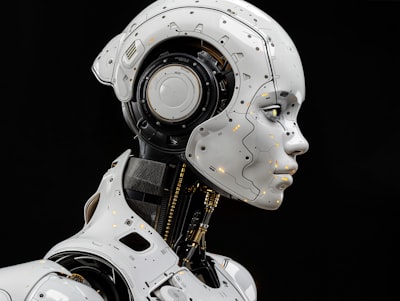
Humanoid robotics is advancing at a breathtaking pace, and each year new models redefine what a human-shaped machine can achieve. From domestic assistants to industrial collaborators, these robots are no longer just sci-fi promises but real tools with concrete applications. In this complete guide and updated ranking, we explore the most notable humanoids, analyzing their capabilities, uses, and the technological ecosystem around them. Additionally, we offer a business perspective so you know how to integrate these solutions into your organization, relying on allies like Q2BSTUDIO, specialists in custom applications and emerging technologies.
What defines a humanoid robot today? Beyond bipedal appearance, a modern humanoid combines locomotion, fine manipulation, and artificial intelligence to interact with environments designed for people. Its real value lies in the ability to operate without redesigning factories, homes, or hospitals. Therefore, integration with cloud AWS/Azure systems, BI platforms like Power BI, and AI agents becomes key to unlocking its full potential. At Q2BSTUDIO, we help companies connect these robots with their business processes through custom software, ensuring cybersecurity and scalability.
Ranking of the most impactful humanoid robots
1. Atlas (Boston Dynamics) - Benchmark in extreme mobility: jumps, backflips, and running at 2.5 m/s. Ideal for advanced research in locomotion and heavy load manipulation. Its use is almost exclusively in labs, but it sets the standard for dynamic stability.
2. Ameca (Engineered Arts) - The most expressive face on the planet. Capable of displaying over 50 micro-expressions, perfect for customer service, museums, and social interaction studies. It does not excel in mobility but in natural communication.
3. Optimus (Tesla) - Promised as a domestic and industrial assistant, still in prototype phase but backed by Tesla. Expected to revolutionize cost and scalability, though today it is more a promise than a commercial reality.
4. H1/G1 (Unitree Robotics) - The most affordable option for R&D. The H1 runs at 3.3 m/s and the G1 cooks, serves drinks, and manipulates objects. Their competitive price makes them favorites among universities and startups.
5. Digit (Agility Robotics) - Pioneer in real logistics: already working in Amazon warehouses moving boxes. RaaS (Robot as a Service) model reduces initial investment. Demonstrates technical maturity in B2B environments.
6. Figure 01/03 (Figure AI) - Focused on bimanual manipulation and robust perception for automotive and logistics. Collaborates with industrial partners for complex tasks, emphasizing human-robot safety.
7. Apollo (Apptronik) - Factory assistant designed to work side by side with people. Excels in picking and ergonomics, still in validation but with mass production in sight.
8. GR-1 (Fourier Intelligence) - Reference in healthcare and elderly assistance. Accessible research platform for universities, with adapted motion libraries.
9. Walker S/S2 (UBTECH) - Service robots for trade shows, corporate buildings, and light logistics. They climb stairs and carry small loads with great autonomy.
10. Neo Beta (1X) - Made in Norway, designed for domestic coexistence with children and adults. No facial features to avoid the uncanny valley, performs tasks like loading dishwashers or delivering packages.
Beyond the ranking: other notable humanoids Sophia (Hanson Robotics) remains the celebrity of social interaction; Phoenix (Sanctuary AI) excels in manual dexterity for retail; Pepper and NAO (SoftBank) are educational classics; ARMAR-6 (Karlsruhe) handles tools in factories; and Jia Jia (China) brings robotics to popular culture.
Keys to choosing the right humanoid robot There is no universal winner. The decision depends on use: need extreme agility? Atlas. Emotional interaction? Ameca or Sophia. Industrial logistics? Digit, Figure or Apollo. Affordable R&D? Unitree. Assistance or education? GR-1, Neo Beta, Walker, Pepper. Evaluate total cost of ownership, technical support, integration with legacy systems, and cloud scalability. Here enters the value of a partner like Q2BSTUDIO, offering custom applications, cybersecurity services, cloud AWS/Azure, BI/Power BI, and AI agents to maximize the return on your robotic investment.
Technological integration: the differentiating factor An isolated humanoid robot has limited value. True power emerges when connected to enterprise management systems (ERP, WMS), data platforms, and automation flows. For example, a Digit in a warehouse can report real-time metrics to a Power BI dashboard, while an AI agent optimizes its routes. For this to work, you need robust AI solutions and a cybersecurity strategy that protects robot-cloud communication. At Q2BSTUDIO we design and implement these architectures, from the cloud to the edge.
Acquisition models: purchase vs. subscription With exceptions like Unitree (direct sale), most humanoids are offered under RaaS or enterprise agreements. This reduces economic barriers but requires evaluating SLAs, updates, and recurring costs. For SMEs, a smart option is to start with a pilot advised by automation experts like those at Q2BSTUDIO, who identify the most suitable robot and integrate it with your processes without major risks.
Where to see and test these robots Trade fairs like Automatica (Munich), Hannover Messe, CES, or ICRA/IROS conferences are meeting points. There are also manufacturer demonstration centers. If you are looking to implement, contact integrators like Q2BSTUDIO who can manage tests and deployments.
Conclusion Humanoid robotics is maturing rapidly, offering real solutions for industry, services, healthcare, and home. The key to success lies in choosing the right model and, above all, integrating it intelligently with your digital ecosystem. With the support of Q2BSTUDIO and its services of custom applications, AI, cybersecurity, cloud AWS/Azure, and BI/Power BI, your organization can leap into the next generation of intelligent automation. The future is already here, and it moves on two legs.


