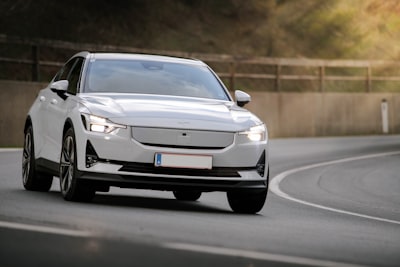
The market for electric SUVs has undergone a radical transformation in recent years. What was once a dream reserved for high budgets —ranges exceeding 300 miles— has now become a reality accessible for under $40,000. This shift is no coincidence: it responds to advances in battery chemistry, motor efficiency, and above all, intense competition among manufacturers seeking to democratize sustainable mobility. However, behind these achievements lies an invisible yet fundamental component: custom software that optimizes every kilowatt-hour and ensures vehicle safety.
To understand how we reached this point, it is worth analyzing battery evolution. Lithium-ion cells have improved their energy density by over 30% in the last decade, allowing more energy to be packed without increasing weight or volume. Additionally, the adoption of 800-volt architectures reduces heat losses and speeds up charging. But these physical advances are not enough: intelligent energy management is key. This is where companies like Q2BSTUDIO bring their expertise in AI to develop range prediction algorithms that adapt to driving style, terrain, and weather conditions.
The most competitive manufacturers in the long-range electric SUV segment under $40,000 have integrated advanced cybersecurity systems. With always-on cloud connectivity, vehicles become network nodes that can be vulnerable if not properly protected. That is why cybersecurity audits have become essential in the development cycle. Q2BSTUDIO collaborates with manufacturers to implement encryption protocols, multi-factor authentication, and on-board network segmentation, ensuring over-the-air updates do not open doors to attackers.
Another technological pillar is cloud infrastructure. SUV telemetry is processed on platforms like AWS or Azure to offer predictive maintenance services, real-time map updates, and charging recommendations. Q2BSTUDIO's cloud services allow manufacturers to scale these solutions without investing in own hardware, reducing costs and accelerating time-to-market. Furthermore, analyzing massive data with Business Intelligence tools like Power BI helps identify usage patterns that improve user experience. For instance, it can determine which routes consume more energy and suggest more efficient alternatives.
Business intelligence applied to the automotive sector has enabled manufacturers to adjust pricing and production strategies. Q2BSTUDIO develops customized dashboards that cross-reference sales data, weather, electricity prices, and driver behavior. This not only optimizes logistics but also anticipates demand for long-range models. In fact, charging route planning benefits from machine learning models that predict station occupancy, avoiding unnecessary wait times.
On-board software, managing everything from infotainment to driver assistance systems, requires a multiplatform development approach. The custom applications created by Q2BSTUDIO integrate with vehicle operating systems, ensuring seamless updates and compatibility with automotive industry standards. This is especially critical in long-range SUVs, where battery thermal management and regenerative braking must be coordinated with millimeter precision.
Mentioning process automation is inevitable. From the production line to customer delivery, robotization and digital workflows reduce errors and costs. Q2BSTUDIO implements automation systems that connect ERP, CRM, and quality platforms, enabling manufacturers to track each battery component and ensure traceability. Additionally, conversational AI agents are already appearing in vehicle virtual assistants, solving driver queries without needing to visit a dealership.
The $40,000 price target is not an insurmountable barrier. Manufacturers like Chevrolet, Hyundai, Kia, and Tesla have launched models that meet that figure, but the real differentiation lies in the digital ecosystem. A long-range electric SUV is not just a set of batteries and motors; it is a mobile data platform. Whoever controls the software will control the market. That is why Q2BSTUDIO positions itself as a key technology partner for manufacturers seeking to deliver a superior experience without skyrocketing costs.
Real-world range often exceeds official estimates thanks to continuous optimization. Software updates can improve efficiency by 5% to 10% without changing a single hardware part. This is achieved through machine learning algorithms that adjust the motor power curve, climate control pressure, and regeneration in real time. Artificial intelligence is, without doubt, the hidden engine behind these advances.
In short, long-range electric SUVs under $40,000 represent a business opportunity and a technical challenge. Companies that coherently integrate custom software, cloud, cybersecurity, BI, and automation will have a decisive competitive edge. And on that path, collaboration with specialists like Q2BSTUDIO becomes a differentiating factor. The mobility of the future will not only be electric: it will be intelligent, connected, and secure, thanks to the invisible talent of software development.