
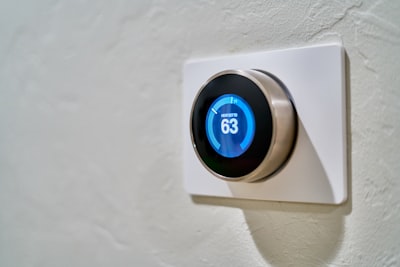
The smart home market continues to evolve at a rapid pace, and one of the devices that has contributed most to this transformation is the smart thermostat. Google has managed to position its Nest Thermostat as an accessible and efficient solution for home climate control. Now, with a deal that brings it to $79 — its best price of the year — it becomes an even more attractive option for those looking to reduce energy consumption without compromising comfort.
This device, launched in 2020, represents Google's entry point into the world of smart thermostats. Although it lacks some premium features of the Nest Learning Thermostat, such as automatic schedule learning or support for room temperature sensors, it offers a very complete set of tools for the average user. Its installation is simple and it integrates perfectly with the Google Home ecosystem, allowing temperature adjustments from anywhere via the mobile app or voice commands with Google Assistant, Alexa, or any Matter-compatible assistant.
From a technical perspective, the Nest Thermostat incorporates energy-saving features that go beyond simple remote control. For instance, it can detect when no one is home and automatically adjust heating or air conditioning to avoid unnecessary consumption. Additionally, the Savings Finder feature analyzes HVAC system usage and suggests personalized improvements. For users in areas with variable electricity rates, Nest Renew can shift heating or cooling consumption to times when electricity is cleaner or cheaper, optimizing both cost and environmental impact.
HVAC system monitoring is another strong point: the thermostat can alert you about potential failures before they become costly breakdowns. This not only extends the equipment's lifespan but also prevents unexpected interruptions in home comfort. In a context where energy efficiency and sustainability are increasingly relevant, such functionalities are essential.
Now, what does all this have to do with the business and technology world? The answer lies in the convergence of disciplines like artificial intelligence, cybersecurity, cloud computing, and data analytics. A smart thermostat by itself is a relatively simple device, but when integrated into a broader ecosystem — whether in a connected home or a corporate building — the possibilities multiply. Companies that develop custom software for managing smart infrastructures can leverage temperature, occupancy, and consumption data to generate predictive models that optimize resource usage. This is where the expertise of Q2BSTUDIO comes in, a company specialized in software development and technology that helps organizations create personalized solutions in this field.
For example, imagine an office building equipped with dozens of smart thermostats. If connected to a cloud platform like AWS or Azure, the generated data can be processed by artificial intelligence algorithms to anticipate demand peaks, adjust climate control in real time, and reduce energy bills by up to 30%. Q2BSTUDIO offers cloud AWS/Azure services that facilitate such deployments, ensuring scalability and security. However, massive data collection also poses cybersecurity challenges: a misconfigured thermostat could be a gateway for cyberattacks. Therefore, the company also implements cybersecurity strategies that protect both devices and sensitive user information.
Beyond climate control, the information gathered by these sensors can feed Business Intelligence dashboards. With tools like Power BI, it is possible to visualize consumption patterns, correlate them with weather or occupancy variables, and make informed decisions about energy efficiency investments. At Q2BSTUDIO, the BI and Power BI team helps companies transform raw data into actionable dashboards, facilitating continuous system monitoring.
Process automation is another pillar. Smart thermostats are just one piece of a larger gear: home or office automation. Q2BSTUDIO develops automation solutions that integrate multiple devices and sensors, creating intelligent workflows. For example, upon detecting that an employee has left their workstation, the system can turn off lights, reduce climate control in that area, and log the change into a management system. All without human intervention, thanks to rule-based logic and machine learning models.
Artificial intelligence is the engine driving these capabilities. AI agents can learn occupant behavior patterns, predict their needs, and make autonomous decisions. In the case of the Nest Thermostat, Google has opted for a more manual approach in the base model, but the possibilities at the enterprise level are enormous. Q2BSTUDIO works with companies to integrate AI agents into their building management systems, achieving more efficient and adaptive environments.
Returning to the flagship product, the Google Nest Thermostat at $79 is an unbeatable opportunity for those looking to start with smart home automation. Its price-performance ratio is hard to match, and the features it offers cover the basic needs of any household. Moreover, its compatibility with the Matter standard ensures it will remain relevant in the future, allowing interoperability with devices from different brands.
For tech professionals, such deals also serve as a reminder of how consumer devices can act as testing platforms for more advanced concepts. Sensor integration, cloud connectivity, data analytics, and automation are trends reshaping both home and business. And companies like Q2BSTUDIO are at the forefront of that transformation, offering services ranging from custom software development to complete AI, cloud, and cybersecurity solutions.
In conclusion, if you are looking for an affordable way to improve your home's energy efficiency, the Google Nest Thermostat at $79 is a smart buy. But beyond immediate savings, this device symbolizes the potential of connected technology to optimize resources and enhance our quality of life. And if you decide to take the leap into a more complex ecosystem, remember that having the support of a software development company like Q2BSTUDIO can make the difference between a chaotic implementation and a truly intelligent solution.

