
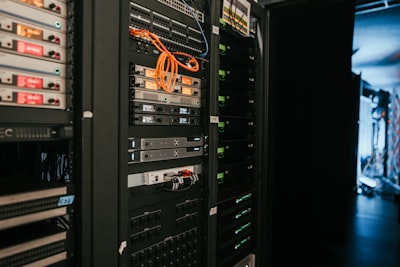
The exponential growth of artificial intelligence is redefining the technology landscape, but at an unprecedented energy cost. Recent projections indicate that by 2027, servers dedicated to AI workloads will consume more electricity than all traditional hardware combined. This milestone represents a turning point for businesses and data centers, forcing them to rethink their infrastructure and efficiency strategies.
The main driver is the increasing demand for large language models and real-time inference systems. Training a model like GPT-4 requires weeks of continuous operation on clusters of thousands of GPUs, consuming megawatt-hours. As AI integrates into everyday applications – from virtual assistants to medical diagnostics – the number of specialized servers skyrockets. According to industry studies, the energy footprint of AI data centers could double every two years.
In contrast, traditional hardware – web servers, databases, enterprise applications – maintains a more moderate growth. The projected parity by 2027 highlights a structural shift: computing is no longer just about processing power, but about intelligent energy management. Organizations that fail to optimize their systems could face unsustainable operational costs and power supply constraints.
This is where optimization through artificial intelligence solutions and cloud services on AWS and Azure comes into play. Companies like Q2BSTUDIO, specialized in software development and technology, help clients design custom software that reduces unnecessary energy consumption. For example, by deploying AI agents that dynamically allocate cloud resources, avoiding idle servers and taking advantage of off-peak hours.
Efficiency depends not only on hardware but also on software. Developing custom software allows eliminating redundant processes and optimizing algorithms to require fewer CPU cycles. Q2BSTUDIO applies compilation and parallelization techniques that reduce execution time, directly impacting the electricity bill. Additionally, migrating to cloud infrastructures like AWS or Azure offers elastic scalability: only what is needed is consumed.
Another critical aspect is cybersecurity. AI data centers become attractive targets for cyberattacks, and an incident can cause abnormal energy consumption in addition to data loss. Therefore, Q2BSTUDIO integrates security measures in its developments, from encryption to continuous monitoring. Cybersecurity is not an add-on but a fundamental pillar to ensure business continuity and energy efficiency.
Intelligent monitoring through Business Intelligence (BI) and tools like Power BI allows companies to visualize in real time the energy consumption of their systems. Q2BSTUDIO deploys dashboards that correlate GPU usage metrics, workload, and electricity cost, facilitating informed decisions. For example, identifying inefficient processes or predicting demand spikes to adjust contracted capacity.
Autonomous AI agents also play a growing role. These agents can automatically manage cloud resource scaling, shut down unused servers, and reschedule intensive tasks for hours with lower electricity rates. Integrated into custom software, they offer an operational intelligence layer that reduces consumption without sacrificing performance.
The future of computing is not only about more powerful processors, but about software and service ecosystems that maximize efficiency. Q2BSTUDIO, as a software development and technology company, accompanies organizations in this transition, offering from cloud consulting to implementation of AI and BI solutions. The collaboration between efficient hardware, optimized software, and cloud strategies is key to facing the energy challenge of 2027.
In summary, the prediction that AI servers will consume more energy than all traditional hardware in 2027 is not an alarm but a call to action. Companies must adopt a holistic approach that combines custom software, cloud infrastructure, cybersecurity, and intelligent monitoring. Only then can they harness the potential of AI without compromising their economic or environmental sustainability.

