
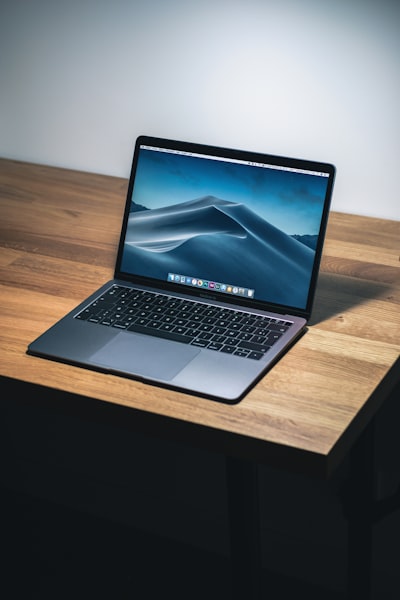
In the fast-paced tech market, the temptation to buy the latest laptop often clouds rational judgment. However, more and more voices from the technical and business fields point to a revealing paradox: the best new laptop you can buy in 2026 might not be the newest one, but one from previous generations. This idea, far from being a simple savings tip, is grounded in real hardware evolution, AI-driven pricing dynamics, and the need to align technology investment with true productivity demands.
To understand this phenomenon, it is crucial to analyze how processors and components have evolved in recent years. For decades, each new CPU generation offered notable performance leaps that justified upgrades. But since 2020, improvements have been incremental, often in the single-digit percentage range for everyday tasks. A 2023 laptop with a 12th-gen Intel or AMD Ryzen 6000 processor is still perfectly capable of handling spreadsheets, web browsing, light video editing, and business applications. The difference with a 2026 model is seconds in intensive tasks, not hours of lost productivity. This relative stagnation is even more evident when comparing battery life: the newest chips do not always outperform their predecessors, as independent streaming power consumption tests show.
In parallel, the rise of artificial intelligence has driven up the costs of RAM and SSD storage. Manufacturers, to maintain margins, pass those increases onto the final prices of the latest laptops. A top-tier model with 16 GB RAM and 512 GB SSD can easily cost 30-40% more than an equivalent model from the previous year, whose components were manufactured before the price surge. Thus, the price-performance ratio tilts dramatically in favor of the 'old.' Businesses, in particular, can take advantage of this window to refresh their computer fleets without sacrificing functional capacity, channeling the savings into other strategic areas.
From a business perspective, the buying decision must go beyond hardware. The convergence of custom software, artificial intelligence, cybersecurity, and the cloud redefines what a modern worker truly needs. For example, a company that has developed its own custom software with Q2BSTUDIO can run it perfectly on a two-year-old laptop, provided it has enough RAM (16 GB minimum) and a fast SSD. Raw CPU power is rarely the bottleneck; memory and storage are, precisely the two components that have become most expensive in recent models.
Furthermore, the emergence of local AI agents—processing data without relying on the cloud—is starting to demand more RAM, but not necessarily the latest CPUs. A business AI assistant integrated into a custom application can run on a 2022 Ryzen 7 if it has 16 or 32 GB of RAM. In this scenario, prioritizing a new CPU over sufficient memory would be a strategic mistake. Q2BSTUDIO, as a software development and technology company, recommends that its clients first assess the real needs of their ecosystem: where are critical processes executed? What level of business intelligence (BI) is needed? How much sensitive data does the workforce handle? These questions guide hardware selection.
In the realm of cybersecurity, an older laptop can be perfectly secure if it is kept updated with operating system patches and perimeter protection solutions are implemented. Serious hardware vulnerabilities affecting entire generations (like Spectre or Meltdown) are already patched in models from 2021 onward. The real risk lies not in the age of the device, but in the lack of security policies. Companies working with Q2BSTUDIO integrate their systems with AWS or Azure cloud, ensuring that sensitive data resides in protected environments and that laptops act only as lightweight terminals. This hybrid cloud architecture extends the useful life of hardware without compromising security.
On the other hand, the adoption of generative AI and autonomous agents is transforming workflows. But these systems, when run locally, demand powerful GPUs and abundant RAM, not necessarily ultra-modern CPUs. A 2023 gaming laptop with an RTX 4060 and 32 GB RAM can be more effective for training small AI models than a 2026 ultrabook with a latest-gen CPU but only 8 GB of memory. Here, the key is understanding which type of AI will be used: if it is conversational agents or assistants for repetitive tasks, most loads can be offloaded to the cloud via services like Azure OpenAI. Q2BSTUDIO helps design these hybrid solutions that balance cost, performance, and scalability.
What practical recommendations can we extract? For the individual user or SME, the priority list when buying a 'new-old' laptop should be: minimum 16 GB RAM (8 GB is insufficient for modern multitasking workloads), SSD storage of at least 512 GB (can be expanded externally), 1080p or higher screen, and a processor from the last 3-4 years. The specific CPU model matters less than memory. Avoid configurations with 256 GB SSD, even if they can be supplemented with an external drive, because the operating system and basic applications already take up half. It is also advisable to purchase the device through a major retailer that offers a warranty and return option, and to verify that the USB-C port is compatible with recent standards to avoid transfer speed bottlenecks.
The tech industry constantly pushes to ask 'what's new?'. But the smarter question is 'what is still great and now affordable?' A 2024 laptop with 16 GB RAM and a 1 TB SSD can be found today for under 700 euros, while an equivalent 2026 model costs over 1,100 euros. The difference in daily performance is practically imperceptible for 90% of users. If we add the possibility of optimizing software with custom applications that fit existing hardware, the savings multiply.
At Q2BSTUDIO we understand that technology is not an end, but a means to productivity and innovation. That is why we accompany companies and professionals in hardware selection, development of custom software, and integration of cloud, BI and AI services so that every technology investment generates maximum return. If you are considering renewing your equipment or your computer fleet, perhaps the answer is not in the launch date, but in a broader strategy that combines efficient hardware with software designed for your real needs.
In conclusion, the best new laptop you can buy today is, paradoxically, one from two years ago. Technology has reached a plateau where generational differences are minimal for most tasks, while prices have soared due to external factors. Taking advantage of this value window allows you to allocate resources to what really makes a difference: custom software development, process automation, artificial intelligence, and cybersecurity. And on that path, having a technology partner like Q2BSTUDIO can make the difference between an impulsive purchase and a smart investment.
