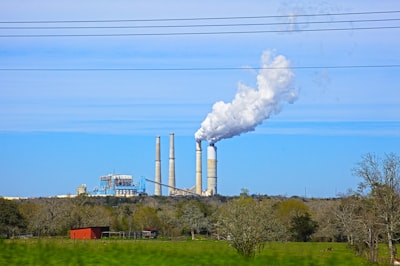
Texas has become the epicenter of the artificial intelligence revolution in the United States. The proliferation of data centers dedicated to training and running AI models has skyrocketed energy demand in the state, and much of that electricity is being generated by new fossil-fuel power plants that are quietly activated thanks to a regulatory loophole. While tech giants promise an automated future, local communities face catastrophic pollution that threatens their health and the environment.
The AI boom requires massive computational infrastructure. Data centers consume enormous amounts of energy not only to power servers but also for cooling systems that prevent overheating. In Texas, the combination of abundant land, tax incentives, and a deregulated power grid has attracted companies like Google, Microsoft, and Amazon, as well as hundreds of startups leasing capacity in specialized facilities. However, the growth rate has outstripped the existing grid capacity, forcing operators to install backup generators and, in many cases, build small gas or diesel power plants that run almost continuously.
These plants benefit from a legal loophole: by not exceeding certain capacity thresholds, they are not subject to the same emissions restrictions as traditional power plants. Permits are obtained quickly and environmental oversight is minimal. The result is that while the public associates AI with clean innovation, in practice its carbon footprint is increasing dramatically in regions like West Texas, where air quality is already deteriorating. Environmental organizations have reported that fine particulate matter and nitrogen oxide emissions exceed recommended limits, and residents complain of respiratory problems and a constant smell of burnt fuel.
From a technical perspective, the problem is not inherent to AI but to how it is deployed. Tech companies have the ability to implement solutions that reduce energy consumption and optimize the use of renewable sources. This is where custom software development, artificial intelligence applied to infrastructure management, and cloud migration can make a real difference. For example, specialized software can monitor server efficiency in real time, adjust workloads to minimize demand peaks, and coordinate generator activation only when strictly necessary.
Furthermore, AI agents can analyze usage patterns and predict energy needs, enabling data centers to contract renewable energy dynamically. Cybersecurity also plays a crucial role: protecting these critical systems from attacks that could destabilize the power grid or cause prolonged blackouts. A company like Q2BSTUDIO, specialized in advanced technologies, offers precisely these capabilities. In the field of artificial intelligence, Q2BSTUDIO develops predictive models and automation systems that help companies reduce their environmental impact without sacrificing performance. Their cloud AWS/Azure services enable migrating workloads to more efficient environments, while BI/Power BI solutions provide dashboards to visualize energy consumption and emissions in real time.
Of course, responsibility does not lie solely with technology providers. Texas lawmakers must close the regulatory loophole that allows unchecked proliferation of fossil plants. But until then, companies building and operating data centers can take immediate action. Implementing custom software applications for energy management, combined with artificial intelligence and data analytics, can reduce consumption by up to 30% in existing facilities. Additionally, adopting hybrid or multi-cloud architectures allows load distribution across regions with better access to renewable energy.
The situation in Texas is a perfect example of how innovation can have unintended consequences if not managed sustainably. The AI boom does not have to come with catastrophic pollution. On the contrary, AI itself can be the tool to design greener data centers, optimize energy supply chains, and monitor environmental compliance. This requires close collaboration between operators, regulators, and technology companies like Q2BSTUDIO, which bring the technical expertise needed to transform the digital infrastructure of the future.
In conclusion, the explosive growth of data centers in Texas is a wake-up call. Society cannot afford for artificial intelligence to advance at the expense of the air we breathe. It is time to invest in intelligent solutions, based on software, automation, and data analytics, that reconcile technological progress with planetary health. Those who lead this change will not only be remembered as AI pioneers but as guardians of a sustainable legacy.