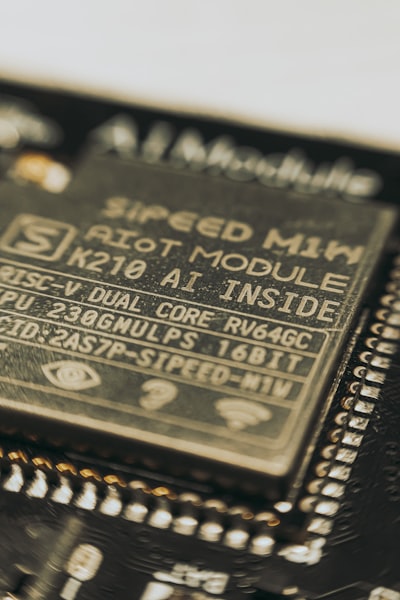
For decades, processor architecture was a closely guarded secret held by a handful of companies. Designing your own chip required million-dollar licenses, non-disclosure agreements, and accepting black boxes that were impossible to audit. That world is changing radically. The arrival of RISC-V, a royalty-free open standard for processor instruction sets, has democratized access to silicon design. No longer do you need to belong to an oligopoly to create a chip that understands software commands. Governments on three continents, tech startups, and research centers have grasped a key truth: you can blacklist a company, but you cannot blacklist a language. This movement, known as the open chip revolution, is transforming entire industries, from data centers to IoT devices.
The real impact of this revolution is not measured solely by benchmarks. Companies like Alibaba, Google, and Western Digital already use RISC-V cores in commercial products. In China, the XiangShan project has achieved performance close to server-class ARM cores, and in Europe, the DARE initiative aims to build supercomputers based on RISC-V. But what is most relevant for the business ecosystem is that now any organization can consider designing its own hardware accelerator, integrating it with existing systems, and gaining advantages in cost, security, and customization. That is where companies like Q2BSTUDIO come in: we offer custom software development services that can integrate this new hardware, along with AI, cybersecurity, cloud AWS/Azure, and business intelligence solutions, helping businesses take advantage of this transformation.
One of the fields where open silicon is gaining ground is artificial intelligence. RISC-V-based AI accelerators, such as tensor cores, allow running language models and neural networks with much lower energy consumption than proprietary GPUs. Moreover, being open standards, companies can add custom instructions to optimize their workloads without depending on a single vendor. This fits perfectly with Q2BSTUDIO's vision of offering AI solutions tailored to each client's specific needs, whether in the cloud or at the edge. Cybersecurity also benefits: open-source projects like OpenTitan, a root of trust, allow auditing the hardware and ensuring there are no backdoors, which is essential for critical environments.
Public cloud providers, especially AWS and Azure, are adopting RISC-V for certain workloads. Companies can now run their applications on instances based on open chips, reducing costs and increasing technological sovereignty. Q2BSTUDIO, with its experience in cloud AWS/Azure services, helps organizations migrate and optimize their infrastructure to leverage these new capabilities. Additionally, combining RISC-V with business intelligence techniques enables more efficient processing of large data volumes, and AI agents can be deployed directly on open hardware, eliminating dependencies on closed ecosystems.
The open silicon revolution is a strategic opportunity for companies that want to innovate without constraints. At Q2BSTUDIO, we understand that software and hardware must go hand in hand. That is why we offer a comprehensive approach: from architecture design to production deployment, including process automation and AI integration. If your company wants to explore how open chips can transform your business, contact us. The future of computing is no longer owned by a few; it is open, collaborative, and within everyone's reach.