
Discord, the popular communication platform for communities, has begun experimenting with a new concept that promises to transform the voice channel experience: an immersive virtual living room. The announcement, shared through its official X account, showcases an environment labeled 'Hangout · Living Room BETA' where users can be represented by avatars inside a three-dimensional space with sofas, a coffee table, and a single chair. This move not only aims to make social interaction more engaging but also opens a range of technical and business possibilities worth exploring.
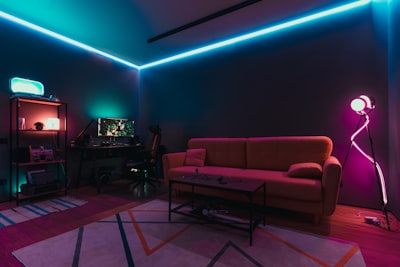
The leaked image reveals a virtual living room with purple neon lighting, wooden flooring, and a large blue L-shaped sectional couch holding two cartoon-style user avatars. A central coffee table displays game controllers and a small plant, while a separate white plastic chair sits slightly apart with another avatar. This design suggests a radical shift from the traditional grid of profile pictures that currently dominates video calls. Instead of a static list of participants, Discord proposes a visual layout that mimics a shared physical space, where each avatar's position could carry social or functional meaning.
From a technical perspective, this feature represents a step toward integrating lightweight 3D environments within a messaging app. It is not a full metaverse but a contextual social space that can run without specialized hardware. The company has clarified that it is still an early experiment with no public testing timeline, but it is gathering recommendations. This indicates that the underlying architecture could rely on web technologies (WebGL, WebRTC) or game engines optimized for low latency—something that companies like Q2BSTUDIO already master in developing custom software for collaborative environments.
The community has reacted with enthusiasm, noting that this design could foster more natural interactions during voice calls. For instance, the isolated chair has already spawned memes about the 'punishment corner' or the 'introvert seat,' suggesting that spatial arrangement can influence group dynamics. Users have also proposed features like proximity-based audio (where distance between avatars affects volume), customizable elements (furniture, backgrounds), and enhanced screen-sharing options. All these ideas have significant technical implications: real-time synchronization, efficient data streaming, and, above all, robust cloud infrastructure.
This is where cloud computing services like AWS and Azure come into play. For a virtual room to work smoothly for millions of users, it is necessary to deploy servers across multiple regions, manage persistent sessions, and optimize bandwidth. Companies specialized in cloud AWS/Azure can help design scalable architectures that support these environments without compromising user experience. Additionally, artificial intelligence (AI) can play a key role: from automatic moderation of inappropriate behaviors to procedural generation of decorations. AI agents could even act as 'virtual hosts' that energize conversations or suggest activities—a field that Q2BSTUDIO thoroughly explores in its AI and automation solutions.
However, a virtual space also introduces new attack vectors. Cybersecurity becomes crucial: protecting avatar identities, preventing impersonation, blocking malicious content injection into textures or scripts, and ensuring real-time audio is not intercepted. Therefore, integrating cybersecurity services from the design phase is a necessity. Penetration testing and code auditing are mandatory steps before launching any feature that handles sensitive data or peer-to-peer connections.
Another relevant aspect is usage analytics. Immersive voice channels will generate data on how users move, who they interact with, and which decorative elements they prefer. Here, Business Intelligence (BI) with tools like Power BI can provide Discord (and its enterprise clients) valuable insights to improve retention and monetization. For example, knowing that users spend more time near the game table could incentivize the creation of sponsored themed zones. Companies looking to implement similar spaces for internal teams can benefit from BI/Power BI consulting to extract behavior patterns and optimize the experience.
From a business standpoint, this Discord initiative can be seen as a strategic move to compete with platforms like Roblox, VRChat, or even Teams, which already incorporate 'Together' modes or virtual spaces. However, Discord maintains its advantage: ease of access and native integration with gaming communities. By offering a virtual living room, the company aims to increase dwell time and foster sub-communities around events or games. This opens opportunities for external developers to create add-ons or custom worlds, which in turn requires automation tools to manage user-generated content without manual intervention.
In summary, Discord's virtual living room is not just an aesthetic novelty: it represents a paradigm shift in digital social interaction. For software development companies like Q2BSTUDIO, this type of feature demonstrates the importance of combining user experience design, cloud infrastructure, artificial intelligence, and cybersecurity. Those who wish to build their own immersive social spaces can rely on experts in custom software to create robust and scalable solutions. We will be watching how this Discord experiment evolves, but one thing is clear: the future of voice calls will be much more visual and, likely, much more fun.

