
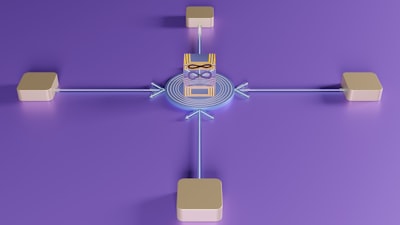
The current landscape of artificial intelligence development demands ever larger and more complex models, driving the need for distributed training strategies that overcome hardware limitations. However, decentralized training faces communication bottlenecks that can significantly slow down the process, especially when employing model parallelism instead of classic data parallelism. In this context, protocol models emerge as an innovative solution to compress both the forward and backward passes, achieving compression rates of up to 99% without convergence degradation and with minimal memory and compute overhead.
The key to these models lies in leveraging the recursive structure of transformer networks to define a low-dimensional subspace that confines activations and gradients. This allows full reconstruction in subsequent layers, eliminating the error accumulation that typically affects traditional compression methods. This approach not only improves communication efficiency by up to 100 times, but also enables training billion-parameter models using modest GPUs connected through consumer-grade internet, with speeds as low as 80 Mbps, matching the convergence of centralized systems with 100 Gbps links.
For companies looking to adopt these technologies, having a technology partner that understands the complexities of distributed training is essential. At Q2BSTUDIO we offer custom software development services that integrate advanced AI solutions, including AI agents capable of automating complex processes. Our team of cloud experts in AWS and Azure designs scalable infrastructures for decentralized training, ensuring maximum efficiency in node communication.
Furthermore, efficient compression of activations and gradients not only reduces bandwidth requirements but also minimizes security risks associated with transferring sensitive data. In cybersecurity, we implement encryption and authentication protocols that protect model integrity during distributed training. Likewise, our BI and Power BI solutions allow real-time monitoring of these processes, offering dashboards that visualize convergence metrics, resource usage, and communication efficiency.
The adoption of protocol models represents a qualitative leap in democratizing large-scale AI model training. No longer is it necessary to have expensive clusters or high-speed fiber optic connections; with the right combination of hardware and software, any organization can train state-of-the-art models from remote locations. At Q2BSTUDIO, we develop software architectures that fully leverage these techniques, integrating AI agents to dynamically optimize compression rates based on network conditions.
Another crucial aspect is integration with cloud services. Our cloud AWS and Azure team configures distributed training environments using optimized GPU instances, managing load balancing and container orchestration. Thanks to protocol models, the amount of data exchanged is drastically reduced, translating into lower bandwidth costs and more predictable training times.
Finally, the flexibility of these protocols allows them to be applied to a wide variety of tasks, from natural language processing to computer vision. Companies can benefit from faster, more efficient training, freeing up resources to innovate in other areas. At Q2BSTUDIO, we combine our expertise in artificial intelligence, cybersecurity, cloud, and BI to deliver comprehensive solutions that maximize return on investment in decentralized AI projects.
In summary, protocol models are redefining the possibilities of decentralized training with efficient parallelism. By compressing communication without sacrificing model quality, they open the door to a new era of distributed collaboration, where scalability is no longer limited by network infrastructure. If your organization seeks to implement these innovations, at Q2BSTUDIO we are ready to support you, from architecture design to production deployment, including the integration of AI agents and continuous optimization.

