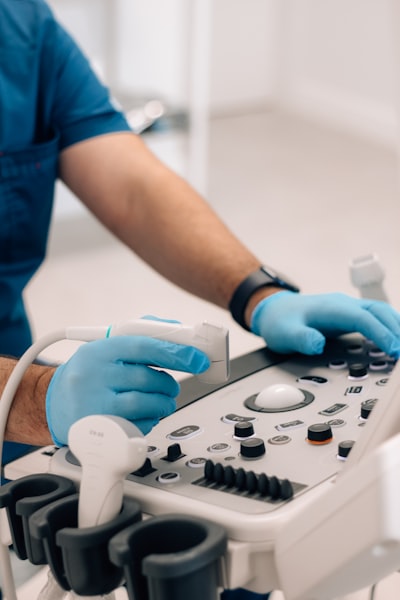
In the field of AI-assisted medical diagnosis, prostate cancer remains one of the most complex challenges. Early and accurate detection is crucial, and advances in imaging, such as micro-ultrasound (μUS), have opened new avenues. Recently, a methodology called Compass has shown how analyzing rotational video sequences combined with deep learning can overcome the limitations of single-frame analysis. This approach, inspired by the clinical practice of radiologists, integrates multiple views of the prostate to generate risk scores both at the frame level and the entire study. The ability to aggregate evidence using a transformer conditioned on the probe's rotation angle represents a qualitative leap in prostate cancer detection.
From a technical perspective, Compass models a μUS study as a continuous stream of 2D images, simultaneously processing rotational sweep videos and frames acquired at the moment of biopsy. The model is trained on a multicenter dataset and its performance surpasses literature baselines, approaching the expertise of radiologists. This innovation not only improves diagnostic accuracy but also reduces inter-observer variability. Implementing such AI architectures requires robust and scalable platforms capable of handling large volumes of multimodal data. This is where companies like Q2BSTUDIO bring their expertise in custom software development and intelligent software solutions.
The multi-view context employed by Compass is a perfect example of how artificial intelligence can replicate and enhance human reasoning. However, taking these solutions from prototype to real clinical environment involves overcoming integration, security, and scalability challenges. Cloud solutions, both on AWS and Azure, provide the necessary infrastructure to deploy AI models in environments with strict regulatory compliance, such as HIPAA or GDPR. Furthermore, cybersecurity becomes a fundamental pillar: patient data is extremely sensitive and any vulnerability could compromise trust in the system. Therefore, any AI deployment in healthcare must include security audits and penetration testing, services offered by Q2BSTUDIO in its portfolio.
Beyond imaging diagnosis, clinical workflow can benefit from AI agents that automate repetitive tasks, such as lesion segmentation or case prioritization based on risk. These agents, combined with BI dashboards based on Power BI, allow medical teams to visualize trends and make data-driven decisions in real time. The ability to integrate data from multiple sources — clinical history, biopsy results, genetic markers — into a single ecosystem is the next step for personalized medicine. Q2BSTUDIO, with its expertise in Business Intelligence and automation, can build these comprehensive platforms.
From a business perspective, adopting tools like Compass not only improves clinical outcomes but also optimizes hospital resources. By reducing unnecessary biopsies and speeding up diagnosis, costs decrease and patient experience improves. Healthcare institutions that embrace digital transformation need technology partners who understand both the technical and regulatory aspects. From designing multiplatform applications to cloud migration, and from implementing explainable AI algorithms, each step requires a customized approach. For example, a custom application for distributed image reading could allow radiologists from different centers to collaborate in real time, something Q2BSTUDIO team has successfully developed in other sectors.
Artificial intelligence will not replace doctors, but it will provide them with increasingly powerful tools. Compass is a clear example of how multi-view context and deep learning can improve prostate cancer detection. However, for these innovations to reach clinical practice safely and efficiently, a solid technological ecosystem is essential. The combination of AI, cloud, cybersecurity, and BI under the umbrella of an integration-focused company like Q2BSTUDIO makes the difference between a pilot project and a sustainable solution.
In conclusion, the future of diagnostic imaging lies in models that understand the spatial and temporal context of scans. Compass demonstrates that it is possible, and the healthcare software industry has the opportunity to scale these capabilities. From custom software development to deploying AI agents that support decision-making, each component plays a critical role. The question is no longer whether AI will transform medicine, but how quickly organizations will be ready to integrate it with the appropriate levels of security and quality. Companies like Q2BSTUDIO are prepared to accompany that journey, bringing know-how in artificial intelligence, cloud AWS/Azure, cybersecurity, and Business Intelligence with Power BI.
The coming years will see a proliferation of models similar to Compass applied to other pathologies. But success will depend on the industry's ability to build bridges between academic research and commercial implementation. The key lies in customization: each hospital, each workflow, each dataset is unique. That is why custom software and technology consulting are more necessary than ever. Investing in these capabilities is not an expense, but an investment in precision, efficiency, and ultimately, human lives.