
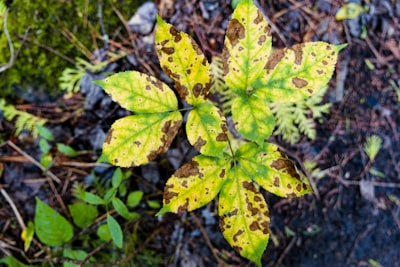
Modern agriculture faces the challenge of maximizing productivity while minimizing losses caused by plant diseases. According to recent studies, pests and pathogens can reduce global yields by 20% to 40%, representing an economic impact of hundreds of billions of dollars. In this context, the ability to accurately and in real time quantify disease severity is a critical factor for precision agriculture. Traditionally, this assessment is done through visual inspection by agronomists, a process that is not only tedious and costly but also subjective and prone to human error.
Semantic segmentation, an advanced computer vision technique based on deep learning, offers an automated and objective alternative. It consists of classifying each pixel of an image into predefined categories, such as 'healthy leaf', 'diseased leaf', or 'background'. From this classification, it is possible to calculate the percentage of affected leaf area and determine the disease severity level, typically categorized into ranges such as low, medium, high, or very high. This information allows farmers and technicians to make informed decisions about fungicide application, irrigation, or pruning, optimizing resources and reducing chemical use.
Segmentation models such as U-Net, combined with lightweight backbones like MobileNetV2, have shown exceptional performance on crop leaf datasets, achieving pixel accuracies above 98% and a very high correlation index with expert assessments. Moreover, their inference speed (in the order of milliseconds per image) makes them viable for deployment on mobile devices or drones, enabling continuous, large-scale monitoring. Other architectures like SegFormer also yield good results, but computational efficiency remains a determining factor for real-time applications.
For these models to work correctly, high-quality labeled datasets are essential. Semantic segmentation requires pixel-level annotations, a labor-intensive process that can be outsourced or partially automated. Q2BSTUDIO offers AI-assisted labeling services and custom annotation tools, accelerating the creation of specific datasets for each crop. Additionally, the company can design data augmentation pipelines to improve model robustness against variations in lighting, orientation, or scale.
However, implementing a disease severity estimation system goes beyond training an AI model. It requires a complete technological infrastructure including image capture, cloud or edge processing, historical data management, and result visualization. This is where companies like Q2BSTUDIO, specialized in software development and technology, play a fundamental role. Q2BSTUDIO offers artificial intelligence services that allow designing and training custom models for specific sectors, such as agriculture. Additionally, its experience in cloud computing (AWS and Azure) ensures that these models can scale efficiently, processing terabytes of images without compromising speed.
For a monitoring system to be truly useful, the data must be accessible and understandable. The business intelligence (Power BI) solutions developed by Q2BSTUDIO enable the creation of interactive dashboards where farmers can visualize the evolution of disease severity over time, identify patterns, and correlate them with climate or soil variables. This turns raw data into actionable knowledge. Likewise, cybersecurity is a crucial aspect: agricultural data is sensitive and must be protected against unauthorized access, especially when integrated with automated irrigation systems or sales platforms. Q2BSTUDIO incorporates cybersecurity measures in all its implementations, ensuring data integrity and confidentiality.
Another innovative component is AI agents, which can automate tasks such as generating alerts when a sudden increase in disease is detected, or recommending treatments based on crop history. These agents, integrated into the cloud platform, enable rapid response and reduce the workload of technicians. The combination of semantic segmentation with intelligent agents represents a qualitative leap in agricultural management.
Developing custom applications is essential to adapt these technologies to each client's specific needs. Not all crops have the same diseases, nor the same lighting conditions or image resolution. Q2BSTUDIO designs tailored solutions that include field-specific data collection, adaptation of segmentation models, and integration with geographic information systems (GIS) and irrigation platforms. This approach ensures that the tool is practical and efficient in the farmer's daily routine.
Implementing these solutions not only improves disease detection accuracy but also generates tangible return on investment. By reducing unnecessary fungicide use and optimizing irrigation, farmers can save operational costs and increase harvest quality. The scalability of AWS and Azure cloud platforms, combined with the flexibility of custom software, allows the system to adapt from a small plot to thousands of hectares. Q2BSTUDIO advises its clients on choosing the most suitable architecture and integrating with existing systems, ensuring a smooth transition to digital agriculture.
In summary, semantic segmentation for estimating disease severity in crops is a mature technology with high impact potential. Its widespread adoption, however, depends on the ability of technology companies to offer complete, robust, and user-friendly solutions. Q2BSTUDIO, with its portfolio of services in artificial intelligence, cloud, cybersecurity, business intelligence, and custom software development, is in a privileged position to accompany agricultural companies in this digital transformation. Investing in these technologies not only improves productivity and sustainability but also contributes to global food security.
