
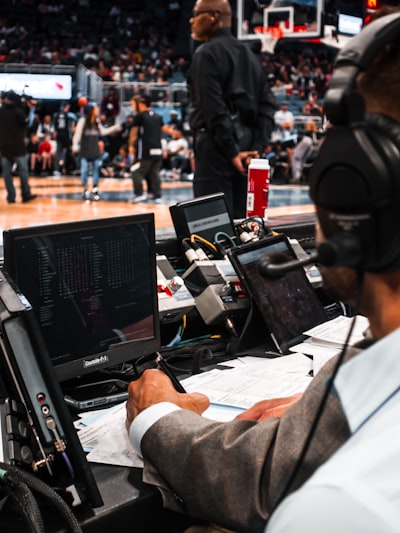
The television industry is undergoing a profound transformation. For decades, audience metrics were limited to how many TV sets were tuned to a channel, but today operators need to understand the actual content that drives engagement. The leap from raw audience data to semantic content analysis enables broadcasters to make informed decisions about programming, advertising, and personalization. In this context, multimodal annotation frameworks emerge as the key tool to bridge the audiovisual world with viewer preferences.
A multimodal annotation framework for television does not merely tag videos with text; it integrates visual signals, audio, speech transcriptions, broadcast metadata, and even normalized audience data. The goal is to extract semantic dimensions such as visual environment type, program topic, sensitive content detection, and named entity recognition (characters, brands, locations). When combined with audience data, these dimensions allow correlating which content attracts which demographic segments, revealing consumption patterns that were previously invisible.
From a technical perspective, implementing such a system requires orchestrating multiple artificial intelligence models. Large multimodal language models (MLLMs) have demonstrated impressive capabilities for video understanding, but their effectiveness varies depending on the pipeline architecture and input strategy. Larger models leverage temporal continuity, while smaller models may suffer degradation from token overload. Therefore, selecting the right combination of models, preprocessing, and postprocessing is critical. This is where custom software development becomes indispensable: each broadcaster has different workflows, data volumes, and latency requirements, and a standard solution rarely fits.
Companies wishing to implement this kind of advanced analytics need a technology partner that offers specialized AI services, capable of training or fine-tuning models in specific domains (news, sports, entertainment). But artificial intelligence does not operate in a vacuum: it requires robust and scalable cloud infrastructure. AWS and Azure platforms provide the compute and storage environments needed to process hundreds of hours of video daily, along with managed machine learning services and vector databases. Security is also paramount, especially when handling sensitive audience data or copyright-protected content. Therefore, cybersecurity must be integrated from the design stage, protecting both annotation pipelines and resulting data.
Once content is semantically annotated, the next step is to visualize and exploit that information. Business Intelligence dashboards based on Power BI allow programming and marketing teams to explore correlations between semantic tags and audience metrics, such as time-slot loyalty or generational divergence. For example, one might discover that certain sensitive topics cause an audience spike in the younger segment but a drop among seniors, enabling adjustments to the schedule or content strategy. Furthermore, automated AI agents can take real-time actions, such as recommending similar content or activating segmented advertising campaigns, all without manual intervention.
At Q2BSTUDIO, we understand that the transition from content to audience is not a weekend project but a strategic evolution. Our experience in custom software development, cloud AWS/Azure, artificial intelligence, cybersecurity, and business intelligence allows us to build vertical solutions that fit perfectly within media and broadcasting operations. We help companies design multimodal annotation pipelines, train proprietary models, deploy scalable cloud infrastructure, and create Power BI dashboards that turn complex data into clear business decisions. Multimodal annotation is not just a technological trend: it is the bridge that connects what is broadcast with what truly matters to the audience.
The future of television is no longer measured in rating points, but in the ability to understand content at a semantic level and act on that knowledge. Broadcasters that adopt multimodal annotation frameworks will be better positioned to retain audiences, optimize advertising investments, and deliver personalized experiences. And with the support of a technology partner like Q2BSTUDIO, the path from content to audience becomes not only possible, but efficient and secure.

