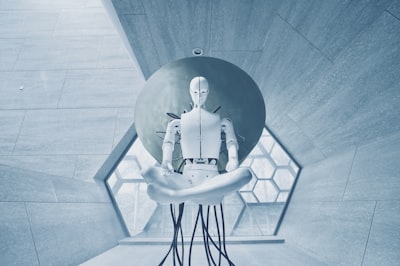
Universal robot morphology control is one of the greatest challenges in modern robotics. Until now, most systems are designed for robots with a fixed structure, limiting their ability to adapt when faced with completely new morphologies. Recent research has proposed transformer-based architectures with shared modular recurrence to address this problem, allowing a single agent to control robots of highly diverse shapes, kinematics, and topologies without retraining. This approach not only improves computational efficiency but also paves the way toward truly universal robotic systems.
The key idea behind this technology is that contextual features of each robot, although often only partially available, can be recovered through modular interactions. Instead of relying on a specific model for each morphology, the system learns shared representations that combine dynamically. This enables robust generalization to contexts never seen during training, an essential requirement for real-world applications where robots may have unpredictable designs.
From a technical perspective, the proposed architecture employs recurrent modules that communicate with each other through attention mechanisms. Each module handles a part of the robot (such as a limb or sensor) and shares information with the rest to coordinate complex movements. Results in environments like MuJoCo show substantial improvements in zero-shot generalization, even when robots have radically different dynamics, kinematics, and topologies. This demonstrates that it is possible to train a single controller that works for a wide variety of morphologies without additional human intervention.
For companies developing robotics and automation solutions, this line of research opens strategic opportunities. The ability to implement a universal controller drastically reduces development and maintenance costs, as there is no need to design and train separate models for each robot. Instead, investment can be made in a centralized system that adapts to any morphology, accelerating time-to-market and improving scalability.
At Q2BSTUDIO, we understand that innovation in robotics goes hand in hand with robust and flexible software development. That is why we offer custom software services that allow integrating these advanced architectures into production environments. Our team of experts can design modular control systems using artificial intelligence, AI agents, and shared recurrence techniques, tailored to each client's specific needs.
Cybersecurity also plays a crucial role in these systems. Because universal controllers operate over multiple robots, it is essential to protect communication between modules and prevent attacks that could compromise system integrity. Q2BSTUDIO provides cybersecurity solutions that ensure data confidentiality and availability, even in distributed environments.
Furthermore, cloud infrastructure is essential for training and deploying complex models. We use platforms like AWS and Azure to efficiently scale computational resources. Our cloud AWS/Azure services enable managing large volumes of sensor data, running parallel simulations, and deploying controllers in real time.
Another area where these architectures have a direct impact is data analytics. Robots generate massive amounts of performance information, which must be processed to optimize control. With Business Intelligence tools like Power BI, we can visualize key metrics, detect patterns, and make data-driven decisions. At Q2BSTUDIO, we implement BI/Power BI so that companies gain clear insight into the behavior of their robotic fleets.
Finally, process automation is the natural next step. A universal robot morphology controller enables designing autonomous systems that dynamically adjust to changes in the environment or the robot's own structure. We offer automation services that integrate these advances to improve operational efficiency.
In conclusion, shared modular recurrence applied to robot morphology control represents a significant step toward universality in robotics. Companies like Q2BSTUDIO are ideally positioned to help implement these technologies, combining expertise in custom software development, artificial intelligence, cybersecurity, cloud computing, and business intelligence. The future of robotics lies in systems that adapt to any shape, and we are already working to make it a reality.
If your company aims to be at the forefront of robotic automation, contact us. We offer personalized solutions that integrate the latest advances in universal control, backed by a multidisciplinary team with experience in cloud technologies, AI, and cybersecurity. Together we can build robots that not only move but also learn and adapt to any morphology.