
Business decision-making no longer depends only on intuition or static reports. The current pace of the market demands an almost instantaneous view of what is happening in every area of the organization, from production and finance to sales and customer service. Business software solutions have become the technological foundation that makes this vision possible. It is not just about collecting data, but about connecting data to processes, validating it and presenting it at the right moment. An informed decision can be the difference between seizing an opportunity and reacting too late. For this reason, the design of these solutions must be strategic, modular and able to evolve with the business. Organizations that understand this stop treating software as an expense and begin to treat it as an investment in responsiveness, competitiveness and sustainable growth.
For a business software solution to deliver real value, it must fit the way the company works. Generic products often force processes to change, creating resistance and efficiency losses. Custom software, on the other hand, makes it possible to build workflows that respect the particularities of each business, integrate existing systems and remove barriers between departments. A custom developed application can, for example, unify order management, inventory and invoicing, giving the commercial team a single source of truth. At the same time, this flexibility makes it easier to incorporate own business rules, specific approvals and quality controls that are hard to find in a standard package. At this point, Q2BSTUDIO brings its experience in multiplatform application development and systems integration, helping each client define the processes they really need to automate.
Artificial intelligence has expanded the reach of these solutions. Current systems not only show what happened; they can also analyze patterns and anticipate scenarios. A predictive model can identify customers with a higher risk of churn, forecast product demand or detect operational anomalies before they become serious incidents. The key is that these models work with integrated, high-quality data, and that results are explained in a clear way for the person who has to decide. AI applied to business management does not seek to replace human judgment, but to amplify it. When a tool can suggest the next best action, the manager can focus attention on cases that require nuance, negotiation or context. This approach turns advanced analytics into an everyday decision engine, rather than a report reviewed once a month.
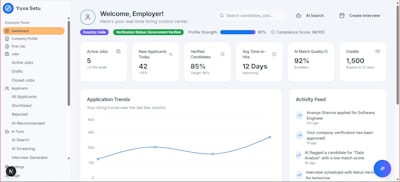
In the field of business intelligence, Power BI has become a very powerful platform for visualizing data and sharing information. Its integration with multiple data sources makes it possible to build dashboards that reflect the state of the organization in real time. The advantage is not only in the charts, but in the ability to explore data from different perspectives: by product, by region, by team, by channel. Good dashboard design reduces noise and prioritizes the metrics that really matter. Furthermore, combining Power BI with business software solutions allows information to flow back into operational processes, closing the loop between analysis and action, and ensuring that every department works with the same indicators. Data consistency is the foundation on which trust in the tool is built.
AI agents represent the next step in automation. Unlike traditional flows based on fixed rules, an agent can interpret contexts, query data sources, execute actions and learn from results. It can, for example, classify support emails, update CRM records, prepare responses or escalate incidents. When these agents are integrated into the business software ecosystem, they increase productivity without adding friction to the human team. However, deployment must be done with a clear design of permissions, supervision and continuous evaluation. It is not about automating for the sake of automating, but about freeing people from repetitive tasks so they can focus on higher-impact activities. Organizational maturity and data quality are prerequisites for this technology to deliver sustainable results.
Infrastructure also plays a fundamental role. Business software solutions need stable, scalable and secure execution environments. Cloud platforms such as AWS and Azure offer managed services that allow capacity to be adjusted to demand, ensure availability and accelerate continuous deployment. A well-defined architecture reduces access times, facilitates fault recovery and simplifies maintenance. But the cloud does not eliminate security risks by itself. Cybersecurity must be considered a cross-cutting layer, present in application design, access management, data protection and threat monitoring. Security audits, penetration testing and incident response policies are essential parts of a reliable software program. Advanced companies understand that digital trust is built from day one, not after the first attack.
Implementing these capabilities is not a purely technical process. It requires a prior analysis of processes, prioritization of needs and continuous support. Organizational change is often more complex than technical change. Therefore, a business software solution for decision-making must include training, documentation and continuous improvement mechanisms. Users need to understand not only how the tool works, but which decisions it can support and how to interpret the information. This requires a team with both strategic and technical profiles. Q2BSTUDIO, a software development and technology company, understands this reality: it combines software development, cloud architecture and data analytics to offer solutions that adapt to each organization's level of maturity. Its approach accompanies clients from definition to constant product evolution, ensuring that technology delivers measurable value.
In short, business software solutions for decision-making must be conceived as a living system, connected to business strategy and to the people who use them. The integration of custom applications, artificial intelligence, business intelligence, cloud and security makes it possible to build a solid foundation for deciding with confidence. There is no universal formula; each organization must find its own balance between flexibility, control, innovation and risk. The important thing is to move forward with a clear vision, rely on providers that understand the context and maintain a culture of continuous improvement. When technology and strategy move forward together, decisions stop being based on perceptions and begin to be based on facts. Q2BSTUDIO can be the partner that helps companies walk that path, with solutions that not only inform, but transform the ability to decide.

