When a company invests in software, the first question at the executive table is: when will we see the return? Executives want dates, numbers and a clear roadmap. The answer is not unique, because it depends on the technological starting point, data quality, project scope and the organization's ability to embrace change. Even so, it is possible to establish a realistic time frame to help plan and measure the financial results of a software solution.
Speaking of financial results does not only mean looking at net profit. Return on software investment can appear as reduced operating costs, higher productivity, improved customer retention, fewer errors, faster sales cycles, or entry into new markets. Each of these effects has a different rhythm. An automated process produces almost immediate savings, while entering a new market segment needs time to mature. Therefore, any serious analysis must separate short-term benefits from structural ones.
In broad terms, companies start to see operational effects in the first one to three months. These are often called early gains: automating manual tasks, centralizing data or removing duplicate entries creates measurable impact on day-to-day operations. Customer-facing and sales benefits usually appear within one or two quarters, because they improve buying experience, support response, or delivery time. Effects on cost structure become visible around six months, when historical data allows comparing before and after. Finally, strategic advantages related to expansion or competitive repositioning may take twelve to eighteen months to consolidate.
This schedule is not automatic. An implementation with poor foundations can extend all deadlines. Experience shows that failed projects usually fail because of poor process definition, dirty data or lack of team involvement, not because of technology. Therefore, before buying a tool, organizations should understand the concrete problem to solve and the financial metric that will change. Software that does not address a real need is an expense, not an investment.
The choice between generic tools and custom software is another key factor. Standard solutions promise fast implementation but often hide adaptation costs, additional licensing, and integration complexity. Custom software, on the other hand, can be built to fit exactly with company workflows. Although a custom application requires solid development, the return accelerates because the software solves the real problem from the start and does not force restructuring of teams.
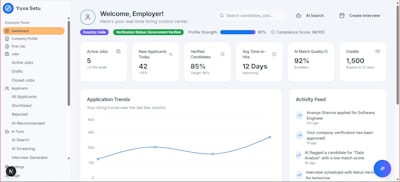
BI/Power BI is essential to measure that return. Without KPIs, any calendar is an illusion. A dashboard connecting operations, finance, sales and marketing makes it possible to see in real time which areas are improving and which still generate costs. This way, organizations can detect whether an automation is working, whether customer service time has been reduced, or whether the production cycle has improved. Visibility is the foundation to communicate results to board members and adjust investment before it is too late.
Artificial intelligence has significantly changed this equation. AI agents are not limited to executing predefined processes: they can analyze language, recognize patterns, make decisions and learn from experience. An agent that classifies incidents, pre-qualifies leads or writes reports reduces manual work to a fraction of the usual time. The financial effect of these agents is cumulative, because each month accuracy and speed improve. However, AI requires a clean data foundation and clear context; if the organization is not ready, benefits take longer to arrive.
Infrastructure also influences timing. Migrating to cloud AWS/Azure allows companies to adjust costs, improve security and accelerate deployment of new features. Organizations running on-premise infrastructure often have to buy hardware and predict peak capacity, which leads to wasted resources. In the cloud, companies scale progressively and pay for consumption. This flexibility has a direct impact on the operational budget and reduces overinvestment risk. Without that foundation, any custom application or AI program will struggle to show results.
Another factor often overlooked is cybersecurity. A security breach can cause financial losses, regulatory penalties, and reputation damage that takes years to repair. Including security measures from the design stage is not a brake but an accelerator, because it prevents a single incident from destroying accumulated value. Regular audits and penetration testing are a small investment compared with the cost of a data leak.
At Q2BSTUDIO, we work with a complete view of the value cycle. It is not only about delivering code, but also about making sure every application, integration and automation process is aligned with business goals. To make that possible, before starting we define the financial and operational variables that will determine whether the solution works. Then we review those variables at thirty days, six months and one year, always comparing against the initial scenario.
Experience with clients in different industries shows that organizations combining custom software, automation, data and cloud obtain faster and more sustainable results. Improvements are not linear; at first small wins build trust, then operational advances appear and finally strategic benefits consolidate. This continuous improvement cycle turns a technology investment into a lasting competitive advantage.
So, how long does it take for companies to see financial results with software? It depends on the approach, but a company with clear objectives can expect the first signs of savings and efficiency in the first quarter, visible results in sales and customer satisfaction within a couple of quarters, and structural cost changes at six months. Projects that transform business models need twelve to eighteen months to demonstrate their full value. The question is not only when results will come, but what kind of result is wanted and how it will be measured. With a well-designed strategy and a technology partner supporting the process, software stops being an expense and becomes a growth lever.