Sustainability is no longer a corporate slogan: it is a management variable that affects the bottom line, reputation and competitiveness. Companies need tools to reduce their environmental impact while improving operational efficiency. At that intersection, enterprise software solutions for sustainability and efficiency are born: a set of tools and methodologies that turn data into decisions and decisions into measurable results.
The starting point is understanding that a poorly designed process consumes more than necessary. Every overproduction, every unnecessary trip, every printed document and every duplicate transaction has an economic and environmental cost. Technology is not an end in itself, but the means to eliminate waste. When an organization's systems are interconnected, inefficiencies can be identified and corrected quickly.
Traditionally, information has been fragmented across ERPs, CRMs, spreadsheets and local files. That fragmentation makes it impossible to calculate the real footprint of a product or service. To integrate sustainability into daily operations, the first step is to get the house in order: define which data matter, where they are generated, who is responsible for their quality and how they will be analyzed.
Q2BSTUDIO, a software development and technology company, specializes in building this technological fabric. Its engineering team analyzes business processes and designs custom software solutions aligned with each client's strategy. The goal is not to deploy technology for its own sake, but to generate a positive impact: smoother operations, fewer errors, lower consumption and greater capacity to anticipate.
Developing custom software overcomes the limitations of generic programs. A company may need, for example, a tool that links production planning with the energy consumption of each machine, or a portal for suppliers to register their environmental certificates. These needs cannot be solved with a standard package; they are solved with software born from the client's reality.
Artificial intelligence adds a highly valuable layer of prediction and automation. With machine learning models, an organization can forecast demand more accurately, adjust inventory levels and avoid surpluses that end up as waste. AI agents can monitor complex processes, identify deviations and propose corrective actions before the problem escalates.
An AI agent connected to a plant's management system can review electricity consumption, compare it with production and detect whether a line is operating during expensive peak hours unnecessarily. It can also generate alerts so the responsible person can decide whether to reschedule shifts or adjust machine parameters. That immediate reaction capacity has a double effect: it reduces costs and avoids unnecessary emissions.
The infrastructure supporting these solutions must also be efficient. Migrating to the cloud on platforms such as AWS or Azure makes it possible to scale computing resources according to real demand and pay only for what is used. This avoids maintaining underused servers that consume electricity, take up space and require maintenance. Cloud providers also offer tools for measuring the carbon footprint of infrastructure and selecting regions powered by clean energy.
In a digitalized environment, security is a precondition. Enterprise software solutions for sustainability and efficiency handle sensitive data: invoices, contracts, supplier information, production metrics. A cybersecurity failure can interrupt operations and ruin years of trust. Therefore, any project must include protective measures from design onward, not as a later add-on.
Cybersecurity ranges from audits and penetration tests to network segmentation and employee training. In a connected system, the weakest link is often a reused password or a phishing email. Technology helps minimize those risks, but a security culture must extend throughout the organization.
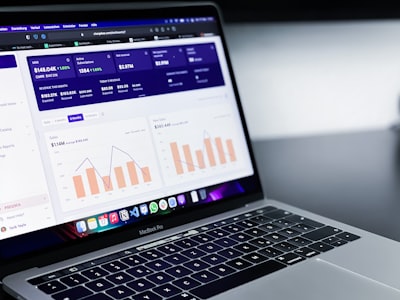
Visibility of indicators is another pillar. This is where business intelligence delivers value. With a well-built data model and tools such as Power BI, executives can see in real time the evolution of ESG targets: direct and indirect emissions, water consumption, percentage of recycled waste or supplier compliance levels. Sustainability is thus managed with the same rigor as any other business area.
An effective dashboard does not merely show numbers. It makes it possible to segment information by work center, product or region, compare periods and detect the causes of deviations. It also facilitates internal communication: when all teams see the same indicators, it is easier to align behaviors and priorities.
Process automation complements these capabilities. Administrative tasks such as invoice validation, order reconciliation or generation of regulatory reports can be executed automatically. This reduces paper use, unnecessary travel and hours devoted to repetitive activities. Automation does not eliminate human judgment, but frees up time for people to focus on higher-value decisions.
For all these pieces to fit together, a solid data architecture is required. Data must be consistent, clean and accessible to authorized systems. Integrations between ERP, CRM and operational databases avoid duplications and ensure consistency. Without this foundation, any sustainability report can become an exercise in cosmetics.
Measuring environmental impact also requires alignment with recognized frameworks. Global ESG reporting standards help structure information and compare results among organizations. However, collecting and validating the necessary data is impossible without a system that automates capture, calculates indicators and generates the documentation required by regulators.
Companies that used to focus exclusively on cost optimization are rediscovering that sustainability is a source of competitive advantage. A product with a lower carbon footprint can access new markets, attract more demanding customers and improve financing conditions. Efficiency and environmental responsibility are not conflicting goals; they reinforce each other.
Q2BSTUDIO offers a comprehensive view of this transformation. Its services combine custom application development, AWS/Azure cloud consulting, AI agents, cybersecurity and business intelligence in projects that connect environmental ambition with operational reality. The work starts with a diagnosis and ends with a system in use, sustainable and able to evolve.
In short, enterprise software solutions for sustainability and efficiency are the foundation for building a more resilient, transparent and profitable organization. Technology cannot solve all environmental challenges by itself, but it can provide the information, control and automation needed to act with rigor. Those who embrace this approach will be better prepared for a future where corporate responsibility is an unavoidable requirement.