Energy efficiency has become a strategic priority for modern companies. The current context combines volatile prices, stricter regulation and growing pressure from investors and customers to reduce carbon footprints. Although many organizations have upgraded their equipment with low-consumption technology, real impact appears when they are able to measure, analyze and optimize energy across their entire operation. At this point, business software solutions act as the brain that turns data into meaning and allows companies to move from good intentions to verifiable results.
The root of the problem is not usually a lack of data. Industrial, logistics and service companies deal every day with meters, sensors and monitoring systems. The difficulty is that this data lives in separate systems: the ERP records purchases and production, the building management system controls HVAC, and invoices are processed with financial tools. Without proper integration, no one can explain why consumption rises in a given period or how much a plant should have consumed for a particular production volume.
The first layer of an energy efficiency solution consists of integrating and normalizing those sources. Industrial protocols, smart meters and IoT sensors constantly send values for power, voltage, temperature or pressure. Custom business software can ingest that data, clean it and relate it to business variables such as units produced, hours of use or weather conditions. In this way, energy becomes another business KPI rather than a bill that arrives at the end of the month.
Cloud computing provides the elasticity needed to handle this volume of information. Platforms such as AWS or Azure offer ingestion, storage and analytics services that adapt to demand without the need to maintain large on-premises infrastructures. They also include machine learning tools, optimized databases and development environments that accelerate the creation of custom solutions. Companies can start small and expand functionality as their energy management model matures.
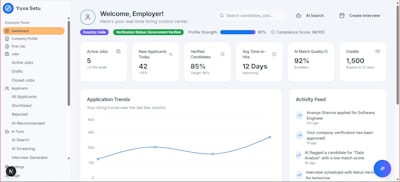
The next step is to transform data into actionable knowledge. BI/Power BI solutions allow the creation of dashboards with consumption, cost and energy intensity indicators. A plant manager can see on one screen the performance of each line, compare shifts or detect deviations from standard consumption. The key is in the design: it is not about showing many charts, but about helping each user quickly find the answer to their questions. Good visualization reduces analysis time and supports day-to-day decision-making.
At the same time, the expansion of connected systems makes it necessary to strengthen cybersecurity. An energy control center, a sensor network or a cloud gateway can become attack targets. In a converged environment, IT and OT are no longer separate, and a vulnerability in an HVAC panel can compromise critical systems. Therefore, business software solutions must include strong authentication, encryption in transit and at rest, access control and periodic audits. Security is not an optional module; it is part of efficiency itself, because an incident can halt operations and increase costs.
Once data is reliable and protected, automation opportunities appear. AI agents can analyze historical series, identify relationships between variables and suggest actions in real time. For example, a system can detect that a production line is running in a cold state during an unscheduled stop and recommend switching it off. Another case: demand prediction models make it possible to bring the start-up of a boiler forward or reprogram the launch of heavy machinery to avoid peaks at the most expensive times.
The advantage of using AI agents over static rules is that they learn from operations. A fixed rule such as 'turn off the system at 10 p.m.' can be valid for one year, but not when night-time production increases. An AI agent updates its recommendations as consumption patterns, weather or electricity tariffs change. It can also prioritize actions according to their economic impact and remind teams when intervention is necessary.
It is important to understand that software does not replace people; it removes the most repetitive and error-prone tasks. Workflow automation connects energy information with operational processes. If a machine consumes above its threshold, the system can create a maintenance order, notify the person responsible and track its closure. If the electricity tariff changes, it can update load priorities in the production schedule. This orchestration capability is what differentiates a simple monitoring tool from a business management solution.
There is no one-size-fits-all solution. Each sector has its own variables: chemical industries are dominated by thermal processes, supermarkets by refrigeration, and data centers by HVAC and servers. Therefore, applying the same standard software to every case rarely works. Custom software makes it possible to capture business logic, adapt approval flows and connect existing tools without changing the whole system at once. This flexibility is especially useful in organizations with heterogeneous plants or evolving processes.
At Q2BSTUDIO we have internalized this reality. We design business software solutions that combine custom software, AWS or Azure integration, Power BI dashboards and AI agents. Unlike a purely technological project, our work begins by understanding the process, strategy and value drivers of the client. From there, we define a pragmatic, phased architecture capable of delivering visible results in weeks and evolving over time.
A typical case could be a company with several plants and heterogeneous consumption criteria. After integrating meters into the cloud, Q2BSTUDIO builds a single repository of energy data. On that foundation, executive and operational dashboards are implemented, automatic alarms are defined and a predictive demand model is trained. The purchasing area gets a more accurate forecast for contracting electricity, while maintenance receives alerts before a failure affects performance.
This evolution has a deep cultural impact. When energy data is available and understandable, middle managers stop making decisions based on impressions and start using the same language. Operations teams propose improvements, plant managers prioritize them, and management validates their impact. Energy efficiency stops being an isolated department and becomes a cross-cutting practice aligned with production, procurement, maintenance and sustainability.
Ultimately, business software solutions are a direct answer to the question of whether energy efficiency can be improved with technology. Yes, provided it is done with a systematic approach: integrate data, protect infrastructure, visualize information and automate decisions. Energy is not managed with just a sensor or a solar panel; it is managed with intelligent processes. And in those processes, software is the piece that connects strategy, operation and results.