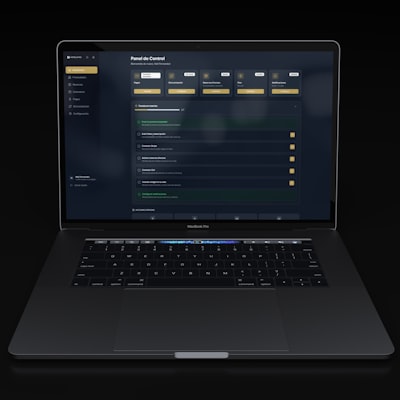
Organizations with distributed teams face a silent problem: information lives in emails, personal chats, shared documents and isolated tools. The lack of a centralized space forces people to interrupt colleagues to find data, approvals or final versions. An intranet for distributed teams with chat resolves that fragmentation by bringing communication, knowledge and processes together in one place accessible from anywhere.
It is not just about having a corporate chat. The chat is the gateway, but the real value lies in making every conversation linkable to documents, tasks and approval flows. When an employee asks something in a channel, they should be able to get the answer from the knowledge base, not wait for a colleague to type it. That is why companies that understand this difference use the intranet as a headquarters, not as a simple notice board.
First signal: information is scattered. If employees store files on local drives, share links through instant messaging and keep the truth in personal spreadsheets, productivity drops. People waste time looking for correct versions. An objective sign is that frequent questions are repeated in different channels and nobody knows which is the official answer. With a well-designed intranet, knowledge is captured once and reused forever, and chat makes it possible to ask for help without losing context.
Second signal: onboarding is slow. Every hire involves weeks of informal mentoring, welcome emails and meetings to explain how the company works. A PDF manual is not enough, because it does not answer questions in the moment. An intranet for distributed teams with chat makes it possible to create welcome paths, interactive guides, channels by area and AI agents that answer common questions. As a result, a new person starts producing sooner and with fewer mistakes.
Third signal: internal processes depend on email. Approvals, requests, orders and reviews travel through inboxes without traceability. When a task requires human intervention and there is no clear record, delays and errors increase. Automation inside an intranet with chat reduces cycle times and makes every status visible. Teams know what has been approved, who did it and when the next step is coming.
Fourth signal: security and compliance have become difficult to manage. Without centralized access, it is impossible to control who sees each document or which actions are recorded. With employees in remote locations and personal devices, the risk of exposure grows. An intranet built with cybersecurity criteria makes it possible to assign roles, define permissions, audit activities and protect communications. This is especially relevant when the company handles customer data, financial information or intellectual property.
Fifth signal: leadership lacks business visibility. Data lives in different systems and cannot be correlated. A portal with dashboards and BI/Power BI allows you to see usage indicators, response times, satisfaction levels and coordination costs. When the intranet is integrated with operational systems, business information stops being fragmented. Executives can make decisions based on data, not impressions.
Sixth signal: AI is tested in silos but does not transform operations. Many companies have experimented with AI tools to generate texts, summarize emails or create images, but they have not connected them to the real knowledge base. The next step is to integrate AI into the intranet, with agents that consult internal documentation, summarize threads, help write responses and automate tasks. That requires solid architecture, Azure or AWS cloud services, data governance and a practical approach. It is not about having AI for the sake of it, but about applying it to concrete problems with measurable return.
An intranet for distributed teams with chat in 2026 needs much more than a news wall. It needs semantic search, channel chat, integration with existing tools, approval flows, document management and dashboards. The most efficient way to achieve this is custom software development, because every company has different ways of working. Q2BSTUDIO, a software development and technology company, designs intranets that adapt to real operations and avoid the rigidity of generic products.
The technical side also matters. An intranet can be deployed on AWS or Azure cloud to guarantee availability, scalability and advanced security. The cloud allows teams to access it from anywhere without exposing the corporate network. In addition, integration with Power BI turns intranet usage data into executive information: which teams collaborate more, which documents are consulted, which processes get stuck. That visibility is the basis for continuous improvement.
When the company already has experience with AI, the next level is AI agents inside the intranet. An agent can classify requests, generate summaries, extract data from documents or answer compliance questions. Q2BSTUDIO works on artificial intelligence projects with technologies such as Azure AI, RAG and private models, so sensitive information does not leave the company perimeter. This is not a laboratory demonstration: it is an operational tool that reduces workload and accelerates decisions.
There is a common pattern in companies that overcome these symptoms: they stop seeing the intranet as an IT department project and understand it as a business platform. Integration with systems such as ERP or CRM multiplies the value of chat and AI, because employees can consult real data without leaving the tool. For example, an AI agent can answer in chat about the status of an order or the expense policy if it is connected to the right data sources. This capability does not appear magically; it requires an integration strategy, an updated knowledge base and a provider with experience in software, automation and cloud.
How do you know if the time has come to act? There are concrete signs: the number of internal tools has become unmanageable, teams ask for a common space, management does not have reliable metrics, employees report that information is hard to find, and the cost of coordination grows faster than headcount. A well-planned intranet with chat is an investment with measurable return in saved hours and avoided errors. Q2BSTUDIO recommends starting with a process diagnosis and an MVP in four to eight weeks. That approach makes it possible to validate the solution in the real environment without waiting for a long project.
Furthermore, implementation must respect security from day one. Roles, permissions, activity logs and encryption are essential when access is remote. Q2BSTUDIO includes access controls, auditing and GDPR alignment in its intranets. If the intranet connects with internal systems, communication is protected with VPN tunnels and private endpoints in Azure. In this way, remote teams get the same experience as if they were in the office, but with a controlled level of security.
In short, the signs that you need an intranet for distributed teams with chat are more evident than they seem: scattered information, slow processes, lack of visibility, security risk and AI initiatives disconnected from real work. Ignoring these signs does not eliminate them; it only increases the cost of coordinating teams that already work far from each other. Those who act with a suitable technology partner gain speed, control and scalability. Q2BSTUDIO helps companies take that step with a practical, measurable and business-aligned vision.