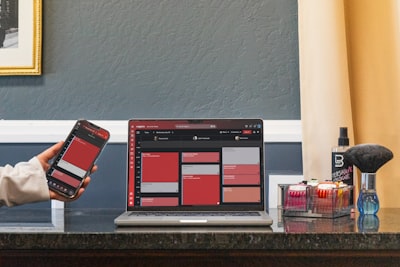
The intranet for distributed teams with chat has become a central piece of digital transformation. When an organization operates across several cities or countries, collaboration is no longer spontaneous and depends on well-designed systems. A modern intranet unifies communication, knowledge, tasks, and metrics in one environment, so every team shares a unique view of reality and can make decisions faster. Without this foundation, companies suffer information loss, duplicated efforts, and meetings that do not lead to agreements.
Generic messaging channels do not solve fragmentation. The problem is not lack of tools, but lack of coherence among them. Teams use one system for chat, another for files, and another for project tracking; in the end, information is scattered. This is where the value of custom software appears: it makes it possible to build a workspace that adapts to the company's real processes, not the other way around. With a personalized intranet, chat is embedded in the workflow and each conversation has clear context.
An intranet with integrated chat has a direct impact on collaboration. People can consult updated information, resolve doubts, and receive answers without leaving the environment. Moreover, conversations become knowledge: a decision taken in a channel is recorded, can be tagged, searched, and reused later. This creates an organizational memory that no email can offer. Collaboration improves because information is transparent and uniform and because agreements are documented naturally, without asking someone to write minutes.
For chat inside the intranet to deliver value, it must be designed with business criteria. It is not enough to add a conversation window. Permissions, channels by project or department, relevant notifications, and escalation processes must be defined. A good platform allows creating threads where responsible people are mentioned, linking messages to concrete tasks, and automatically alerting the right person. In this way, communication stops being noise and becomes an execution engine.
Artificial intelligence multiplies these capabilities. An internal assistant can summarize long threads, search documents, draft responses, and recommend the right person for each query. AI agents can handle repetitive tasks such as classifying requests, updating databases, or detecting project risks. For this to work, AI must be trained on the company's own knowledge. Q2BSTUDIO integrates language models with internal sources using retrieval-augmented architectures, generating relevant and auditable responses.
Technical deployment requires a solid architecture. Many organizations choose cloud services in Azure and AWS for scalability, availability, and security capabilities. Q2BSTUDIO designs cloud-native solutions with separate development and production environments, automated backups, and protected connections between offices. The cloud allows an employee in Mexico and another in Germany to work with the same experience, without hardware investments and with the flexibility to grow as the company grows.
Distributed work also multiplies cybersecurity risks. Every remote access is a potential entry point, so the intranet must include secure authentication, role-based access control, and activity logging. Q2BSTUDIO applies cybersecurity measures from the design stage: secure connection protocols, data encryption, defense against unauthorized access, and periodic reviews to reduce vulnerabilities. Digital trust is a requirement for teams to share sensitive information without friction.
The information that flows through the intranet is a valuable source for decision-making. With BI/Power BI tools, data about usage, response times, workload, and internal satisfaction can be visualized in dashboards. Leaders know which teams are overloaded, which processes are blocked, and which areas need more support. Q2BSTUDIO builds data layers that connect the intranet with management systems, bringing indicators from the technical area to the executive team.
An intranet does not necessarily replace existing systems. It is usually integrated with CRM, ERP, email tools, and HR platforms. Through APIs and connectors, the intranet becomes the entry point that connects all these worlds. Thus, an employee can view an order, check a customer's status, or update a document without opening three different programs. This integration is one of the greatest advantages of custom software: technology adapts to strategy, not the other way around.
The impact on productivity is measurable when there is a methodology behind it. Q2BSTUDIO starts each project with a diagnosis of workflows, friction points, and business objectives. Then a first version is deployed in a few weeks, the result is measured, and iterations follow. This approach avoids large projects that take a year to deliver value and allows the organization to verify improvements in time, cost, and quality from the very beginning.
Employee adoption is as important as technology. A perfect intranet is useless if people do not use it. That is why the experience must be simple, with intuitive searches, useful alerts, and a short learning curve. Integrated chat accelerates adoption because it respects the habit of talking; employees enter the tool to communicate and end up also using the processes, forms, and knowledge available.
It is also important to think about evolution. An intranet for distributed teams must adapt to structural changes, new markets, and new demands. The flexibility of custom development is a competitive advantage. Q2BSTUDIO prepares systems so that the client can configure certain parameters, create channels, and manage the AI model without depending on engineering for every change. This reduces bottlenecks and gives autonomy to business areas.
In practice, a service company with employees in different countries can use the intranet to coordinate projects, publish internal offers, consult the training catalog, and talk to the support team. Integrated chat resolves incidents in real time, while AI groups similar requests and suggests responses. The result is a more agile organization, with fewer internal emails and shorter meetings because information is available where people work.
Q2BSTUDIO brings experience in software development, artificial intelligence, cloud, cybersecurity, and business intelligence. Its proposal combines strategic vision with technical execution. Each intranet is built as a living product: first it solves critical problems, then it expands with new capabilities, using data to prioritize. This is how continuous improvement of collaboration and business performance is achieved, regardless of company size.
In short, the intranet for distributed teams with chat is much more than a corporate social network. It is the nervous system of modern organizations, where communication, knowledge, processes, and indicators intersect. Technology already allows building secure, scalable, and intelligent solutions that respect the way each company works. Whoever invests in a well-designed platform, with solid AI, cloud, and data foundations, turns physical distance into an operational advantage.