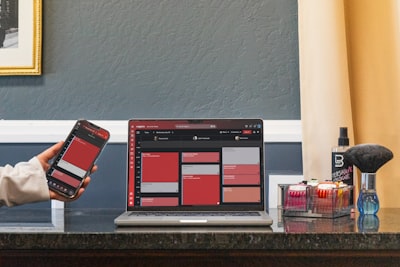
An intranet for distributed teams with chat is much more than a digital notice board. In 2026, most organizations compete with professionals working across different cities, time zones and devices. Critical information is scattered across emails, meetings, documents and third-party applications. A well-built intranet turns that chaos into a corporate operating system: a single place where people check news, talk, collaborate and execute processes. Achieving that requires more than installing a standard product; it requires an engineering solution that respects how each company actually works.
The most common mistake is improvising an infrastructure with disconnected tools. One team uses Slack, another Microsoft Teams, a third shares files by email and nobody knows which version of a document is current. Employees waste time searching for contacts, duplicating tasks or decoding decisions made in undocumented meetings. An intranet for distributed teams with chat solves this by integrating messaging, a repository, search and workflows into one experience. Teams stop asking where every resource is and start executing with more autonomy.
Achieving this requires a solid technical vision: well-designed APIs, a shared data model, centralized authentication and an interface that reduces friction. That is why custom software development is so relevant. Generic platforms impose a way of organizing things that rarely matches real operations. A tailored application lets you model departments, roles, approvals and notifications exactly. Q2BSTUDIO has helped companies across industries build intranets that adapt to their processes, not the other way around.
Artificial intelligence multiplies the value of an intranet. An internal assistant can answer questions based on corporate documents, summarize long chat threads or automatically classify requests. AI agents can handle recurring tasks: logging incidents, updating CRM records, sending reminders or generating reports. But these advances require careful design. Without a well-curated corpus and proper access control, AI can invent answers or leak confidential information. Q2BSTUDIO integrates artificial intelligence solutions with retrieval augmented generation (RAG), private models and human checkpoints where decisions require it.
Technical deployment needs a robust infrastructure. Using AWS/Azure cloud provides elasticity, high availability and disaster recovery. An intranet can run in containers, use managed databases and scale on demand. Real-time chat requires persistent communication channels that work even during usage spikes. The cloud also makes it possible to add complementary services: voice recognition, automatic translation or sentiment analysis. Q2BSTUDIO designs efficient cloud architectures with continuous monitoring and cost optimization from day one.
Cybersecurity cannot be an afterthought. An internal chat contains negotiations, customer data, strategic decisions and human resources information. Protecting it requires encryption in transit and at rest, multi-factor authentication, session control and role-based access policies. You also need to record who accesses each document and when. European companies must comply with GDPR; regulated industries need additional traceability. Q2BSTUDIO embeds cybersecurity in every lifecycle phase: threat analysis, penetration testing, server hardening and continuous auditing.
No improvement is real unless measured. Business Intelligence and Power BI make it possible to visualize usage patterns, bottlenecks, response times and adoption levels. A real-time dashboard helps team leaders detect which areas use the intranet best and which need training or incentives. With metrics linked to business indicators, management can justify the investment with hard data. An intranet that is not evaluated becomes an abandoned repository; an intranet that is analyzed becomes a lever for continuous improvement.
Implementation must be progressive. Q2BSTUDIO begins with a discovery phase in which workflows are mapped, pain points identified and priorities defined. Then a minimum viable product is built in a few weeks, containing the highest-impact features. Each iteration delivers tangible value and allows course correction. Users participate from the start, which reduces resistance to change. This approach avoids year-long projects that arrive late and with obsolete requirements.
An adoption plan is also essential. The intranet must offer an experience so simple that employees prefer it on their own. Integrated chat helps: relevant conversations appear next to documents and data instead of being lost in separate applications. Notifications must be intelligent, not invasive. Search has to understand synonyms and contexts. When these elements come together, productivity improves naturally: fewer interruptions, fewer emails, fewer status meetings.
The result is a more connected organization. Onboarding accelerates because all knowledge is structured. Sales teams quickly find presentations and case studies. Operations executes tasks with fewer errors. Leadership has visibility into projects and dependencies. Work does not stop when someone changes city or schedule: the intranet is the permanent meeting point that makes asynchronous collaboration possible.
Q2BSTUDIO brings an uncommon combination: custom software, artificial intelligence, automation, cloud and security expertise. It does not sell a generic license; it develops the right solution alongside the client. Companies that need an intranet for distributed teams with chat find in this approach a way to reduce dependence on improvised tools, improve decision-making and protect corporate knowledge.
If you are thinking about modernizing internal communication, the first step is understanding what you need and which technology can help. Q2BSTUDIO offers an initial discovery session to explore goals, constraints and possible solutions. From there, a roadmap is defined with short deliveries and measurable results. Technology changes fast, but the need to connect people and knowledge remains the same.