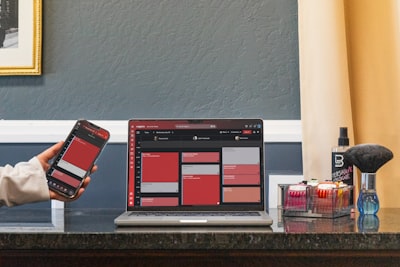
An intranet with chat for distributed teams is much more than a space for uploading documents. In a remote and hybrid work environment, the ability to connect people, systems and data on a single platform has become a competitive advantage. Companies need instant communication channels, knowledge repositories and processes designed for teams that do not share an office.
A traditional intranet usually becomes obsolete for three reasons: information is scattered, communication depends on external tools and workflows are not integrated. By adding native chat and a modular architecture, the intranet stops being a static showcase and becomes a corporate operating system. This approach allows every team to work with up-to-date data and supports decision-making based on reliable information.
The first benefit is communication. An intranet with integrated chat facilitates quick conversations, reduces internal email and creates an auditable trail of decisions. Distributed teams can organize around thematic channels, projects or geographic areas, and receive relevant notifications without losing context. This avoids fragmenting information across multiple messaging apps and improves organizational transparency.
The second benefit is knowledge management. When a person joins the company, they need to find answers without relying on a colleague to explain everything verbally. A well-designed intranet with chat centralizes manuals, policies, technical guides and frequently asked questions, and allows the system itself to locate relevant information. Over time, the organization accumulates a living knowledge base that is updated with every conversation and every shared document.
The third benefit is process automation. By integrating the intranet with internal business systems, it is possible to create tasks, approve requests, log incidents and synchronize data across departments. Automatic notifications and workflows reduce manual errors and accelerate cycles such as purchasing, hiring or technical support. This capability is multiplied when the platform is built with custom software tailored to the actual needs of the business.
From a technical perspective, a modern intranet relies on APIs and cloud services. Instead of replacing all systems, the intranet connects to existing tools through native and custom integrations. Q2BSTUDIO, a software development and technology company, works with modular architectures that combine a secure backend, a usable frontend and connectors for platforms such as SharePoint, Microsoft Teams, Active Directory, SAP or Salesforce. The goal is to create a single ecosystem without forcing the client to replace previous investments.
Artificial intelligence adds a valuable layer. Traditional search engines return lists of links; an AI-powered intranet understands the intention behind a question and answers with the exact fragment, citing the source. This is especially useful for distributed teams because it reduces time spent searching for information and increases confidence in data. AI can also summarize long documents, draft internal announcements and suggest subject-matter experts within the organization.
Another key trend is AI agents. These assistants are not limited to answering questions: they execute tasks on behalf of the user, such as logging an expense, updating a CRM, sending reminders or generating reports. For an agent to act safely, the intranet must incorporate control mechanisms, permissions and human review in critical processes. This combines the productivity of automation with the supervision needed to avoid mistakes.
Infrastructure also matters. An intranet for distributed teams must be available 24/7 and scale according to user volume. That is why many organizations choose to deploy the platform on AWS/Azure cloud, with redundancy and automatic backups. Q2BSTUDIO uses these environments to ensure performance, elasticity and continuity, adapting each deployment to the security and data residency requirements of the company.
Cybersecurity is an essential pillar. Access to the intranet must be protected with multi-factor authentication, role-based access control and encrypted communications. In addition, the system must record who accesses each document, who modifies each resource and who executes sensitive processes. For regulated environments, secure connections can be established through VPN tunnels or private cloud endpoints, so information never travels over public networks.
Data analytics and visualization are another outstanding benefit. An intranet that records team activity generates valuable indicators: response times, channel usage, documents viewed or process status. Integrating the intranet with BI/Power BI tools gives management real-time dashboards and allows evidence-based decisions instead of perception-based ones.
Integration with the digital workplace is also decisive. Many employees live in Microsoft Teams, Google Workspace or Slack. Instead of creating a parallel tool, the intranet should appear inside the usual workflow: as a tab, a bot, or an embedded panel. This makes adoption much more natural and prevents employees from switching tools for every query.
Q2BSTUDIO's approach combines these capabilities in a measurable project. The process starts with an analysis of current workflows and the definition of key performance indicators. A minimum viable product is then delivered within weeks, so users begin to receive value quickly. Later, integrations, AI modules, dashboards and improvements based on real usage are added. The client also receives a manageable platform with portals to configure AI and manage permissions without depending on a vendor for every change.
Development ownership is a differentiating factor. Working with a company that builds custom software makes it possible to adapt the intranet to real processes, avoids accepting a predefined logic and ensures that the code and data belong to the client. This collaboration model is especially valuable for companies that want to evolve their platform step by step and keep technological control.
For leadership teams, the chat-enabled intranet is a way to align objectives, transfer knowledge and accelerate execution. For middle managers, it is an instrument for operational control and team monitoring. For employees, it is a place to work with less friction. When technology is designed from the perspective of each profile, the return appears in the form of productivity, service quality and adaptability to change.
In short, an intranet with chat for distributed teams is not an optional expense but a structural investment. Organizations that combine communication, data, automation and artificial intelligence make their remote teams work as if they were in the same room. Choosing a technology partner with experience in custom software, AWS/Azure cloud, cybersecurity and AI is the key to turning that vision into a sustainable reality.