The intranet that replaces SharePoint is no longer a minor technology project; it is a transformation lever for companies that need to reduce operational friction and make decisions based on reliable data. In Valencia, a medium-sized company proved that replacing SharePoint with a custom-built platform, using custom software, artificial intelligence and process automation, could deliver measurable results in less than three months. This success story, coordinated by Q2BSTUDIO, demonstrates the value of applying business and technical criteria at the same time.
The starting point was a fragmented operation: disconnected tools, spreadsheets that had to be updated manually, slow approval processes and limited visibility for management. The operations team lost hours on repetitive tasks, and the risk of error increased every time someone had to copy information between systems. The company, based in Valencia and with a workforce of 12 to 25 people in back office, wanted a modern intranet that would unify access to information, automate internal workflows and give managers a clear view of what was actually happening.
The project was designed with concrete objectives from the start. It was not simply a matter of 'changing SharePoint' for another tool; it was about designing an intranet that would support business growth. The decision-makers defined four priorities: centralize critical documentation and knowledge, automate recurring administrative tasks, integrate the existing ERP and CRM, and provide management with real-time activity indicators through dashboards. Q2BSTUDIO translated these priorities into a clear technical architecture, with phases and measurable success criteria.
Q2BSTUDIO designed a solution based on three layers: a custom web application, a process automation engine and a set of artificial intelligence services. The application centralized the user experience, with role-based permissions and navigation adapted to each department. The automation engine connected existing systems through APIs, so that information moved securely between the ERP, CRM and the new intranet. On top of this, AI assistants were added to find documents, summarize files and propose responses in situations where previously an expert had to be consulted.
The integration layer was key. Instead of forcing the company to abandon its previous investments, the intranet connected with the existing ecosystem: ERP, CRM, Microsoft Teams and internal tools. To do this, Q2BSTUDIO used cloud services on AWS and Azure, with containers, managed databases and secure endpoints. This architecture allowed sensitive data to remain protected in private environments and communications between the cloud and internal systems to travel through encrypted tunnels, avoiding exposure of critical information on the Internet.
Cybersecurity was a central concern from the beginning. Compliance with European data protection regulations required control over who could access each document and what operations were performed. The platform included Active Directory-based authentication, role-based access control and audit logs to trace any change. In addition, human supervision checkpoints were established in the most sensitive AI processes: if the system proposes an action with financial or legal impact, a professional reviews and approves it before it is executed.
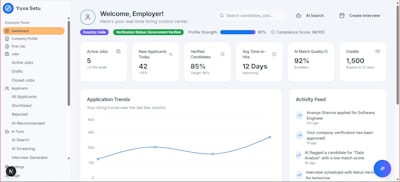
Another decisive component was the dashboard. The intranet is not only useful for finding files and coordinating tasks; it must also help leadership understand what is happening in the company. Thanks to Power BI integration and the Business Intelligence layer, management was able to visualize in real time the volume of pending work, average response times and bottlenecks. This information, previously collected manually at the end of the month, became available instantly in a unified panel.
AI agents made the difference. Instead of limiting itself to a classic search engine, the new intranet incorporated a virtual assistant that understands user intent and offers contextual answers. When an employee needs to know the status of an order, the internal procedure to approve an invoice or the person responsible for a customer, the assistant locates the information in connected systems and gives a clear answer. When the answer is not conclusive enough, the system routes the query to a human expert and records the learning for future interactions.
Why a custom application? Because generic solutions often impose a way of working that does not always fit the reality of each company. A custom development makes it possible to adapt the intranet to real processes, internal culture and the specific needs of teams. It also avoids paying for features that nobody uses and allows the platform to evolve over time. Q2BSTUDIO, as a company specialized in custom applications, designed a simple interface, focused on productivity and capable of scaling.
The results exceeded initial expectations. In the selected workflows, manual tasks fell by more than 40%, freeing up time for the team to focus on higher-value activities. The full cycle of internal processes accelerated by around 30% and the operational cost of affected processes fell by more than 25% in the first six months. Operational accuracy reached 90%, and management gained much better visibility through dashboards. The investment was recovered before the first year was over.
The rollout was gradual to minimize disruption. During the first two weeks, baseline indicators were defined and critical processes mapped. In the following weeks, a first viable product with the most urgent workflows was built. Then a controlled phase began with real users, and finally the platform was extended to all departments. This roughly three-month schedule allowed issues to be corrected in time and built trust among employees.
The experience leaves several lessons. The first is that defining KPIs in advance is the best investment: if you do not know what you want to improve, it is impossible to demonstrate return. The second is that integration with existing systems matters more than choosing the most advanced AI model. The third is that involving end users during deployment reduces resistance to change. The fourth is that technology must remain in the hands of the business: the intranet allows administrators to configure workflows and adjust parameters without depending on an engineering team for each change.
Companies in Valencia evaluating how to replace SharePoint should ask potential partners not only about the demo, but also about integration architecture, security model and how success will be measured. The artificial intelligence inside the intranet is useful when supported by reliable data, organized processes and human oversight. Solutions that promise results without a clear implementation plan, data governance and business metrics usually remain isolated experiments.
Q2BSTUDIO proves that it is possible to go beyond simply replacing SharePoint. Combining custom software, AI-driven automation, integrated cybersecurity and dashboards, the intranet becomes an operating system for the organization. For a company in Valencia with little room to waste time, having a partner that understands both technology and business is the difference between a digital platform and a tangible improvement in productivity.