
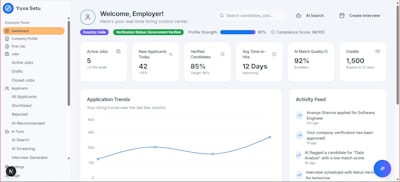
In 2026, companies in Seville are rethinking their internal work platforms. The corporate intranet, which for years was a simple document repository, has become a strategic element. The question is no longer whether SharePoint should remain the technological foundation, but how to evolve toward a smarter, more integrated and secure environment. In this context, custom software development appears as the most solid path to achieving an intranet that truly fits business processes.
This article provides a comparative analysis for executives and IT managers who are evaluating how to replace SharePoint in Seville. Throughout these lines, the technical and business criteria that should guide the decision are examined, as well as the capabilities that Q2BSTUDIO brings as a technology development partner.
The role of the intranet in the modern enterprise
The intranet is no longer a place where employees consult corporate documents. In a modern company, the intranet is the operations center that provides access to business applications, displays indicators, enables real-time collaboration and, above all, automates repetitive tasks. This paradigm shift is the main reason why many organizations in Seville are considering replacing SharePoint with a purpose-built platform.
SharePoint has strengths in document management, but it suffers from rigidity when adapting to specific processes. Moreover, its licensing model and administrative complexity place a growing burden on IT departments. In contrast, custom applications offer total flexibility: every feature is designed to solve a concrete problem, without unnecessary functions that slow down the experience and increase costs.
Fundamental criteria for choosing a new intranet in 2026
The decision to replace SharePoint cannot be taken lightly. The solution must be evaluated from different angles, considering both the impact on users and the technical sustainability of the project.
First, employee experience is a decisive factor. A recent study points out that 76% of small and medium-sized companies use artificial intelligence tools, but only 14% have integrated them into core workflows. This means that most intranets still do not take advantage of AI's potential to reduce workload and accelerate information. The new intranet should integrate AI naturally, for example through virtual assistants that answer questions based on internal documents.
Second, integration capability is crucial. The intranet does not operate alone: it must communicate with the CRM, the ERP, billing tools and Business Intelligence systems. A custom development allows these connections to be built with well-documented APIs, rather than relying on limited connectors. Q2BSTUDIO, for example, has experience integrating platforms such as SAP, Odoo, Salesforce, Microsoft Dynamics and Azure AI Foundry, creating a coherent digital ecosystem.
Third, security and governance are non-negotiable. Access to sensitive information must be controlled through roles, permissions and audits. Furthermore, cybersecurity must cover both the cloud infrastructure and connections with on-premises systems. This is where Q2BSTUDIO's expertise in AWS/Azure cloud and cybersecurity comes into play, with deployments that include VPNs, encryption and GDPR compliance.
Finally, code ownership and customer autonomy mark the difference between a digitalization project and a new technological dependency. Hiring a closed platform may seem convenient at first, but it limits the ability to evolve. With custom software, the company becomes the owner of the solution and can modify it with its own team or with the provider of its choice.
What does Q2BSTUDIO do as a technology partner?
Q2BSTUDIO is a Seville-based company specialized in custom web application development, artificial intelligence and process automation. Its proposal to replace SharePoint moves away from selling licenses and focuses on building corporate intranets that operate as a key piece of the business. Its team combines software architects, AI engineers, integration consultants and cybersecurity experts.
Q2BSTUDIO's methodology begins with a discovery of the client's context. During this phase, information flows, workloads, legacy systems and business objectives are analyzed. From here, a project plan is defined with clear milestones, realistic deadlines and an MVP delivered within four to eight weeks.
The intranet is built following clean and scalable architecture principles. The use of AWS or Azure cloud allows the infrastructure to be sized according to demand, and DevOps practices ensure fast and reversible deployments. Throughout the process, the client participates actively, so the final result truly reflects their expectations.
One of Q2BSTUDIO's differentiating capabilities is the incorporation of AI agents within the intranet. These agents are intelligent assistants trained with the company's own data that can, for example, classify documents, draft reports, recommend responses and extract relevant data from free text. With the appropriate guardrails, AI agents become an additional employee, available 24 hours a day.
Comparison: approaches to replacing SharePoint
In the Seville market, there are different ways to face this challenge. Some consultancies propose implementing standard collaboration software packages, which transfer the customization problem to an uncertain future. Others offer consulting services limited to strategy, without building anything. Q2BSTUDIO combines both: it analyzes, designs and builds.
The decision between a commercial platform and a custom solution depends on the organization's digital maturity. For a company that needs something very specific, such as file management with complex approval workflows, custom development is the most reasonable option. For a company looking to standardize basic processes, a standard solution may be enough. The problem is that SharePoint is already that standard solution, and its shortcomings are precisely the starting point.
Measurable impact on operations
When the intranet is designed around the company's real processes, results become visible quickly. Workers spend less time searching for information because an intelligent search engine provides the exact answer. Team leaders receive automatic alerts when a process stalls or needs intervention. Executives consult dashboards with real-time indicators, without relying on manual reports.
Another relevant benefit is the reduction of operational costs. By automating approval flows, the company eliminates delays and management errors. Automatic notifications replace email as a monitoring method. And integration with BI tools, such as Power BI, makes it possible to detect trends and address problems before they become crises.
Q2BSTUDIO documents these benefits in an ROI report aligned with the indicators defined during the discovery phase. This means that the company does not sign a blind contract, but knows from the start which metrics will be improved and how progress will be demonstrated.
Technology applied to the intranet: cloud, AI and cybersecurity
Cloud infrastructure is the foundation of any modern intranet. AWS and Azure offer managed database, storage and authentication services, which simplifies development and guarantees high availability. Q2BSTUDIO deploys the intranet in the Europe region to comply with GDPR requirements and adapts resources to workload, avoiding unnecessary costs during low-activity hours.
Artificial intelligence is materialized through generative models and RAG architectures. The intranet can offer a corporate chat that accurately answers questions such as 'what is the current expense policy?' or 'which contracts expire this quarter?'. AI agents connect to authorized data sources and operate under strict permission limits. This type of functionality is what differentiates a traditional intranet from an intelligent platform.
In the cybersecurity chapter, Q2BSTUDIO applies a defense-in-depth approach. In addition to information encryption, role-based access controls, multi-factor authentication and audit logs are implemented. When the intranet needs to communicate with internal systems, VPN tunnels or Azure private endpoints are used, so data never travels over uncontrolled networks.
Practical steps to replace SharePoint in Seville
The first step is to take an inventory of what the company currently uses in SharePoint. It is necessary to identify which workflows are essential, which can be improved and which should be eliminated. This exercise helps avoid the trap of reproducing the same problems on a new technology.
Next, a pilot project is defined with a limited scope. It can be a department, a process or a specific functionality. The pilot allows seeing the solution in action, measuring user reactions and gaining internal support before extending the system to the entire organization. Q2BSTUDIO recommends choosing a use case with visible return, such as automating an approval process or a semantic document search engine.
Then, data migration and integration with the rest of the applications are planned. Here Q2BSTUDIO's experience in connectivity with business systems is especially valuable, because it prevents the intranet from becoming an island. Staff receive training and a usage guide adapted to their daily work.
Conclusion and recommendation
The best intranet to replace SharePoint in Seville in 2026 is one that combines custom development with the most advanced technologies: generative artificial intelligence, process automation, enterprise cybersecurity and cloud deployment. This combination is exactly what Q2BSTUDIO offers, with the advantage of being a local company that understands the Seville business context.
If your organization is considering taking this step, it is worth starting a conversation with a technical team that does not merely sell a generic solution. Ask for examples of similar projects, check their working methodology, and make sure the proposal includes source code delivery and training for your team.
Explore how custom application development can solve SharePoint limitations. You can also learn about software process automation to discover how to reduce manual work and speed up your company's internal cycles.

