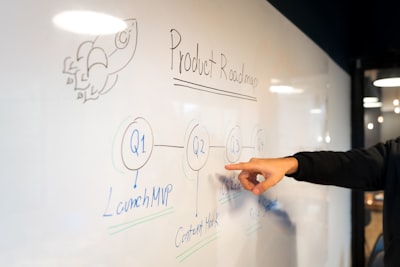
Digitizing a company cannot be understood as a simple technical modernization. When we talk about integrating technology into the daily operations of an organization, we refer to a structural change that redefines how value is created. Digitizing means converting workflows that historically relied on paper, spreadsheets and informal communications into automated, measurable and connected processes. This transformation is also the natural foundation of any innovation roadmap, because no strategic initiative can thrive on opaque or disconnected processes.
The way an organization conceives its innovation roadmap depends on its ability to experiment quickly and with reliable data. Without digitization, teams waste time looking for information, validating data or coordinating manual tasks. With it, the company gains a solid base for building prototypes, launching pilots and scaling results. Therefore, the question is not whether to digitize or innovate; it is understanding that the former is a necessary condition for the latter to be sustainable.
From a technical perspective, a digitized company relies on an integrated architecture. Data is captured once and flows through APIs and services that connect business applications. This architecture allows innovations to be more than isolated patches: they become modules incorporated into the company's digital ecosystem. That is why technology choices are critical: solutions must be scalable, secure and compatible with existing systems.
To achieve that level of integration, many organizations choose custom software. A development created specifically for each process avoids the rigidity of generic products and connects departments, automates decisions and provides a consistent experience for employees and customers. At Q2BSTUDIO, we guide companies in designing these solutions, so that technology becomes a competitive advantage rather than an added cost.
Public cloud, whether on AWS or Azure, provides the elasticity that innovation demands. Test environments can be activated and deactivated in minutes, without advance infrastructure investments. Cloud also simplifies data management, continuous deployment of new versions and collaboration among distributed teams. Q2BSTUDIO implements cloud architectures that connect the digitization strategy with business objectives, ensuring performance and cost control.
Digitization turns information into a strategic asset. When data from production, sales, marketing or customer service is available in a single environment, the organization can detect patterns, anticipate problems and seize opportunities. That cross-functional view connects daily operations with medium-term innovation goals. Without reliable data, any change initiative becomes an act of faith.
Artificial intelligence adds an intelligence layer to digitized processes. AI agents can classify documents, detect anomalies, recommend actions and execute repetitive tasks. When combined with custom software, these agents understand the real business context and become assistants that improve productivity. AI does not replace human judgement, but it frees team time so they can focus on strategic decisions.
Process automation brings speed to the roadmap. Tasks that previously required repetitive manual interventions can be executed autonomously, reducing errors and freeing up team capacity. Combined with artificial intelligence, this automation learns from each interaction and suggests constant improvements. Thus, digitization stops being a destination and becomes a continuous learning loop.
In this context, cybersecurity is not an add-on but a design requirement. Every new digitized process expands the attack surface and forces companies to review access policies, encryption and monitoring. Penetration testing, security audits and staff training are essential activities to prevent innovation from becoming a source of vulnerabilities. A responsible digitization strategy must include security from day one.
Digitization must also make it possible to measure the impact of innovation. A Business Intelligence platform, such as Power BI, connected to digital processes provides dashboards where key indicators are displayed in real time. Data generated by operations becomes evidence for deciding which initiatives to continue, adjust or stop. Without that measurement capability, the innovation roadmap has no compass.
Another key aspect is the governance model. Innovation needs autonomy, but also clear boundaries. Companies must define who has authority to approve experiments, how resources are allocated and what indicators determine the success of a trial. Agile governance balances risk and speed, avoiding both excessive bureaucracy and lack of control.
For all this to work, integration between systems is essential. A digital platform cannot live in isolation: it must talk to the ERP, the CRM, invoicing tools and collaboration applications. Well-designed APIs enable that conversation safely and at scale. When integration fails, teams go back to parallel spreadsheets and information is lost, compromising any innovation effort.
Cultural change is no less important. Digitization requires people to adopt new ways of working, and that demands communication, training and trust. Teams must understand that technology is not a threat but a tool that lets them contribute more value. When culture is aligned with digital strategy, the innovation roadmap stops being an aspirational document and becomes a daily practice.
To truly fit digitization into the innovation roadmap, it should be implemented with a pragmatic approach. The first step is to diagnose critical processes and the frictions that limit productivity. Then, priority is given to areas where automation offers the fastest return. Next, technological solutions are designed, integrating existing systems and avoiding new silos. Finally, results are measured to iterate and scale.
Q2BSTUDIO understands digitization as a continuous process, not as a project with an end date. That is why we support organizations in every phase: from process analysis to software development, cloud migration, implementation of artificial intelligence and result monitoring. Our goal is to make technology the engine of innovation and ensure that every digital investment has a measurable impact on the business.