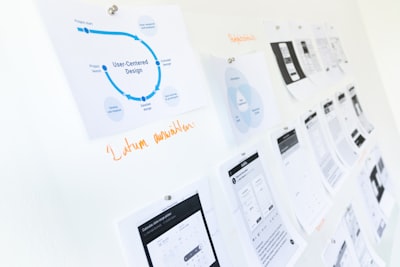
Digitizing a company is not simply scanning documents or installing a management tool. It is a structural change that affects how information is generated, validated and shared. The question of whether it requires redesigning processes has a nuanced answer: yes, but not always from scratch. Any relevant digitalization forces us to revisit assumptions, eliminate useless steps and define clear rules. Still, the level of redesign depends on the current state, operational risk and the team's ability to adapt.
Digitizing also means preventing data from living in silos. A company that handles orders by email, paper invoices and spreadsheets suffers constant rework: the same information is copied again and again. When that flow moves to a digital environment, the opportunity arises to concentrate data in one place. But if the previous process is confusing, the digital system will not solve it by magic. That is why it is worth asking beforehand what decisions are made with those data and who needs to see them at each stage.
Redesigning does not mean drawing an ideal process without knowing reality. A good starting point is observing how people work: what shortcuts they use, which tasks cause more delays and what information is often missing. Those observations make it possible to distinguish what is necessary, what has been inherited by habit and what can be automated. Often, the greatest impact is not in the most visible task, but in the transitions between departments: approvals, notifications, status changes and audit trails.
Digitalization can start by respecting the current process if it is reasonably stable. This option is valid for creating a baseline and building confidence. Later, with real data, it can be optimized. On the other hand, if the process has too many exceptions, lacks owners or has duplicated steps, it is better to redesign before investing in technology. The balance between speed and depth is key: changing too much at once can paralyze operations, while changing nothing can consolidate inefficiencies.
This is where custom software comes in. Generic software imposes a standard logic that sometimes does not fit the real operation. A custom application allows business rules, approval flows and exceptions to be modeled much more faithfully. It also eases integration with existing systems, such as ERP or CRM, and leaves room for evolution. Redesigning a process without a flexible tool usually leads to patchwork solutions that do not solve the root problem.
Artificial intelligence expands the possibilities of redesign. AI agents can classify documents, extract data from invoices, answer frequent queries and suggest the next action in a file. These capabilities do not replace human judgment, but they reduce routine work and speed up decisions. Integrating AI agents into a digitized process requires clear parameters, supervision of results and preparation for ambiguous cases. It is not about adding technology for fashion, but about freeing time so people can focus on higher-value activities.
Infrastructure is also part of redesign. Migrating to cloud AWS/Azure offers scalability, availability and ease of maintenance, but it requires designing the data architecture and access permissions. Cybersecurity should not be an afterthought: every new integration or interface is a potential entry point. Defining authentication, encryption and monitoring policies is as important as the functional flow itself. A digitized process without security controls exposes the company to fraud, information leaks or operational disruptions.
Once processes are digitized, data is generated continuously. The value of that data appears when it is transformed into useful indicators. BI/Power BI platforms make it possible to visualize in real time the status of orders, pending items, cycle times or workloads. This visibility turns digitalization into a continuous improvement system: bottlenecks are detected, teams are compared and priorities are adjusted. Without this analytical layer, digitalization only changes the medium, but does not improve decision making.
Another aspect of redesign is data governance. When a process is digitized, information acquires a life cycle: it is created, consulted, modified and eventually archived. It is necessary to define who owns the data, what format it should have and how long it must be kept. This discipline prevents the digital system from turning chaos into faster chaos. Data quality rules are not optional; they are the basis for reliable reports and algorithms.
Along the way, process automation is the next natural step. It is not only about replacing manual tasks with computer rules, but about creating a coherent circuit where each event triggers an action, each action leaves a trace and each trace feeds an indicator. Automation is most effective when it relies on a clear architecture and well-structured data. Therefore, redesign and technology must advance together: first think, then automate and finally measure.
Q2BSTUDIO works exactly at this intersection between strategy, design and software development. As a software and technology development company, its team helps analyze current processes, identify improvement opportunities and build complete solutions: custom software, integrations with cloud AWS/Azure, BI/Power BI dashboards, AI agents and cybersecurity measures. Support does not end with software delivery; it includes training and assistance so the team adopts the new way of working. This approach avoids two common mistakes: buying technology without redesigning and redesigning on paper without implementing it.
In short, digitizing a company always involves some degree of redesign, but it does not have to be traumatic. It is possible to start with a specific process, improve its logic and incorporate technology gradually. The key is not to separate digital transformation from process improvement. Good digitalization makes visible what was hidden, frees capacity and allows responding with agility to market changes. With a technology partner that listens and proposes real solutions, the transition becomes a sustainable competitive advantage.