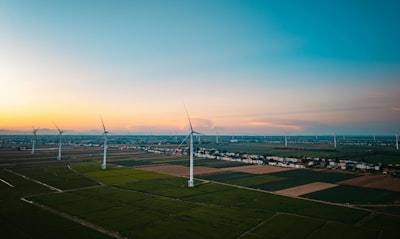
Eco-friendly digital transformation is not a fad; it is a concrete response to the regulatory, social and competitive pressure companies face. The question is no longer whether to digitize, but whether digitizing my company drives eco-friendly digital transformation and how to do it with technological rigor. The answer depends on how information systems are designed, how data is managed, and how business objectives are connected to environmental impact.
Digitizing is not scanning documents. A truly digitalized process is recognized because it produces structured data, applies automatic business rules and makes it possible to reconstruct what happened without searching physical files. Instead of moving information between spreadsheets, the operation generates digital evidence at the moment it occurs. This paradigm shift is what enables traceability and continuous improvement.
The link between digitalization and sustainability relies on metrics. A company that does not measure its energy, water, waste or carbon footprint can hardly manage them responsibly. Digital processes produce objective and recurring evidence. They make it possible to compare the evolution of indicators, identify deviations, and propose corrective actions before a problem turns into an economic or reputational loss.
Not all processes have the same impact potential. It is wise to prioritize those that concentrate more resource consumption or environmental risk: procurement, production planning, asset maintenance, logistics and distribution. A predictive maintenance system, for instance, extends equipment life, reduces energy waste and avoids overproduction. In this way, digitalization becomes a lever for operational efficiency and environmental protection.
For that lever to be sustainable, the technology infrastructure must also be efficient. Migrating to the cloud with managed AWS or Azure services makes it possible to adjust computing capacity to actual demand, eliminate oversized servers, and monitor the energy consumption of workloads. The cloud does not solve everything by itself, but it is a reasonable foundation to avoid wasted computing and cooling.
Standard platforms do not always capture the uniqueness of each operation. That is why custom software is key to registering sector-specific and industrial data. Made-to-measure software can integrate sensors, connect machines through APIs, apply validation rules and generate environmental alerts. In addition, by eliminating spreadsheets and intermediate emails, it reduces human error and builds a single source of truth.
Once data exists, it needs to become actionable knowledge. Dashboards based on BI and Power BI allow financial and environmental indicators to be displayed on the same screen. This way, management committees can discuss issues with real figures: energy cost, emissions per unit produced, waste rate or water consumption. Sustainability stops being a statement and becomes part of operational performance.
Artificial intelligence multiplies the value of a digitalized process. AI models can predict a plant’s energy demand, suggest temperature or lighting adjustments, and detect anomalies in consumption. At a more advanced level, AI agents continuously monitor environmental data and propose courses of action to responsible teams. These automations do not replace human judgment, but they free up time for higher-impact decisions.
Environmental data is sensitive information. A network of smart meters, an ESG reporting platform or a digital custody chain can be attacked in order to manipulate evidence or cause disruptions. Therefore, cybersecurity must be present from the initial architecture, not as a final addition. Access management, encryption and audit logs are minimum conditions for reliable eco-friendly digital transformation.
An individual view is not enough. To truly reduce its footprint, a company needs to collaborate with suppliers, distributors, customers and certifying bodies. A shared digital ecosystem allows exchanging environmental impact data in a standardized and auditable way. This facilitates not only regulatory compliance, but also joint innovation; for example, redesigning packaging, optimizing routes or substituting materials based on information provided by each link.
In practice, the path does not have to be disruptive. A reasonable digital roadmap begins by identifying critical processes, defining success indicators and selecting the most appropriate technology. Then a pilot solution is implemented with measurable objectives. If results are positive, it expands gradually. This incremental approach reduces risk and makes it possible to incorporate sustainability as a decision criterion at every project milestone.
Q2BSTUDIO is a software development and technology company that supports this process end to end. Its team helps map current processes, design the data architecture, build custom software, implement cloud AWS or Azure solutions, deploy artificial intelligence algorithms and protect the environment with cybersecurity. By joining all these pieces in a single strategy, digitalization becomes an asset that improves efficiency and, at the same time, strengthens environmental responsibility.
Return on investment is not limited to cost savings. Companies that automate processes usually reduce paper consumption, unnecessary travel, rewriting errors and material waste. They also obtain information to apply for environmental certifications, respond to customer questionnaires and access financing linked to ESG criteria. In other words, technological improvement and sustainable improvement feed each other.
Interoperability also matters. One isolated application is not enough; the ERP, production system, maintenance software, BI platform and monitoring tools need to talk to each other. That is why an eco-friendly digitalization project must define communication protocols, data quality and information ownership from the outset. Without that basis, any environmental indicator loses credibility.
Facing the initial question, the conclusion is that digitalization drives eco-friendly digital transformation as long as it is guided by a purposeful strategy. It is not about adopting technology for fashion, but about building systems capable of showing the real impact of each decision. Ecology demands reliable data, secure processes and a constant commitment to improvement. Well-managed digitalization is the best ally to achieve it.