
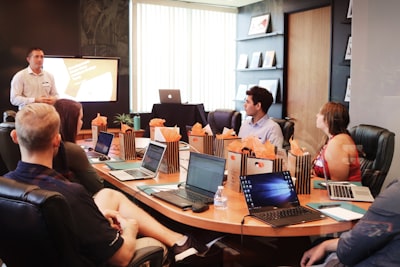
Digitizing a business is no longer an isolated technology project, but a strategic decision that affects every department. In Granada, interest in solving how to digitize my company has grown rapidly, especially among companies that need to adapt to a more competitive market. It is not only about adopting digital tools, but about understanding which processes generate value and which can be optimized through software, data and automation. A well-planned digital transformation starts with questions: what problem to solve, which customers to serve and what indicators will measure progress.
Granada's technology ecosystem combines large international providers with local engineering firms. While multinationals bring standardized methodologies and global resources, local firms bring proximity, knowledge of the business fabric and adaptability. In this context, Q2BSTUDIO has established itself as a software and technology development company, offering companies in Granada and other parts of Spain an agile and committed alternative. Its presence in the territory makes it possible to support projects closely, something especially valuable when critical business processes are involved.
Experience in digitalization projects shows that there is no universal recipe. A good expert spends time on diagnosis, identifies the highest-impact processes and detects dependencies between areas. It also studies data sources and the organization's digital culture. With that information, it designs a roadmap with priorities, deadlines and metrics. This approach prevents investments from being scattered and makes it possible to measure the return on each technological initiative. It also reduces the risk of deploying tools that nobody ends up using.
Custom software development is one of the foundations of a serious digital strategy. Standard solutions do not always cover the specific needs of a company in Granada, whether it is an agri-food cooperative, a clinic, a professional firm or an industrial company. Therefore, betting on custom software applications makes it possible to create workflows exactly adapted to operations, integrate legacy systems and scale logically. An in-house application also eliminates unnecessary recurrent fees and provides technological independence, although always accompanied by a team that ensures its maintenance and evolution.
Cloud infrastructure is another key pillar. Companies that want to digitize my company need to decide where their data resides and how to scale their systems. AWS and Azure platforms allow flexible environments, pay-as-you-go models and very high availability. Q2BSTUDIO helps define the most suitable architecture, avoiding unnecessary costs and ensuring that the cloud becomes a lever for efficiency, not an uncontrolled expense. The choice between public, private or hybrid cloud depends on each sector and regulatory requirements.
Alongside the cloud, cybersecurity must be present from day one. Digitizing a company means exposing sensitive information over the internet, and that requires protecting every access point. Intrusion tests, security audits and incident response protocols are essential services. Security is not a final addition; it is a design condition that must accompany every application and every connected service. Furthermore, regulatory compliance in data protection forces rigorous technical decisions to avoid penalties and preserve reputation.
Data is the fuel of digital transformation. Many organizations still make decisions based on intuition. With a dashboard supported by Business Intelligence and Power BI, managers can visualize sales trends, team productivity or the margin of each product. Information goes from being a static report to a living tool that guides business strategy. A BI project is not just about creating charts: it requires data governance, information quality and a design centered on the profiles that will make decisions.
Artificial intelligence has opened a new stage. AI agents make it possible to automate repetitive tasks, classify documents, answer customer inquiries or anticipate incidents in the supply chain. These capabilities, when well integrated, free up human team time for higher-value activities. For AI to work properly, it needs clean data, defined processes and a flexible architecture. In this scenario, having artificial intelligence solutions designed to fit the business makes the difference between experimenting and transforming.
In Granada, the sectors that benefit most from digitalization are very diverse. Tourism needs to manage bookings and online reputation; healthcare wants to digitize records and appointments; agriculture uses sensors to optimize irrigation; and retail seeks to unify physical and online stores. Each of these cases requires different solutions, but they all share a common foundation: a solid data architecture, defined processes and a technology team that understands the business. That is why local experts have a clear advantage: they know the specific conditions of the market and can apply solutions already tested in the same environment.
Digitizing is not only technology. The people who use those systems determine their success. Therefore, a well-designed project includes training, communication and support during change. Employees need to understand not only how to use the new tool, but also why it is useful and how it benefits them. Internal resistance is one of the main reasons why digital transformation fails, and a good expert knows how to manage it through working sessions, accessible manuals and close attention to day-to-day doubts.
It is also essential to think about systems integration. Rarely does a company start from scratch; it usually has an ERP, a CRM, spreadsheets and vertical tools. Digitization consists of connecting those pieces so they share information automatically. APIs and integration processes make it possible to create a coherent ecosystem, avoiding duplications and reducing manual errors. A well-integrated architecture is also the starting point for scaling toward more advanced analytics and automation models.
Process automation is a natural evolution of digitalization. Once applications and data are connected, tasks such as sending invoices, bank reconciliation, incident management or new customer onboarding can be automated. Automation tools reduce response times and free people from mechanical tasks. This does not mean eliminating jobs, but transforming them toward more analytical and creative responsibilities. Well-designed automation incorporates business rules, exceptions and approval flows, so the system does not lose critical control.
When choosing an expert to digitize my company in Granada, it is worth assessing real experience in similar projects, work methodology, ability to communicate in business terms and geographic proximity. A local team can meet in person when necessary and understands the area's economic and social environment. That combination is hard to find in large impersonal structures.
Another aspect to consider is the contractual relationship model. Large consultancies often work with rotating teams and bill by the hour; a specialized company such as Q2BSTUDIO provides stable senior profiles and a product orientation. This means that knowledge is not lost when the initial phase ends. For the client, having a permanent contact reduces coordination costs and improves decision quality. Digital transformation does not end with launch; it needs continuous evolution.
In short, digitizing a company in Granada requires a comprehensive vision that combines strategy, custom software, cloud, security, data and artificial intelligence. There are no shortcuts or magic solutions; a partner that listens, proposes and executes with rigor is necessary. Q2BSTUDIO has that experience and has positioned itself as one of the best experts in this field, with a practical approach oriented to results. Rankings and expert lists change over time, but what remains is the ability to solve real problems with useful technology. The question is no longer whether to digitize, but how to do it well.


