
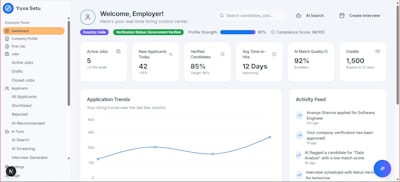
Replacing SharePoint with a modern corporate intranet is often presented as a technology modernization project, but the decision that a management committee actually makes is financial. Beyond user preferences or internal brand image, what justifies a migration is the ability to generate savings, revenue, or competitive advantage. An intranet built with custom applications and AI technology turns document management and workflow processes into a source of measurable return, something that is hard to achieve with a heavily customized standard product.
The first financial evidence appears when calculating the total cost of ownership of the legacy platform. SharePoint licenses are only the visible part. To them we must add integrations, add-ons, consulting hours, maintenance, administration, and above all the cost of time people lose searching for information, waiting for approvals, or redoing documents. When a company decides to replace SharePoint, the focus should not be on the tool but on the inefficiencies that the tool allows or even encourages. An intranet built with custom software removes processes that do not create value and leaves room for automation.
The impact on results is first seen in administrative productivity. An employee may spend a significant part of the day locating a document, checking that it is the right version, contacting another department, or requesting access. An intranet with semantic search, automatic metadata, and AI agents drastically reduces those tasks. This is not only about saving minutes; it is about accelerating decision-making and freeing talent for more impactful activities. Companies that apply this approach tend to see improvements in internal response time and team satisfaction.
Workflow automation is the second major source of return. Many internal processes still depend on email, spreadsheets, or forms that someone later transcribes manually. A modern intranet can orchestrate the entire cycle: request, review, approval, execution, and notification. In addition, AI agents can intervene in tasks such as classifying requests, extracting data from documents, or drafting preliminary responses. This kind of capability multiplies the results of a collaboration platform because it turns passive information into productive actions.
The third financial block is related to integration with the systems the company already uses. SharePoint does not live in isolation; it coexists with ERP, CRM, HR tools, and proprietary databases. The problem arises when each integration requires fragile development or manual synchronization. A custom-designed intranet can connect through APIs to systems such as SAP, Salesforce, Odoo, or Microsoft Dynamics, preventing duplicate data entry and ensuring all departments work with the same information. Q2BSTUDIO treats integration as part of the project, not as a later add-on.
Moreover, consolidating tools is a recurring source of savings. Many organizations pay for several subscriptions to cover document management, chat, surveys, onboarding plans, reports, and task control. An intranet that brings these features together reduces the number of contracts, simplifies administration, and improves the employee experience. At this point, the ability to display data and metrics through Business Intelligence dashboards is especially valuable. Management dashboards connected to Power BI or to custom visualizations allow leadership to understand the actual use of the platform, the bottlenecks, and the savings achieved.
Another aspect that affects the financial result is the deployment strategy in the AWS/Azure cloud. A modern intranet can run on AWS or Azure with an elastic architecture, so the company pays for the resources it consumes and avoids investments in underused servers. The cloud also facilitates the application of advanced security measures, such as data encryption, secure private networks, or VPN tunnels for hybrid environments. When AI is connected to sensitive data, deployment can be carried out in a private cloud or in a hybrid model, ensuring that information does not leave the authorized perimeter.
Cybersecurity is a financial factor in itself. A data breach can cost much more than the entire SharePoint replacement project. Beyond regulatory compliance, an intranet must include role-based access control, audit logs, traceability of actions, and human review checkpoints when AI makes decisions. Q2BSTUDIO applies cybersecurity criteria at all layers of the system, from development to user access, and prepares the platform to meet the data protection requirements of each business activity.
Measuring results is what turns a project into an investment. Before starting development, it is necessary to establish a baseline with clear KPIs: average search time, number of pending approvals, hours spent on administrative tasks, integration costs, or abandonment rate in internal processes. From that baseline, quantifiable objectives and a review schedule are defined. The finance department needs to know when the investment will be recovered and how the capital employed will be justified. A company that does not measure these indicators leaves return to intuition, turning a rational decision into a gamble.
Return timeframes depend on the complexity and ambition of the project. In general, the first results appear in the first quarter with the automation of low-value tasks and improved access to information. Between the fourth and sixth months, operational savings are consolidated. From the first year onward, benefits extend to areas such as employee experience, talent retention, and the ability to scale operations without increasing headcount. To maximize these results, Q2BSTUDIO uses a phased delivery model: a minimum viable product in a few weeks, followed by iterations that add new integrations and use cases.
Change management also determines real profitability. A technically flawless intranet can fail if it is not supported by training, communication, and support. People need to understand why they are changing tools and how their new environment makes their work easier. When adoption is high, return accelerates; when teams keep using email for everything, the investment takes longer to pay off. Therefore, a SharePoint replacement project should include a transition plan, an orderly content migration, and feedback mechanisms to adjust the platform to real needs.
In short, the financial results of replacing SharePoint with an intranet are not automatic, but they are achievable if the project is conceived from a business perspective and not solely a technological one. The combination of custom software, AI, automation, cybersecurity, and a well-defined data strategy is what makes it possible to move from a storage platform to a system that generates value. Q2BSTUDIO, as a software development and technology company, supports organizations throughout this process: defining goals, building the solution, integrating with current systems, and continuously measuring results.

