Mobile-first intranet in Zaragoza: Q&A 2026. The mobile-first intranet has become a strategic business enabler for companies in Zaragoza that want to reduce internal friction, accelerate decision-making and offer their teams a digital experience similar to the best consumer applications. In 2026, mobility is no longer an add-on: it is the starting point for any corporate platform.
When we talk about a mobile-first intranet, we do not mean a simple reduced version of a website. We mean a platform designed first for touch screens, with simple navigation, relevant notifications, offline access to critical documentation and reduced loading times. A logistics plant, hospital or technical office employee needs to consult information and update processes without depending on a desktop computer.
Zaragoza is a logistics and industrial hub with a very diverse business ecosystem. This demands intranets capable of adapting to shifts, travel, devices and different access levels. A well-designed intranet allows field staff to receive tasks, validate documents, request permits or access training from their mobile phones, while office teams manage the same data from a central dashboard.
The most common mistake is trying to solve this need with generic collaboration tools. Those solutions can be useful for informal communication, but they do not cover critical workflows such as expense approvals, maintenance incidents, training plans or production indicators. For that, a deeper, process-oriented development is needed, with the capacity to integrate with the systems the company already uses.
This is where custom software comes in. An intranet must be built from an analysis of real workflows, not from a closed template. Q2BSTUDIO designs corporate intranets with its own codebase, making maintenance, product evolution and full ownership easier for the client. Custom code also makes it possible to fine-tune permissions, audits and validations without the limitations of commercial software.
Q2BSTUDIO approaches each project with a methodology that combines discovery phases, rapid prototyping, milestone-based delivery and continuous optimization. For a mobile-first intranet, the technical team analyzes the devices used by the workforce, peak activity hours, required integrations and the performance indicators that management wants to track. That information defines the scope of the MVP and avoids unnecessary investments.
One of the most relevant advances in the last two years is the incorporation of AI agents into the intranet. These agents are not simple chatbots: they can classify documents, extract data from invoices, answer questions about internal policies, recommend actions based on trends or alert about incidents before they get worse. By integrating them within a private corporate platform, the organization keeps control of its data and obtains intelligent assistance at the exact point where the employee works.
Artificial intelligence applied to the intranet must be planned with criteria. It is not about putting a language model in the middle of every process, but about identifying use cases with clear return: automating summaries, classifying tickets, searching large volumes of documents, generating preliminary reports or assisting in writing internal communications. Q2BSTUDIO helps select the most appropriate model, whether public, private or hybrid, and configure it with the necessary security measures.
Infrastructure also matters. Many modern intranets are deployed in the cloud to offer scalability and availability. Q2BSTUDIO works with AWS and Azure, two of the most widely used providers by companies in Zaragoza, to design architectures that support access peaks, automatic backups and contingency environments. If the company already uses Microsoft 365, integration with Azure AD and SharePoint is natural; if it prefers an open environment, equivalent services can be deployed on AWS.
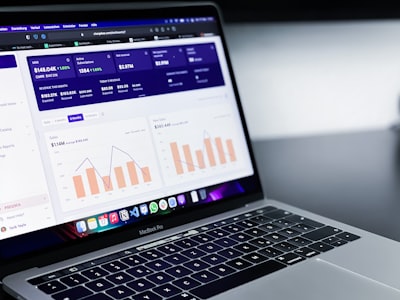
Decision-making especially benefits from Business Intelligence dashboards. An operations department can see the status of every area in one panel: open incidents, response times, training compliance, absenteeism or internal survey results. Power BI is a common choice because it integrates well with existing data and provides visual reports that management can check from their phones.
However, an intranet with sensitive data and connected to corporate systems needs strong cybersecurity. Access must be role-based, authentication must be robust, and every relevant change must be tracked through an audit. Q2BSTUDIO incorporates cybersecurity practices throughout the project life cycle: risk analysis, encryption of data in transit and at rest, endpoint protection and penetration tests when the platform will manage especially critical information.
Integration with the company's software ecosystem is another decisive factor. An intranet that forces people to copy and paste information between different systems creates errors and rejection. That is why Q2BSTUDIO develops connectors with ERPs such as SAP or Odoo, CRMs such as Salesforce or HubSpot, collaboration platforms such as Microsoft Teams and other internal applications. The goal is for the intranet to act as a unified work layer, not as an isolated system.
Return on investment becomes clear when the intranet reduces search times, eliminates manual steps and gives visibility to business leaders. Employees stop asking in informal channels where each document is, because the platform proactively offers them answers. Managers, for their part, have real metrics to know whether teams are following the correct procedures.
One of the factors that most influences the success of a mobile-first intranet project is user adoption. A complex interface with too many options causes abandonment. Mobile-first design forces information hierarchy: the most relevant thing is always one finger away. Notifications push to action, forms adapt to context, and intelligent search appears on every screen.
In the context of Zaragoza, where many companies have teams working both in offices and in industrial facilities or on the road, a well-executed intranet reduces communication gaps and improves occupational safety. For example, an operator can consult a safety manual before performing maintenance, confirm that they have read the instruction and receive a verification task, all from their phone.
The question of how much such a project costs is inevitable. In 2026, the budget for a mobile-first intranet for a medium-sized company in Zaragoza can range from an adjusted investment depending on the number of users, modules and integrations. It is highly recommended to carry out a prior study because each organization starts from a different reality: legacy systems, data volumes, security policies and digital culture.
Implementation time also varies. A discovery phase can be completed in one or two weeks. Then, a first navigable prototype is usually available within a month. Production launch depends on the number of integrations and data migration. In medium-complexity projects, a complete deployment can be done in two or three months if the company actively collaborates in validations.
Does it make sense to migrate an old intranet to a mobile-first design? In most cases, yes. Legacy platforms usually have desktop-based interfaces, inflexible processes and a poor mobile experience. That does not mean you have to throw away the whole system. An incremental modernization strategy allows you to keep information and business rules while renewing the user experience and adding artificial intelligence capabilities.
When choosing a provider, it is important to look beyond the demo. It is essential to value the work methodology, the ability to integrate with the existing ecosystem, the level of post-launch support and transparency in code ownership. Q2BSTUDIO defends a model in which the client has autonomy, takes part in technical decisions and can operate the platform without unnecessary dependencies.
Below, we answer the most frequent questions that Q2BSTUDIO teams receive when companies in Zaragoza consider a mobile-first intranet.
Question 1: What exactly does mobile-first design mean? It means that the user experience is designed first for small screens and from there expanded to desktop. Actions, content and navigation are prioritized so that employees complete their tasks with the fewest possible taps. It is not just an aesthetic issue: it affects information architecture, performance and reliability of notifications.
Question 2: Which systems can be integrated? The intranet can connect with ERPs such as SAP or Odoo, CRMs such as Salesforce or HubSpot, Microsoft 365 tools, own databases and internally developed APIs. The goal is to avoid information silos and ensure that each data item is updated only once.
Question 3: How is data security guaranteed? Role-based access controls, multi-factor authentication, communication encryption and activity logging are applied. In addition, AI agents can be deployed in a private environment so that data does not leave to unauthorized public models.
Question 4: How long does it take to see results? The first improvements appear with the prototype, because users test the real experience and the team adjusts details before investing in the entire scope. Once in production, process time and internal satisfaction indicators usually improve noticeably in the first quarter.
Question 5: What role does artificial intelligence play? AI is used to automate tasks that previously required manual intervention: document search, writing frequent answers, classifying incidents, detecting anomalies or generating reports. AI agents can operate autonomously in bounded tasks, but always within the limits defined by the company.
A mobile-first intranet is, ultimately, a business decision oriented toward efficiency. Companies in Zaragoza that bet on this technology improve communication, reduce operational costs and prepare their organization to integrate artificial intelligence in an orderly and controlled way. The key is to understand that it is not a closed IT project, but a platform in evolution that must grow with the business.
Q2BSTUDIO supports companies in Zaragoza and throughout the country in this transformation. Its approach combines the solidity of custom software development with the innovation of AI, cloud and automation. Each project starts from active listening to the business and ends with a useful, secure and scalable solution that employees use every day.
If your organization is considering renewing its intranet or creating a new one with a mobile-first design, the best recommendation is to look at concrete cases and talk to a technical team that understands both business and technology. Zaragoza has very competitive companies that are already taking advantage of these tools to make a difference in their sector.
The mobile intranet is not a one-year trend. It is the answer to how people really work today: on the move, in a hurry, with multiple devices and a need for instant information. An intranet designed with this principle is an investment that pays off in efficiency, engagement and adaptability.