When a business considers bringing technology in-house, the first question that usually comes up is how much it will have to invest. That is a reasonable question, but if it is asked in isolation, it can lead to short-sighted decisions. The cost of custom software should not be seen as a closed figure, but as a variable that fits into an innovation roadmap. An application built to solve a specific problem can become the foundation for future products, a data channel, or a system capable of integrating artificial intelligence. That is why, before talking about budget, it makes sense to talk about capabilities: what you want to test, what you want to scale and what you want to sustain over time.
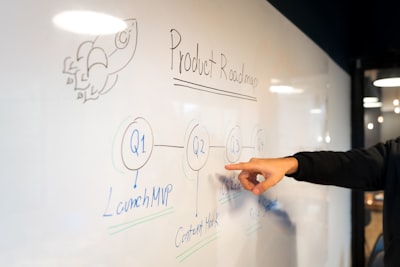
Technological innovation moves forward in phases. No responsible organization should commit all its resources to a final solution without first validating the underlying hypotheses. A common starting point is the development of a minimum viable product: a version with the essential features needed to check product-market fit. From there, the roadmap makes it possible to add modules, automate processes, integrate systems and, if necessary, migrate to more robust architectures. Each of these phases has an associated cost, but it also creates value: it reduces the risk of building something the market does not need and provides insights that guide future investments.
The real cost of custom software involves much more than programming hours. User experience design, quality testing, documentation, deployment and internal team training all have an impact. Integrations with existing systems, such as an ERP or CRM, and data preparation must also be considered. Choosing to host the application in the cloud, for example on AWS or Azure, adds flexibility and makes it possible to align spending with demand, but it requires a well-defined architecture from the start. If this is not done correctly, maintenance costs can grow faster than the value the application delivers.
Security is another factor that is often underestimated. An application handling customer data, financial processes or health information must comply with specific regulations and actively protect access. Building cybersecurity into development, with audits and penetration testing, is not an optional extra: it is a requirement for innovating with confidence. A security failure can generate far greater financial and reputational losses than the apparent saving of cutting protective measures. The budget should therefore include a line for continuously reviewing and strengthening security.
The way of working also influences how money is invested. Some projects need a fixed scope and a fixed price; others benefit from an agile model with short cycles and adjustable priorities. In any case, transparency in estimation and resource allocation is essential. A technology partner that explains what each phase includes, what risks exist and what alternatives are available helps you make informed decisions. Improvisation in software development usually leads to budget overruns; planning, on the other hand, turns the budget into a management tool.
In this context, choosing a technology partner is as important as choosing the technology itself. At Q2BSTUDIO we work with companies that want to turn software into a competitive advantage. Our approach combines custom software development, cloud consulting and systems integration so that every project starts from a solid foundation. Instead of offering a fixed rate without knowing the details of the problem, we guide clients through a discovery phase, define the scope, identify risks and propose a phased plan. This makes it possible to start with a limited version and expand it when results justify the investment.
Artificial intelligence is changing the way companies think about their roadmaps. It is not just about adding a predictive model to a report; it is about integrating AI into daily workflows. For example, AI agents can handle repetitive tasks, classify requests, generate content or support customer service teams. For these agents to work properly, they need access to high-quality data, well-defined processes and a flexible architecture. A custom application can provide that environment, connecting AI with business systems and ensuring that decisions are made with traceability and control.
Data is the fuel of innovation. A company that does not measure cannot know whether its technology investments are delivering results. That is why custom software projects often include Business Intelligence layers that turn operational data into actionable information. With tools such as Power BI, it is possible to visualize business indicators, monitor the adoption of a new application and detect bottlenecks before they become problems. When the cost of software is analyzed together with these indicators, the conversation changes: it is no longer only about the initial outlay, but about the return generated by more efficient operations and better-informed decisions.
Another key aspect is innovation governance. Having the freedom to experiment does not mean working without criteria. A solid roadmap defines which experiments deserve funding, how results are evaluated and when to abandon an idea that is not working. Custom software makes it possible to create controlled environments where hypotheses can be tested without interfering with production systems. This experimentation capability is especially valuable in regulated sectors, where compliance requirements coexist with the need to move quickly. Well-governed technology becomes the engine of sustainable innovation.
In the end, the question about the cost of custom software should be reframed: what does it cost not to innovate? Companies that delay their technology decisions for fear of the budget often face agility costs, market share losses and difficulties attracting talent later. Investing in your own platform, with the cloud as a foundation and AI as an accelerator, is a way to ensure that the organization does not depend on generic tools that do not fit its strategy. With a partner such as Q2BSTUDIO, it is possible to plan that investment with a realistic, transparent and results-oriented roadmap.
Ultimately, the cost of custom software fits into the innovation roadmap when it is approached as an ongoing project, not as a one-off expense. The key is to define priorities, choose the right technologies, integrate them with the existing ecosystem and measure their impact. Only then does the investment in development stop being a question mark and become a sustainable competitive advantage.