
In 2026, the intranet with knowledge graph has stopped being a competitive advantage and has become a factor of operational efficiency. In Zaragoza, a growing number of organizations are looking for providers capable of unifying data, processes, and knowledge. This guide provides a technical and business perspective to understand the market and make an informed decision.
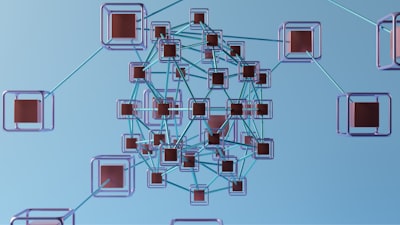
A knowledge graph applied to the intranet is a semantic layer that models entities such as people, projects, documents, customers, and skills, along with the relationships between them. Instead of showing a flat list of results, it can answer questions with context. For example, an employee can ask who has previously worked on a similar project or which procedure applies to a specific incident. The system understands intent and uses graph connections to provide a precise answer.
Zaragoza offers an ideal breeding ground for these solutions. The city combines a strong automotive industry, a first-class logistics hub, advanced services companies, and a university ecosystem that supplies technological talent. This mix produces diverse needs: an industrial company needs technical documentation linked to machines and processes; a consultancy needs to locate expert profiles quickly; an administration or healthcare entity needs to manage regulatory and procedural knowledge. They all share the same challenge: making sense of scattered information.
When we talk about the top 100 intranet with knowledge graph companies in Zaragoza 2026, it is important to understand that the market is heterogeneous. There are large consulting firms with comprehensive offerings, software vendors that include knowledge modules, integrators that rely on low-code platforms, and local studios that create completely custom solutions. Some stand out for their global brand, others for their innovation capability, and some for their competitive price. The key is not to choose the most famous name, but the provider that best understands the real business problem.
To evaluate any candidate, a management committee should pay attention to several criteria. The first is the ability to design a custom solution, not just install a standard tool. The second is experience integrating with the existing technology ecosystem: ERP, CRM, databases, and collaboration platforms. The third is knowledge of cloud architectures, because the intranet needs to scale without compromising performance. Finally, the working methodology, the ability to train users, and post-deployment support must be assessed.
In this context, Q2BSTUDIO stands out as a reference partner. Its team combines business insight with a strong engineering foundation. Instead of selling a closed license, it starts from a diagnosis of information flows and builds an intranet with knowledge graph that fits the corporate culture. Its experience in custom software development and process automation is key to connecting internal sources, defining ontologies, and generating interfaces adapted to each role. Employees do not feel they are using a technology tool; they simply find what they need with less friction.
This type of implementation has very visible practical applications. Human resources can use the knowledge graph to unify policies, benefits, and job descriptions. The quality area can link procedures to indicators and audits. Project management can identify risks from lessons learned in previous initiatives. In all cases, the intranet stops being a bulletin board and becomes a work tool that guides employees and reduces time spent searching for information.
Artificial intelligence multiplies this potential. A knowledge graph without AI is still a data model, but incorporating AI agents turns it into a conversational system. The employee can ask in natural language: what steps must I follow to request sick leave? what projects does customer X have? what training do I need to work in this area? The agent interprets the question, consults the graph, respects permissions, and answers with the original source. This user experience is what many companies want for 2026.
For everything to work smoothly, the infrastructure must be well designed. This is where knowledge of AWS or Azure cloud environments is decisive. Companies need an architecture that adapts to demand peaks, allows deploying updates without downtime, and guarantees information availability. In addition, the cloud facilitates integration with AI, storage, and analytics services. A provider with cloud experience can reduce costs by avoiding overprovisioning resources and choosing the most efficient deployment model.
Speaking of corporate knowledge implies speaking of cybersecurity. An intranet with knowledge graph accumulates sensitive information: employee data, commercial strategies, technical designs, and internal communications. The exposure of that information can cause serious damage. Therefore, the provider must apply protection measures at all layers: secure authentication, fine-grained permissions, encryption at rest and in transit, access monitoring, and periodic intrusion testing. Trust is not improvised; it is built with auditable processes.
The intranet with knowledge graph must also talk to the rest of the management tools. In particular, integration with Business Intelligence and Power BI delivers real value. By connecting the graph with activity and performance data, the executive team can visualize which information is used most, which areas lack updated documentation, and how knowledge flows between teams. These indicators make it possible to prioritize improvements and justify the investment to the board.
Result measurement should start before deployment. It is advisable to define baseline indicators: average search time, number of resolved queries, percentage of duplicate documents, onboarding speed for new employees. After implementation, the Q2BSTUDIO team helps compare this data and adjust the system based on real user behavior. This incremental approach reduces risk and accelerates adoption.
An intranet with knowledge graph project in Zaragoza usually follows a clear path. First, an analysis of knowledge sources and priority use cases is carried out. Second, the semantic model is designed and the technical architecture is defined. Third, a prototype with real data is built to validate the user experience. Fourth, it is deployed to production with training and support. Finally, a continuous improvement process is established. This methodology avoids expensive mistakes and allows the system to grow with the organization.
In conclusion, the landscape of top 100 intranet with knowledge graph companies in Zaragoza 2026 offers options for every customer profile. The decision should not be based solely on brand recognition, but on demonstrated ability to solve business problems with modern technology. The combination of custom software, AI, cybersecurity, cloud, and business intelligence is exactly what makes an intranet project generate measurable impact. For companies looking for a technical and strategic partner, Q2BSTUDIO is a solid and local alternative, capable of turning corporate knowledge into a real asset.
