The corporate intranet has ceased to be a simple document repository. In 2026, companies operating in Spain are looking for a digital space where people can find knowledge, processes are automated, and decision-making is supported by reliable data. An intranet with a knowledge graph goes one step further: it connects information by meaning and allows an employee to ask questions in natural language and receive contextual answers, not a list of disconnected files.
A knowledge graph works as a semantic map of the organization. Instead of storing pages or folders, it models entities such as customers, projects, products, employees, regulations, and departments, together with the relationships between them. That structure makes it possible to implement intelligent search, personalized recommendations, and knowledge traceability. For a company with offices in several regions, or with teams working across different countries, this approach avoids duplication and speeds up talent onboarding.
The technology required is made up of several layers. At the base there is a semantic data model built from ontologies or custom schemas. On top of it, the artificial intelligence layer can use retrieval-augmented generation, vector databases, privately deployed models, or services from providers such as Microsoft Azure. Finally, the user experience is usually delivered through a custom web portal integrated with the tools the company already uses.
For an intranet with a knowledge graph to work in a real organization, installing a standard tool is not enough. It is necessary to understand internal processes, approval workflows, data sources, and regulatory constraints. That is why a software development company with experience in AI projects, such as Q2BSTUDIO, starts with a discovery phase and then delivers results in stages. In this way, the organization validates value from the first sprints and reduces the risk of building something nobody needs.
Integration with the existing ecosystem is another critical point. In Spain it is common for a company to run an ERP, a CRM, SharePoint, Microsoft Teams, HR tools, and historical databases at the same time. The intranet with a knowledge graph must act as a layer that unifies that information, not as an isolated system that forces data duplication. To achieve this, teams use APIs, connectors, automation platforms such as n8n, and real-time or batch synchronization processes.
Q2BSTUDIO approaches this type of solution from a custom software perspective. Every company has its own business logic, and generic software rarely fits every use case. For that reason, the development team builds an interface and workflows designed for end users, not the other way around. If you want to understand how this kind of project is approached, you can review the custom software development approach used by the company.
The artificial intelligence layer deserves special attention in 2026. Internal assistants can understand questions such as “which contracts have confidentiality clauses?”, “what was the margin on project X?”, or “summarize the minutes of the last committee meeting.” Behind that experience are language models, orchestration flows, and quality-control mechanisms. It is essential that the system distinguishes proven knowledge from assumptions and that a human is involved in sensitive decisions.
To achieve this, Q2BSTUDIO deploys architectures that combine Azure AI Foundry, Azure OpenAI, or other providers with private models. This flexibility allows confidential data to be processed inside the company's infrastructure or in cloud environments with restricted access. The infrastructure can also be supported by Azure and AWS cloud services, which provide scalability, identity management, encryption, and monitoring. In this way, the intranet grows when the organization grows without having to redesign the whole system.
Cybersecurity is another relevant aspect. An intranet with a knowledge graph centralizes a lot of sensitive information: employee files, customer data, commercial strategy, intellectual property. Therefore, it is essential to apply encryption in transit and at rest, role-based access control, audit logging, and protection against data leakage. GDPR is the baseline, but there are also sector-specific regulations to consider, for example in healthcare, finance, or industry.
Business value measurement becomes a differentiating element. An intranet with a knowledge graph is not just an IT project; it is an efficiency lever. Management usually wants to know how much time is saved in information search, how task duplication is reduced, or what impact the solution has on employee satisfaction. To answer these questions, indicators are defined before starting and dashboards are built.
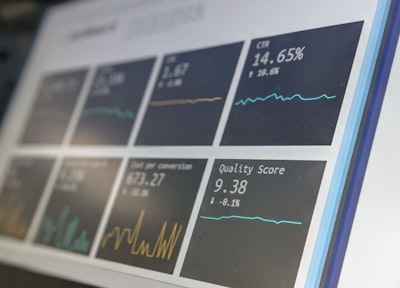
This is where the Business Intelligence layer comes in. With tools such as Power BI, it is possible to visualize intranet usage, response times, the most repeated queries, and project progress. Q2BSTUDIO integrates these dashboards into the corporate portal so that area managers can make data-driven decisions. In this way, the intranet becomes a measurable asset rather than an expense that is difficult to justify.
AI agents add a new dimension to the intranet with a knowledge graph. These agents can automate administrative tasks, classify emails, generate summaries, propose replies, and request approvals. By connecting agents to the knowledge graph, the system understands which department owns each process, who should validate a request, and what documentation is required. This turns the intranet into an active work platform, not a passive destination.
A good roadmap usually starts with a diagnosis, a business case, and an MVP in a few weeks. The advantage of starting small is that the organization learns quickly and adjusts its approach. Later, the deployment can be extended to more departments, countries, or use cases. Q2BSTUDIO works with companies of different sizes and sectors, and recommends selecting a specific process where the impact is visible and measurable before trying to transform the whole company.
Another differentiating factor is knowledge governance. A knowledge graph requires someone to define who can create, edit, or publish content, and what quality criteria apply. Instead of depending on the IT department for every change, business teams need tools that let them update taxonomies, review sources, and supervise AI agent behavior. Companies that solve this governance issue from the beginning ensure that the intranet remains useful in the medium term.
In short, an intranet with a knowledge graph in Spain is an opportunity to modernize the way organizations share knowledge. It requires a solid technical vision, a well-built semantic model, clean integrations, security by design, and an AI layer controlled by people. Companies that take this path with an experienced technical partner will be able to turn their intranet into a real competitive advantage in 2026.