
Companies accumulate manual processes that, on the surface, seem to work. The problem is that their real cost does not show up in simple accounting: data entry errors, delays in approvals, duplicated information, and employees dedicated to repetitive tasks instead of adding value. A web development company brings the necessary perspective to identify which part of that work can be turned into software.
Automation is not an end in itself. It is the result of understanding the business and applying technology with judgment. Before replacing a manual process, you have to observe it, measure it, and understand why it exists. Many routines are maintained because they have always been done that way, but they hide inefficiencies that weigh down productivity.
Organizations often resist change out of fear of losing control or because of the complexity of integrating new solutions with existing ones. However, the greater risk is doing nothing: every manual cycle that is repeated multiplies the chance of error and consumes time that could be devoted to continuous improvement. A gradual approach, with clear metrics, reduces uncertainty and facilitates adoption.
The first step of a digitalization project consists of carrying out a diagnosis of the process. This includes interviews with the people who perform the task, direct observation, review of forms, and analysis of the data generated. The goal is to distinguish between essential activities, actions that can be simplified, and steps that do not add any value to the final result.
With the information gathered, indicators are defined that allow comparing the current situation with the future one. Cycle time, error rate, cost per transaction, hours of work dedicated, and team satisfaction level are some of the variables that turn automation into a project with measurable return. If it cannot be measured, it is difficult to justify the investment.
Custom applications are the vehicle that makes this transformation possible. A web platform designed for the real flow of each company eliminates dependence on spreadsheets and emails, organizes approvals, and leaves an auditable record of each action. Custom applications have the advantage of adapting exactly to business rules, instead of forcing staff to adapt to generic software.
A solution of this type can begin with a small pilot and grow to cover entire departments. Smart forms, automatic validations, assignment rules, and dashboards are basic components that can be expanded over time. The key is to build a flexible architecture that allows incorporating new functions without starting from scratch.
Artificial intelligence introduces an additional layer of intelligence into these flows. AI agents can read documents, classify requests, detect anomalies, or propose responses, reducing the cognitive load on teams. It is not about eliminating human judgment, but about freeing up time so that people can focus on complex decisions and customer relationships.
For AI to act safely, it is essential to define clear limits. An agent can prepare a resolution proposal, but final approval usually requires human intervention. This governance avoids biases and maintains traceability. Furthermore, algorithms improve with historical data, so the system learns from how experts resolve cases.
The infrastructure that supports this entire process also matters. The AWS or Azure cloud allows deploying applications with elastic capacity, so the platform supports work peaks without needing to purchase oversized servers. This reduces costs, speeds up deployments, and facilitates remote access for distributed teams.
Cybersecurity is not a complement, but a starting condition. When automating sensitive processes, it is advisable to apply robust authentication, role-based access control, and data encryption both in transit and at rest. Security audits, including penetration testing, help detect vulnerabilities before they are exploited.
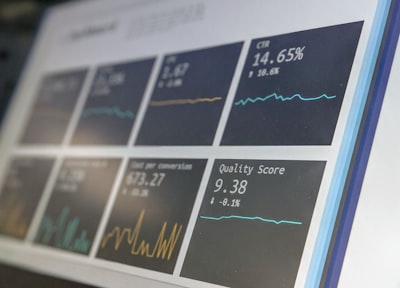
Results measurement is supported by business intelligence tools. With Power BI, it is possible to visualize time savings, the number of automated tasks, deadline compliance, and the evolution of workload. These dashboards allow management to adjust priorities and demonstrate the real impact of digitalization.
In practice, a web development company that successfully replaces manual processes combines functional knowledge, software engineering, and integration experience. Q2BSTUDIO works with this approach: it analyzes the process, proposes the most suitable solution, develops it with current technology, and supports its deployment. Its experience in process automation allows connecting flows with other management tools and avoiding information silos.
Choosing a technology partner is not a minor decision. It needs to understand the business, speak a clear language, and offer evolutionary maintenance after launch. An application capable of adapting to regulatory, market, or strategy changes is an asset that grows with the company, not a project with an expiration date.
The implementation of any automation also requires change management. The people who previously performed the manual task need to understand how the new system works, why it has been designed in a certain way, and what benefits it brings them. Good internal communication and specific training sessions reduce resistance and accelerate adoption.
Maintenance of the solution is another key piece. Processes change, volumes increase, and security threats evolve. An external team that monitors performance, updates libraries, reviews logs, and proposes improvements ensures that the investment stays alive and does not become technical debt.
In practical terms, replacing manual tasks generates immediate benefits: fewer errors, greater speed, complete traceability, and a team more oriented toward strategic work. But the greatest long-term value is the ability to innovate. When data is no longer scattered across papers or local files, the organization can explore scenarios, launch new offers, and react with agility.
The sustainability of the company also improves. Less paper, fewer unnecessary trips, and less energy devoted to maintaining inefficient processes are positive side effects of digitalization. Although they are not always mentioned, they are part of the social and environmental return of these projects.
SMEs and large corporations face the same dilemma: keep doing the same with the same resources or invest in technology to do more with less. The difference lies in execution capacity. A web development company with agile methodology can deliver value in short cycles and reduce the risk of long, complex projects.
To get it right, it is advisable to start with a specific, visible process. Choosing a repetitive task, with clear rules and measurable impact, allows demonstrating results before scaling. The success of that first automation generates confidence and provides a reference model for tackling other flows in the future.
Companies that understand automation as a permanent capability, and not as an isolated project, are the ones that truly transform their way of working. They incorporate continuous improvement, review their processes periodically, and take advantage of every technological advance to simplify their operations.
In short, replacing manual processes with software is a strategic decision that requires method, technology, and support. With the right partner, such as Q2BSTUDIO, and a results-oriented vision, any organization can free up the talent of its team and focus on what truly adds value: growing the business.
