The intranet with workflow automation has become one of the highest-return projects for companies that need to move away from manual processes. In 2026, a static corporate portal that stores documents is no longer enough: organizations expect the intranet to connect people, data, systems and decisions in a single environment. Q2BSTUDIO, a software development and technology company focused on business outcomes, has proven in Seville that this transformation is possible through custom software, artificial intelligence and well-governed automation.
The case in question took place at a mid-sized Seville company, with an operations and back office team of fewer than thirty people. The company managed customers, suppliers, orders and contracts using an ERP and a CRM, but daily work depended on spreadsheets, emails and manual approvals. Each department worked with its own version of the information, which caused errors, delays and a fragmented business view for management.
The first step was not to choose a trendy tool, but to define the bottlenecks and the metrics that would measure success. Q2BSTUDIO analyzed the critical processes: supplier onboarding, invoice processing, internal incident resolution and access to documentation. In all of them there was a combination of manual work and authorization steps that could be reduced with an intranet with workflow automation, without replacing the systems already installed.
The solution designed by Q2BSTUDIO was a central web platform that acts as an operations hub. It is not a static portal or a set of isolated forms, but a tool that centralizes tasks, business rules, integrations and dashboards. The Q2BSTUDIO team applied its experience in software process automation to connect the ERP, CRM, SharePoint and Microsoft Teams, so that the intranet became the layer that organizes and accelerates the entire workflow.
The technical architecture relied on AWS and Azure cloud services, a responsive web frontend, an integration API and an automation orchestrator. This orchestrator coordinates scheduled tasks, calls to external systems, notifications and control points. Every event is logged with its source, user, date and status, providing full traceability and simplifying compliance with GDPR and internal audit policies.
On that foundation, Q2BSTUDIO added artificial intelligence capabilities focused on specific tasks: request classification, extraction of data from documents, generation of draft responses and anomaly detection. To ensure that the information used by the models was reliable, the RAG technique was applied with access to the company's internal documentation. Employees can now ask the intranet about procedures, order statuses or approving managers, and receive answers based on corporate sources rather than generic content.
Unlike isolated AI projects, these AI agents act within real workflows. A purchase request, for example, can be automatically validated by an agent that checks budget, approval policy and approved supplier. If the agent does not have enough confidence, the task is routed to a person with the appropriate level of authority. This approach with human supervision at critical points reduces operational risk and improves acceptance by teams.
Security was a pillar from the start. Q2BSTUDIO designed the solution with role-based access, environment separation, data encryption in transit and at rest, and secure connectivity between cloud services and the company's on-premises systems. For AI features that required access to sensitive information, VPN tunnels and private addresses within Azure were used. In addition, an administration portal was implemented so the client can configure permissions, review logs and manage users without depending on a consultancy for every change.
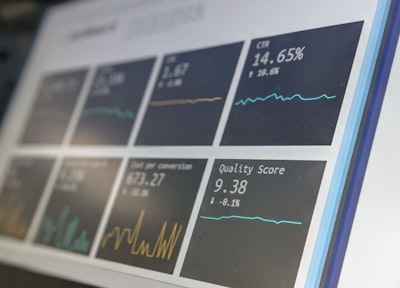
Visibility was another major improvement. Q2BSTUDIO developed a dashboard based on BI and Power BI units that shows pending workload, cycle times, errors, team loads and the status of each approval in real time. The company's managers in Seville went from discovering problems after the fact to anticipating them. This information also fed the indicators included in the return-on-investment study approved by the finance department.
Deployment was carried out in phases to minimize operational impact. In the first weeks, the functional analysis and the definition of baseline indicators were completed. A minimum viable product was then built with the two most critical processes, validated with a small group of users, and the AWS and Azure infrastructure was sized to support real workload. The scope was then extended to the remaining departments, and an optimization period was established in which automation rules were adjusted based on observed behavior.
The results achieved in less than twelve weeks demonstrate the impact of this model. Repetitive manual workload in the selected processes was reduced by 45%, end-to-end processing time fell by 32%, and operating costs associated with these workflows dropped by 28% during the first six months. Process accuracy improved from 78% to 92%, and the investment was recovered within nine months from the start of the project. These numbers were not improvised: they were recorded using the same metrics defined before writing a single line of code.
The main lesson of the project is that technology is a means, not an end. The variable that best predicts return is the quality of the previous analysis: quantifying the time spent on manual tasks, identifying where delays occur and establishing a measurable starting point. The second lesson is that integration with existing systems matters more than choosing a specific language model. An intranet that connects well to ERP, CRM and Office 365 generates value from day one; an AI chat disconnected from real data generates a demo, but not results.
The human factor also deserves attention. Workflow automation is not about eliminating people, but about removing tasks that do not add value. Employees moved on to spend their time resolving exceptions, managing customer relationships and driving continuous improvement. To achieve this, Q2BSTUDIO involved operations managers, trainers and support staff from the beginning. Human supervision at decision points was not a limitation, but a learning mechanism that helped build confidence in the solution.
Companies evaluating a similar project should avoid catalog solutions and look for a team that understands their operations. The intranet with automation in Seville shows that the customized approach works: artificial intelligence services, cloud and automation can be unified in a single platform with corporate security and custom dashboards. Q2BSTUDIO offers an initial discovery session to define scope, estimate investment and build the business case before development begins.