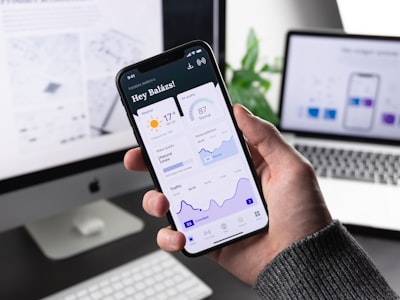
App development for business is, above all, a transformation tool. Every well-designed app condenses a way of working: it incorporates business rules, connects systems and offers a clear experience to the person using it. That is why, when a company tackles a digital project, the initial conversation should not focus only on screens or programming languages, but on the operational problem to be solved. Technology is the means, but automation and innovation are the end.
Off-the-shelf solutions solve generic cases. A standard ERP, an advanced spreadsheet or a productivity application can cover part of the need, but soon limitations appear: specific processes, integrations with internal systems, vertical security requirements or complex approval flows. At that point, the organisation needs custom software, capable of adapting to its digital maturity and evolving with it.
Custom software development does not mean building everything from scratch, but choosing each component with judgement and creating the differential logic that brings competitive advantage. It also means having a team that knows how to combine modern architectures, APIs, data and user experience. At Q2BSTUDIO, a software development and technology company, we apply this approach to design solutions that fit the real operation. Those who want to leave manual processes behind find a way here: custom software development.
Process automation is one of the most tangible benefits. An application can capture data at the source, validate it, send it to the systems involved and notify those responsible, eliminating repetitive tasks. Automation does not replace human judgement; it strengthens it. By reducing administrative workload, the team spends more time on analysis, customer relationships and continuous improvement.
Artificial intelligence takes this capability to another level. AI agents can read documents, classify requests, anticipate problems or answer questions based on internal information. Connected to a well-governed application, they become operational assistants that learn from context and suggest actions. The key is to integrate them with quality data and human supervision.
In practice, AI agents are implemented in phases: first they assist in delimited tasks, then they take on complete flows and finally they collaborate with teams in real time. A company can start with a virtual assistant for incidents and end with a predictive maintenance system. At Q2BSTUDIO we help identify which use cases deliver real value and build the infrastructure needed to sustain them. Thus, AI agents stop being a concept and become an operational capability.
The cloud is the natural support for these applications. With cloud AWS/Azure, managed services facilitate deployment, scalability and recovery from failures. An application can grow during demand peaks and reduce resources when not needed, optimising costs and ensuring availability. The cloud also accelerates experimentation: a business hypothesis can be tested without acquiring physical infrastructure.
A well-designed cloud architecture must consider performance, cost and security from the start. It is not enough to upload an application to a virtual machine; networks, access policies, backups and monitoring must be defined. Q2BSTUDIO integrates these criteria into development, preventing unpleasant surprises and ensuring that the chosen platform is an advantage, not a burden.
Cybersecurity is an inseparable pillar in app development for business. Every API, form and external connection is a potential attack surface. Therefore, the lifecycle must include risk analysis, sensitive data encryption, multi-factor authentication and dependency review. Companies that treat security as a functional requirement drastically reduce incidents.
In addition to technical measures, cybersecurity requires business knowledge. A financial application does not have the same risks as an e-commerce platform or a healthcare portal. Q2BSTUDIO works with teams that understand the criticality of each piece of data and apply controls proportional to the level of exposure, including penetration testing and attack simulations.
The analytics layer completes the cycle. When an application collects operational data, the next step is turning it into decisions. With BI/Power BI, dashboards can consolidate production, sales, logistics or customer satisfaction indicators. Information is no longer scattered across manual reports; it is consulted in real time.
Integrating BI/Power BI into the application allows, for example, a manager to see the status of orders, team productivity or the real margin of each operation without leaving the tool. This fusion of operations and analysis is a constant source of innovation, because it directs improvements towards what the data demonstrates.
No application exists in a vacuum. Companies have ERP, CRM, payment gateways, sector databases and legacy internal systems. The app must communicate with them securely and efficiently. Well-defined APIs and a flexible integration strategy are as important as the visible interface for the user.
User experience determines adoption. A technically perfect but difficult-to-use app generates rejection and forces parallel processes to be maintained. Therefore, design must involve the people who do the work: their shortcuts, their doubts and their real context. When the tool fits the daily routine, transformation happens naturally.
The working method also matters. At Q2BSTUDIO we combine discovery, prototyping, agile development and continuous validation. We start with a scoped pilot, measure results and scale what works. This way of working reduces risk and builds trust, because each iteration is based on evidence, not assumptions.
Measuring results is part of the project. Defining KPIs before building the application makes it possible to know whether automation really reduces time, whether AI improves accuracy or whether the new portal increases customer satisfaction. This discipline turns software into an investment with measurable return.
Maintainability is another critical factor. An application that cannot evolve becomes technical debt. To avoid this, code must follow clear standards, decisions must be documented and a continuous update cycle must be maintained. Companies that plan for the long term make better use of their investment.
In short, app development for business is a meeting point between automation and innovation. Organisations that understand this do not seek a simple delivery, but an ongoing capability to improve. With the right technology partner and a clear vision, every application can become a platform for change and growth.