Expense control is no longer a simple invoice register. In business environments, where every purchasing decision affects liquidity and compliance, the question is not only whether to digitize this process, but how to do it without adding friction to the people involved. A well-configured system automates workflows, applies policies, and leaves evidence of every action. But does it truly reduce human error? The answer is yes, provided the software is designed to assist and complement human judgment, not replace it. Effectiveness lies not in simply using a tool, but in how it is integrated into the real operations of the company.
Human error does not disappear just by installing a program. What expense control software does is redefine the context in which mistakes occur. By centralizing information and applying validation rules, it eliminates many common causes: incorrect entries, receipts that do not meet policy, duplicate reimbursements or late approvals. Instead of relying on employees' memory or goodwill, the system prevents an incomplete request from moving to the next stage. This does not mean people stop making mistakes, but that their errors are less likely to propagate and become a financial or regulatory problem.
One of the first barriers lives in capture forms. Mandatory fields and logical validations act at the moment someone enters the data, not after the expense has already been booked. If an invoice exceeds a threshold, the system asks for additional justification. If a category does not match the supplier type, a warning is shown. These checks turn data entry into a guided task, where users do not need to know all internal rules. Expense control software ensures that information reaches subsequent processes with the necessary quality.
The most delicate part is the approval flow. A typical error is a manager approving an expense because there is no time to review it, or because clear information arrives late. With a staggered approval system, every approver receives a task with the right context and attached evidence. In addition, when an anomaly is detected, such as an atypical amount or a duplicate, automatic escalations route the issue to the appropriate person. This reduces the risk of an oversight remaining unsupervised and reinforces the traceability of every decision.
Artificial intelligence adds an extra layer of protection. AI models can compare invoice data with company policy, identify irregular patterns, and suggest the most likely accounting classification. AI agents integrated into expense control software can extract information from scanned documents, answer frequent questions, and prepare pre-approval reports. They do not make the final decision, but they reduce the cognitive effort of people and, therefore, the probability of making mistakes. At Q2BSTUDIO we apply artificial intelligence solutions according to the volume and complexity of each company.
Another decisive factor is integration with the technology ecosystem. Expense control software does not work in isolation; it must connect with the ERP, payment tools, and organizational data sources. When that integration is controlled, transcription errors disappear and the expense lifecycle is documented from request to accounting entry. Cloud technology, both AWS and Azure, allows these solutions to be deployed with high availability and capacity adapted to business needs, without compromising security. Cybersecurity is, in fact, an essential component: a misconfigured access or unencrypted communication becomes another source of risk.
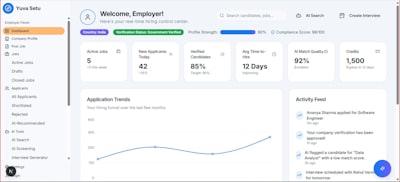
Data visualization also plays a role in reducing human error. A poorly interpreted expense report can lead to wrong decisions about budgets or profitability. Therefore, including a BI layer, for example with Power BI, allows managers to see expense evolution by department, project, or supplier in a clear and consistent way. Dashboards help detect deviations before they become serious problems. Technology does not prevent someone from making a poor decision, but it makes it easier to decide with all available information.
Traceability is another pillar. In an environment where every change leaves a mark, auditors can reconstruct the full process and understand why a particular decision was made. Document version control, activity logs, and audit reports turn the experience of teams into a reusable asset. This visibility not only protects the company from fraud or non-compliance, but also serves to continuously improve policies. If a category of expense generates many incidents, the corresponding rule can be adjusted instead of relying on people to do things right the first time.
It should be noted that software does not eliminate human error completely, but it does limit and manage it. Errors that previously passed to accounting and monthly closing are now detected at the point of entry or during approval. The goal is not to add more controls, but to design smart controls that do not slow down daily operations. A correct configuration must consider user experience, process frequency, and exceptions that are legitimate in the business. A rigid system that requires approval for every small purchase is useless if it pushes users to find alternative routes outside the platform.
Q2BSTUDIO approaches this challenge from a technological and functional perspective. We do not start from a closed template; we develop custom software that adapts to each company's approval rules, invoicing systems, and responsibility structure. This allows human error reduction to be an architectural result, not an optional add-on. Our approach combines process automation, cloud AWS/Azure integration, analytics, and cybersecurity so that spending is visible, controlled, and verifiable. We also include AI agents when transaction volume justifies it, allowing the finance team to focus on decisions that truly add value.
In short, expense control software does reduce human error, but not simply because it exists. It achieves this when it is well designed, integrated, and managed. Technology makes data reliable, decisions recorded, and organizational knowledge embedded into automated processes. This is the real contribution of digital transformation to the finance area: less friction, more accountability, and a solid foundation for growth without taking unnecessary risks.